Here's the thing almost no one tells you when you buy a bike: the suspension came sprung and valved for a hypothetical average rider — a compromise built to feel acceptable to the widest range of people, which means it's dialed in for nobody in particular. If you're heavier or lighter than that average, ride two-up, carry luggage, or push harder than a mild commute, your suspension is working against you, and you've probably just adapted to it without realizing how much the bike could feel better.
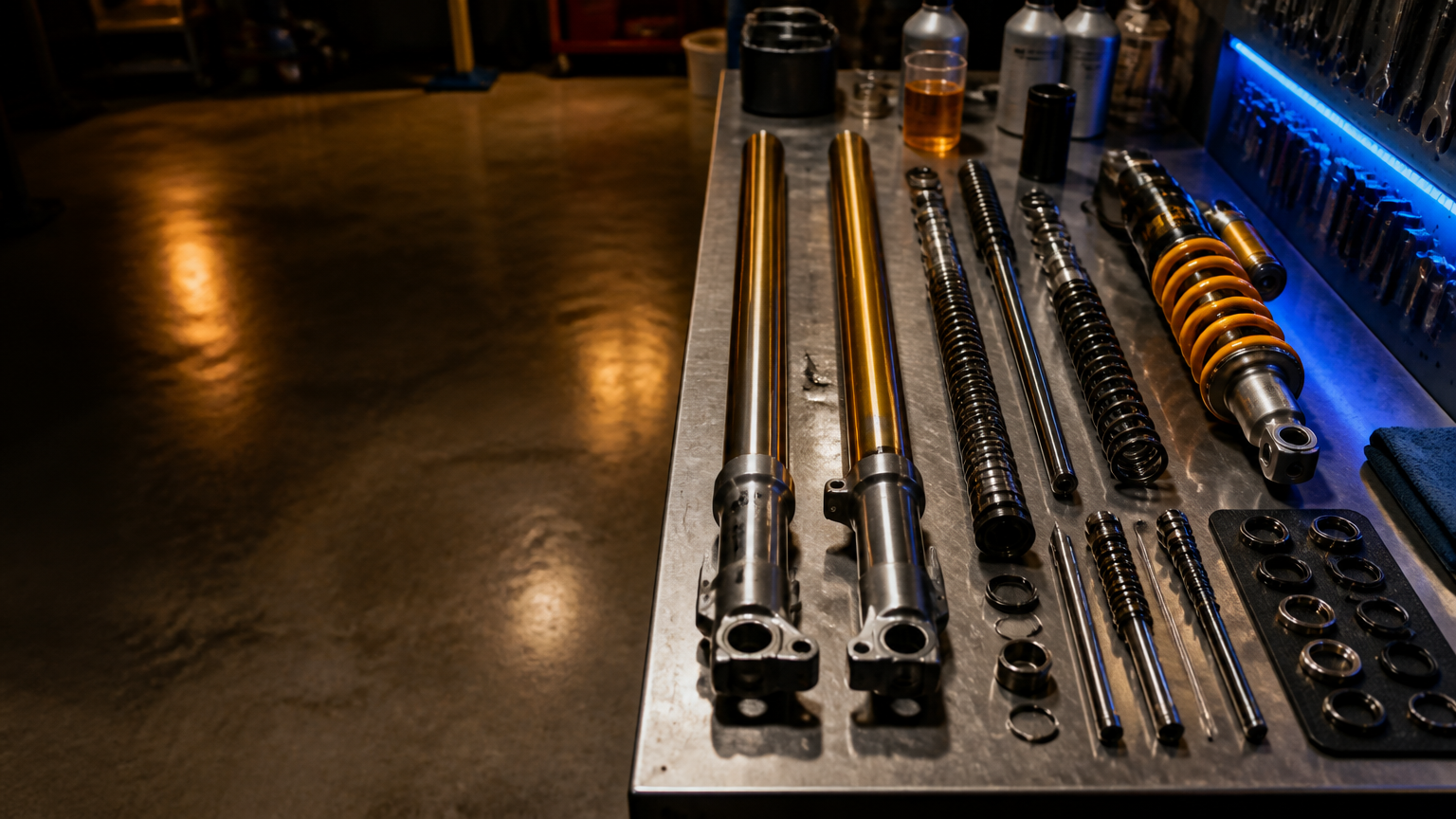
Suspension is the single most transformative service we do, and it's the most overlooked. Riders will spend thousands on an exhaust and a tune chasing a few horsepower, then ride on forks that haven't seen fresh oil in 30,000 miles and a shock that was never set for their weight. Getting the suspension right changes everything you actually feel — braking, corner entry, grip, comfort, confidence. That's why our Miami service department keeps an in-house suspension bench, and why we'll set up a bike no matter where it came from. Bought it used or elsewhere? Doesn't matter — we service any motorcycle.
From a free sag check to a full fork-and-shock rebuild with custom valving, we do the whole range in-house. Here's what goes into dialing a bike in.
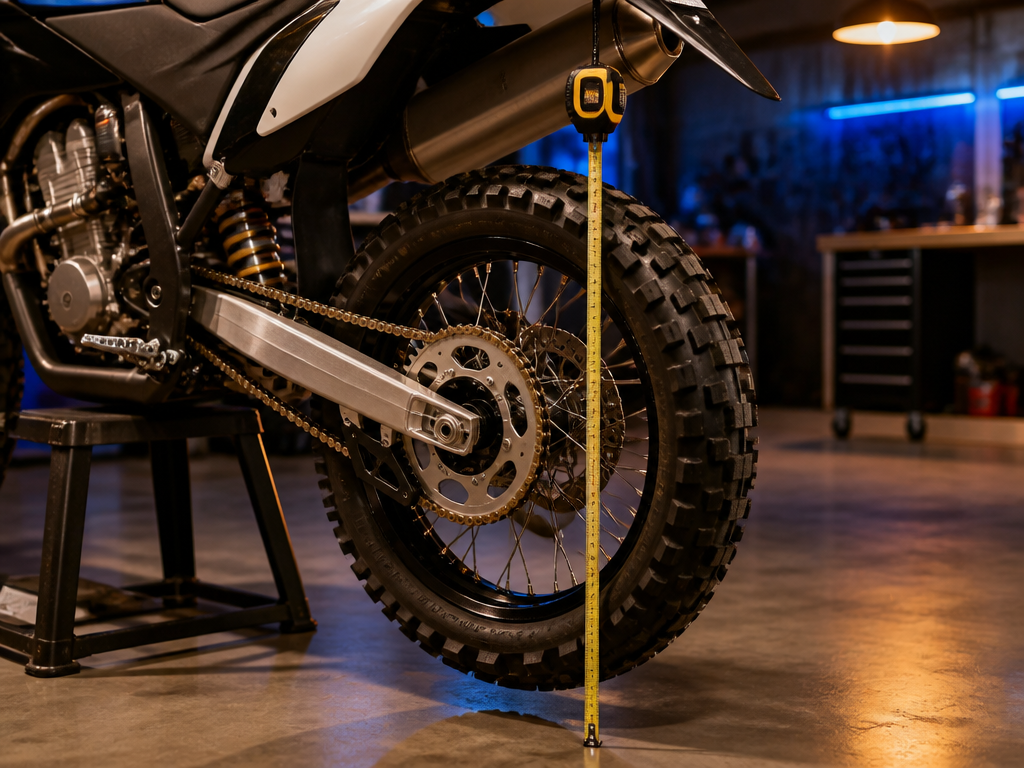
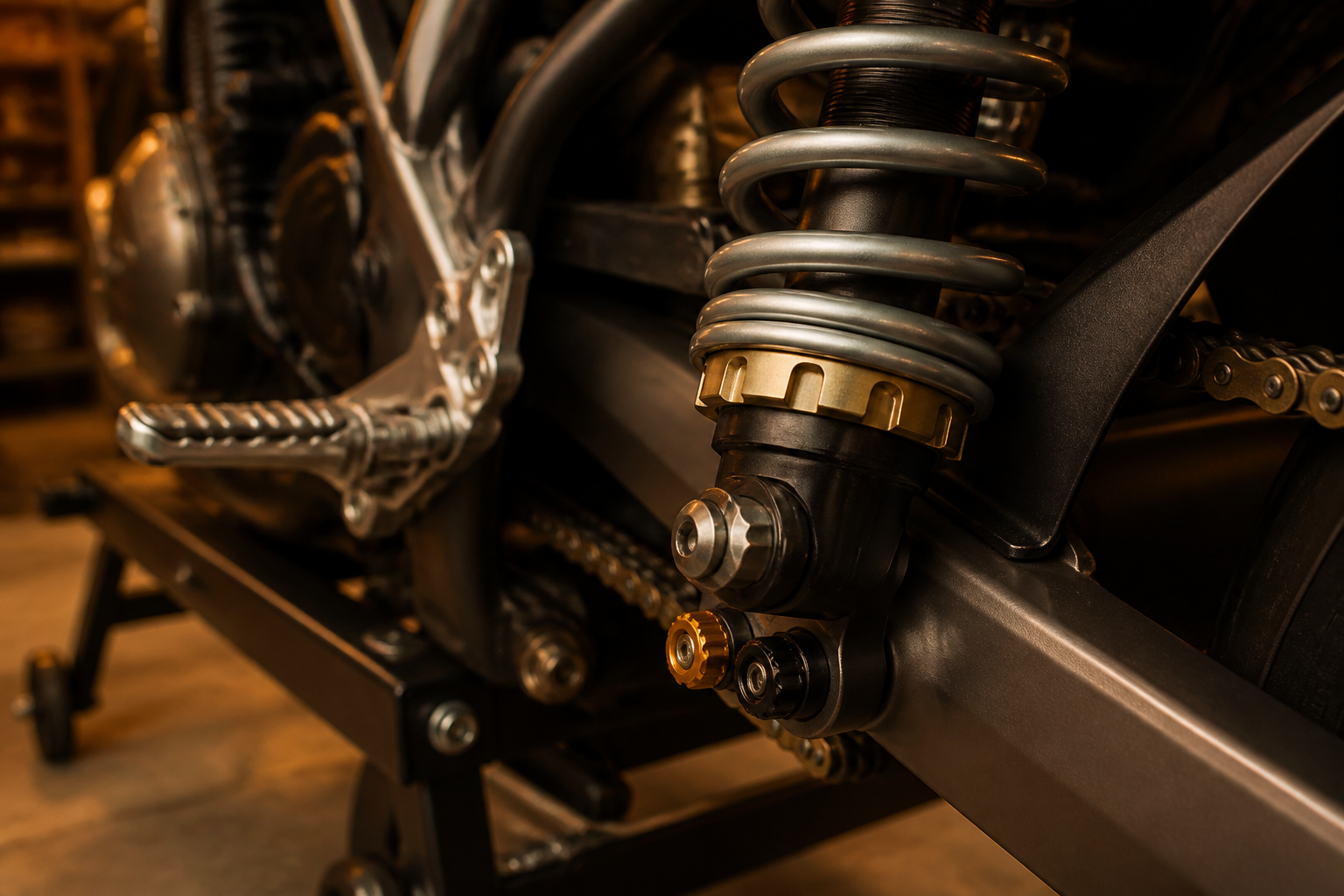
Static and rider sag set to your weight and gear, preload and compression/rebound damping dialed for how you ride. The highest-value, lowest-cost suspension work there is — and where we always start.
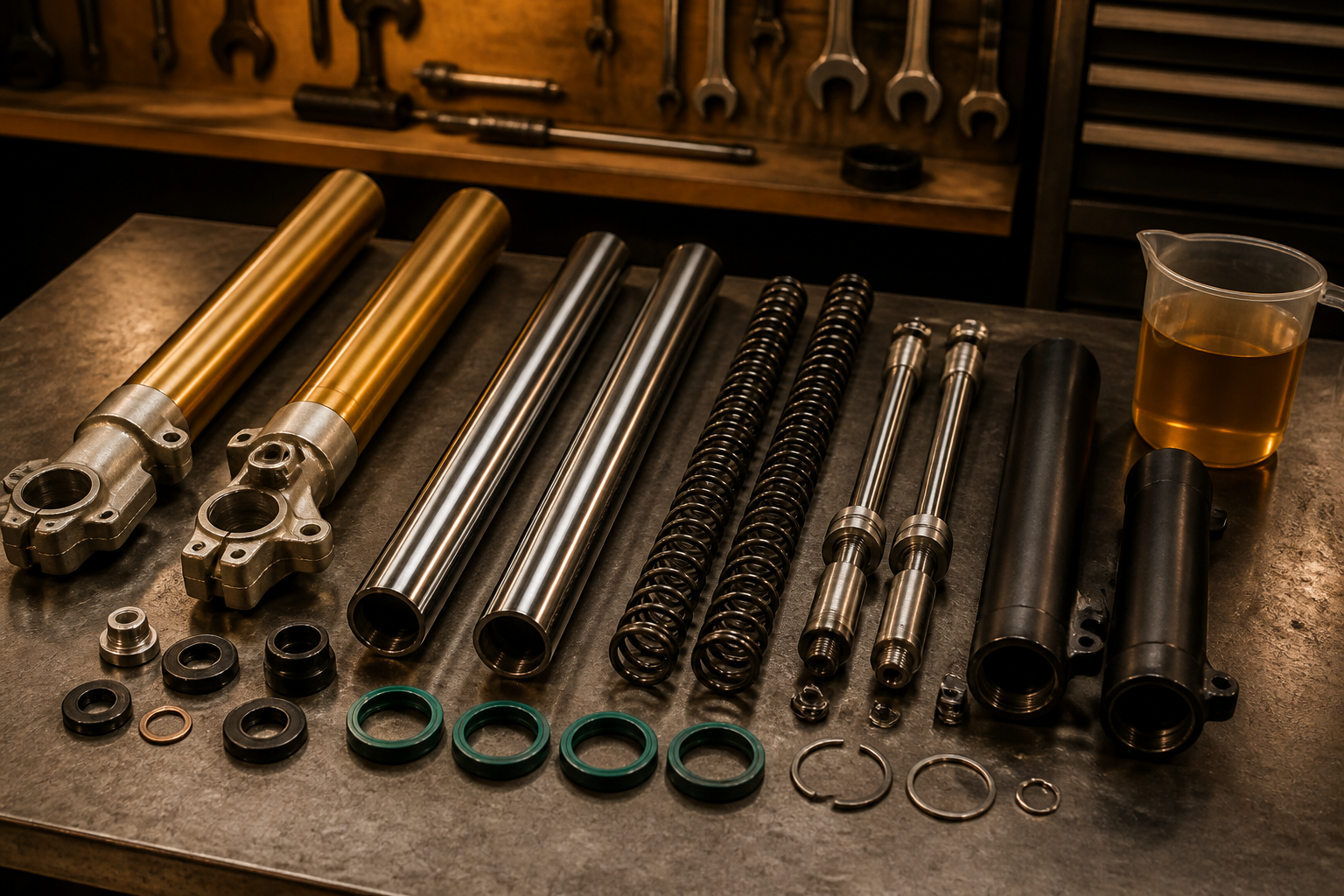
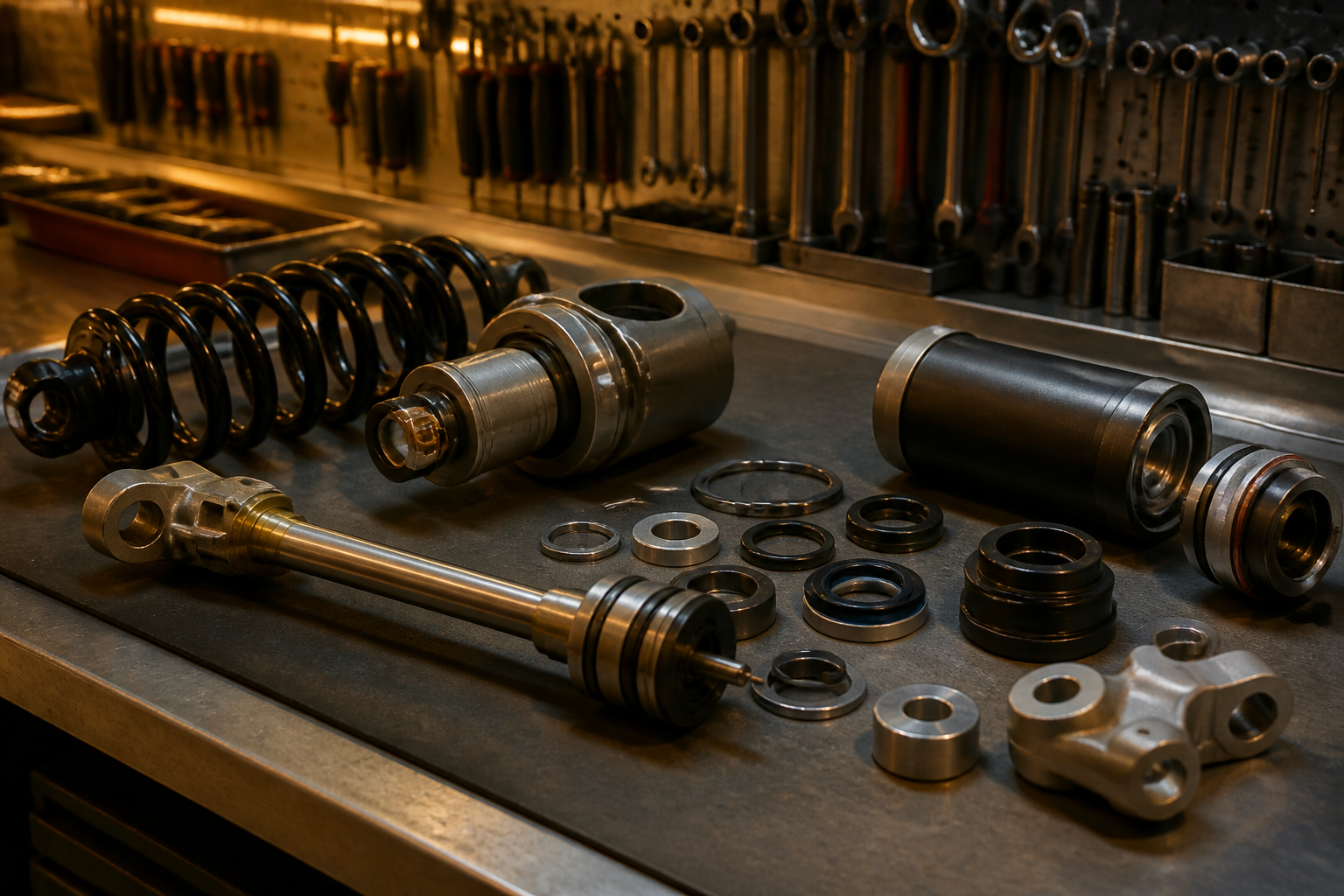
Fresh fork oil and new seals restore consistent damping and stop leaks that ruin brakes and tires. Degraded fork oil quietly kills front-end feel long before a seal ever weeps.
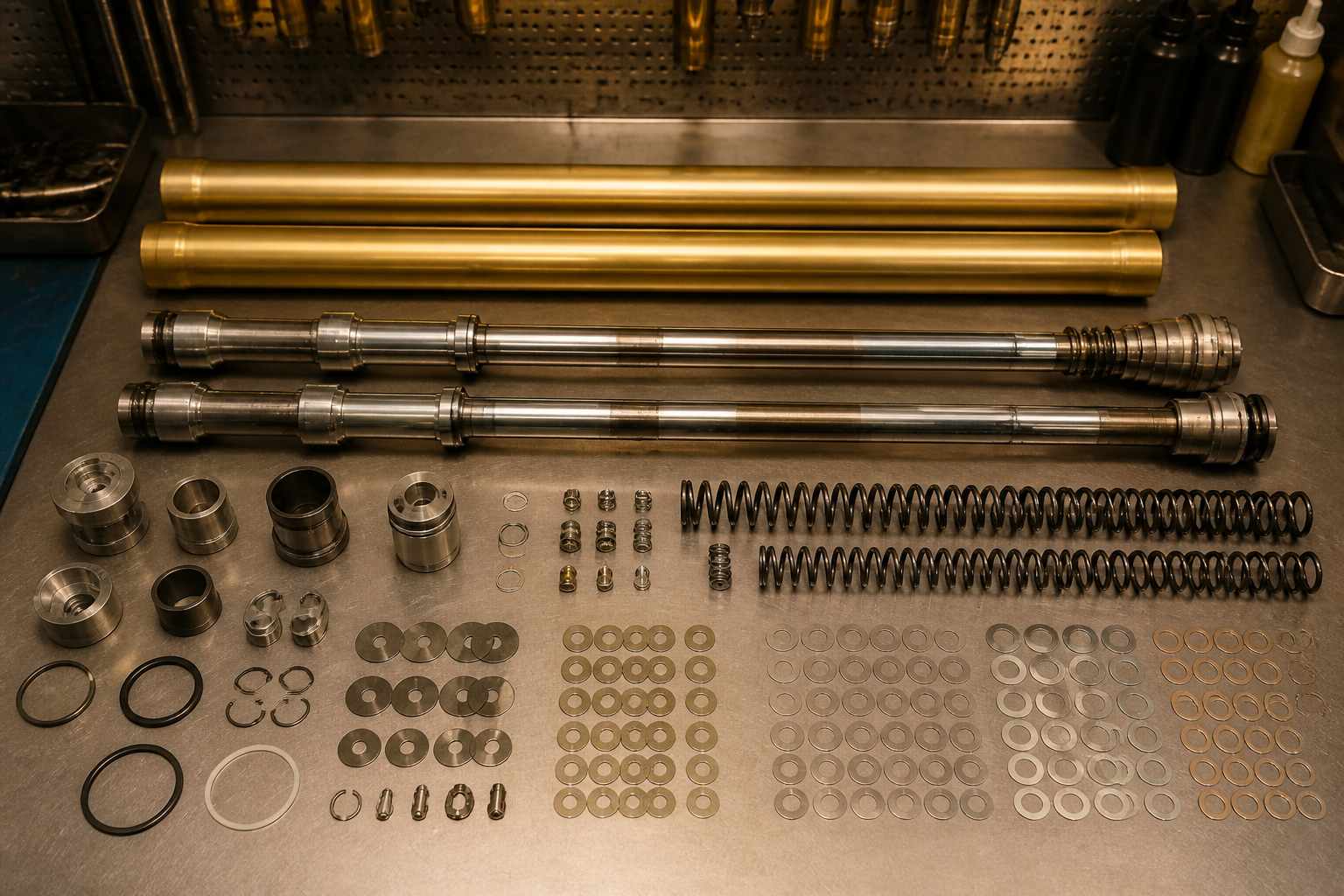
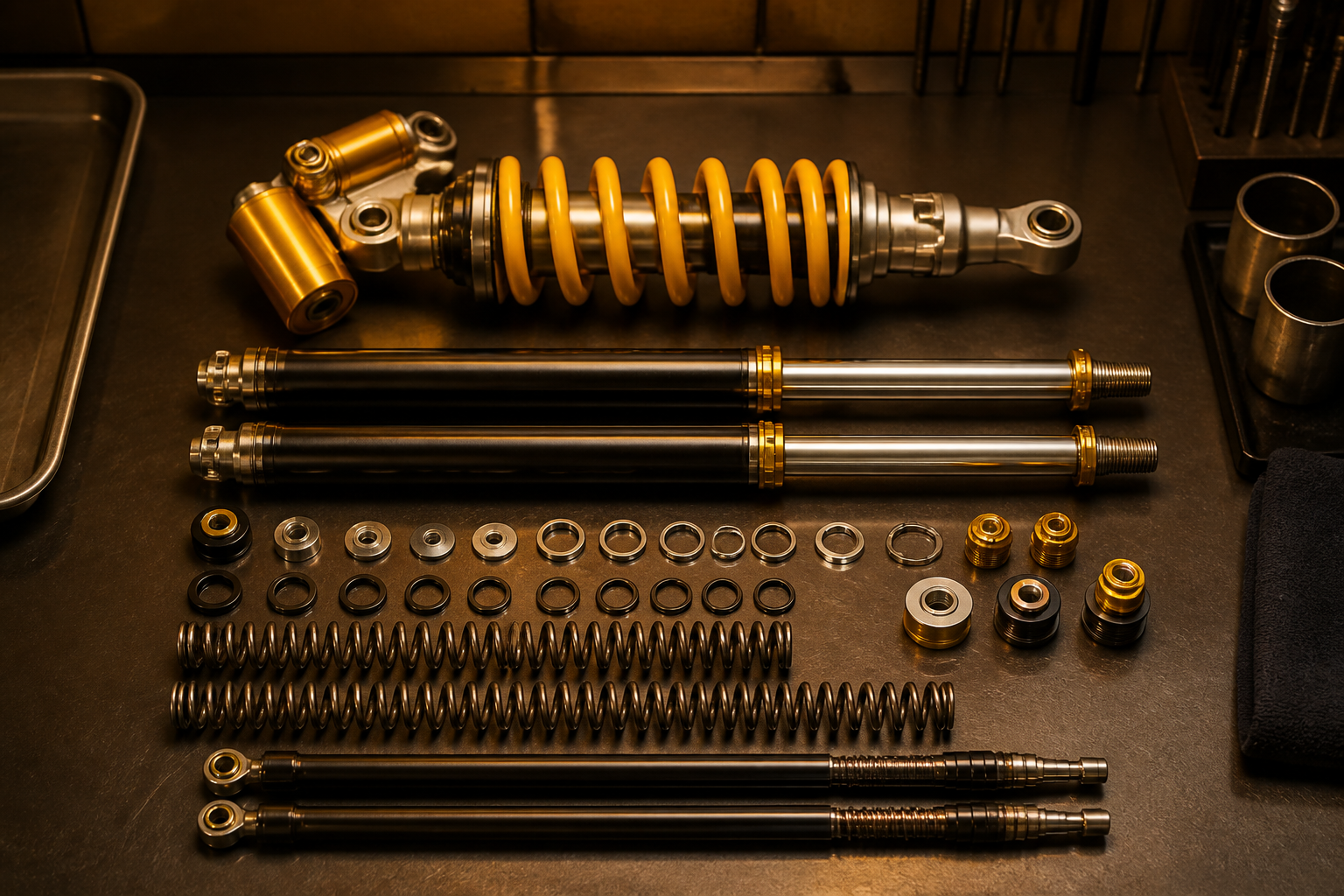
When setup alone can't get there, we revalve the fork internals and re-spring to your weight — turning average factory forks into suspension that actually suits you and your riding.
We rebuild and revalve OEM and aftermarket shocks — fresh oil, seals, nitrogen charge, and revised valving — restoring the damping that a worn, gassed-out shock lost long ago.
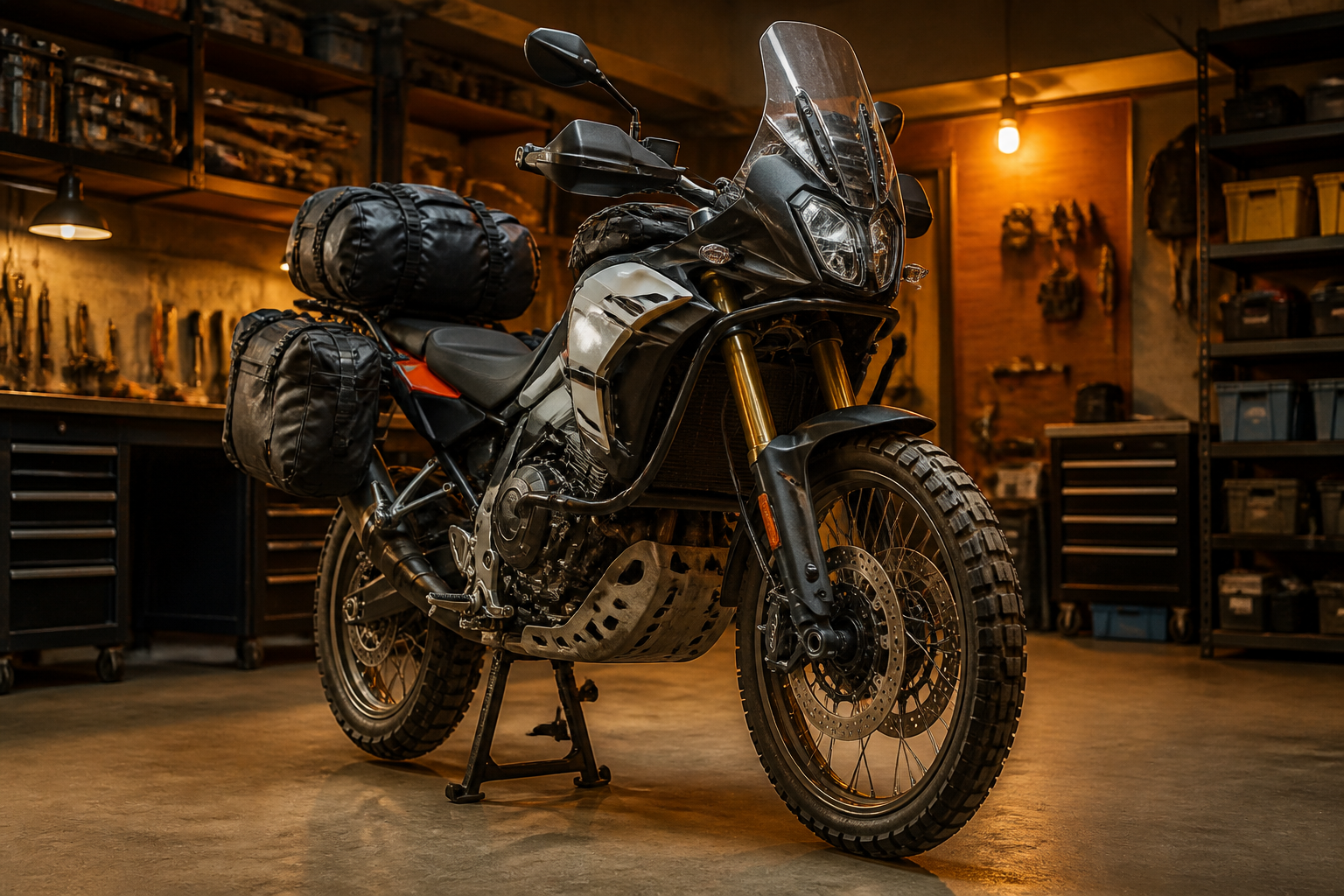
Loaded adventure and dual-sport bikes need spring rate and damping matched to real touring weight. Correct fitment also relies on healthy tires and a good chain and wheels.
You don't need the most expensive suspension — you need the right work in the right order. Almost everyone should start with a sag and damping setup, because it's inexpensive and transforms a surprising number of bikes on its own. If the bike also hasn't had fresh fork oil and seals in years, that service comes next and restores damping the bike lost without you noticing. Only when setup and service can't get you where you want to be does revalving or a full aftermarket unit make sense.
From there it's about matching the work to how you ride. A sport rider chasing corner feel and track pace wants revalving and precise spring rates; a touring rider two-up with luggage wants control and comfort under load; an adventure rider wants long-travel composure on and off pavement. We start with a conversation about your weight, your bike, and your riding, then build the plan up from the highest-value step — never the most expensive one first. A good tire choice is part of the same handling picture.
Suspension has its own vocabulary, and knowing a few terms makes the whole thing far less mysterious — and helps you tell a real setup from clicker guesswork.
How much the suspension compresses under the bike's own weight (static) and with you aboard (rider sag). It's the foundation of setup — get sag wrong and no clicker adjustment saves it.
Adjusts how far into the spring you start, setting sag — it does not change spring stiffness. Running out of preload adjustment usually means the spring rate itself is wrong for your weight.
Compression controls the speed the suspension collapses; rebound controls how fast it returns. Too little rebound feels bouncy; too much packs down over bumps. Balance is everything.
The actual stiffness of the spring, matched to rider weight and use. The most common factory mismatch — and the fix that transforms bikes for heavier or lighter riders.
Changing the shim stacks inside the fork or shock to alter damping character. It's how we tailor suspension beyond what external clickers can reach — real tuning, not just adjustment.
Cartridge forks offer precise, tunable damping; emulators bring cartridge-like control to older damper-rod forks. Both are common upgrade paths we install and tune to your bike.
Suspension is easy to fake because the customer can't see inside a fork leg and a bike rolls out the door feeling "fine." Here's the difference between real suspension work and a fluid-and-hope job.
South Florida is deceptively hard on suspension, and it hits from two directions at once — the roads and the heat. Our roads are not the smooth ideal a factory setup imagines. The Palmetto and I-95 are a patchwork of expansion joints, ruts, and sudden patches; the causeways bake and heave; and a Miami downpour hides potholes that slam the suspension hard. A bike whose damping is worn out or whose sag is wrong turns every one of those hits into a jolt through the bars and an unsettled chassis exactly where you need composure — mid-corner, under braking, changing lanes in traffic.
Heat is the quieter enemy. Suspension damping comes from oil pushed through valving, and heat thins that oil and accelerates its breakdown. In a climate where the pavement radiates warmth nearly year-round and bikes never get a cool winter rest, fork and shock oil degrades faster than a two-year interval written for a temperate state assumes — so damping fades sooner, often without a single visible leak. Add the way people ride here — year-round miles, loaded two-up runs to the Keys, heavy baggers, big adventure bikes carrying luggage — and the suspension is under constant real load. We set bikes up for these actual conditions: sag for your true loaded weight, damping and oil chosen with Miami heat in mind, and springs matched to how much bike and gear you're really carrying. Suspension tuned for somewhere with seasons and smooth roads isn't tuned for here.
Talk through your weight, bike, and riding, then measure sag and check condition.
Fresh oil and seals, re-spring, and revalve or install as the plan calls for.
Dial preload and damping to your weight, gear, and typical load.
Road-test and fine-tune so the bike does what you want under you.
We set up and rebuild the suspension on what you ride — regardless of where it came from.
"They re-sprung and revalved the forks on my S1000RR for my weight and set the sag properly. It's a completely different motorcycle into corners. I wish I'd done it years ago instead of an exhaust."
— Chris N., Brickell
"Rebuilt the shock on my GS and set it up for me plus luggage. It soaks up the Palmetto now instead of kicking me out of the seat. These guys actually understand suspension."
— Miguel A., Doral
Both. We rebuild and revalve most OEM and aftermarket forks and shocks on our in-house suspension bench — fresh seals, oil, and often revised valving and springs — and we install full replacement units like Öhlins or K-Tech when that's genuinely the better call for your bike and budget. Rebuilding a good OEM unit correctly is frequently a smarter spend than replacing it, and we'll tell you which path makes sense rather than defaulting to the most expensive one.
Excessive dive under braking, a harsh or wallowy ride, a front end that won't hold a line, visible fork-oil leakage on the tubes, or a shock that feels bouncy and vague are all signs it's time. Suspension degrades slowly, so most riders adapt without noticing — until a service or a proper setup reminds them what the bike is supposed to feel like. If it's been years or a lot of miles, it's worth a check.
Yes — this is the single most valuable thing we do. Factory suspension is sprung and valved for an "average" rider who probably isn't you. We set static and rider sag, preload, and damping to your actual weight, gear, and typical load, and re-spring the bike where the stock rate is wrong. It's the difference between a bike that uses its travel properly and one that fights you.
Yes. Long-travel setup and revalving for loaded adventure and dual-sport touring is one of our most common suspension jobs. A big ADV bike carrying luggage, a passenger, and a full tank asks a lot of its suspension, and dialing spring rate and damping to that real-world load transforms how it handles both on the highway and off the pavement.
Typically every two years or a set mileage interval, and sooner if you ride hard, carry heavy loads, or live with Miami's heat. Fork and shock oil breaks down and contaminates over time, which quietly degrades damping long before a seal actually leaks. Fresh oil and seals restore consistent, predictable damping — one of the most underrated services on the bike.
Yes. We set sag, damping, and spring rates for track use and can revalve for a rider's pace and track conditions, working through a proper setup rather than guessing at clicker positions. Whether it's your first track day or club racing, dialed suspension is where lap time and confidence actually come from — more than almost any engine change.
Suspension is one part of the handling picture, and the parts around it matter. The right rubber is half the equation — our tire selection guide helps you match tires to the setup — and worn chain, sprockets, and wheel bearings undermine even a perfectly dialed suspension, so it's smart to check them together while the bike's on the bench.
Based on Biscayne Blvd in Miami's MiMo corridor, we dial in suspension for riders throughout Miami-Dade.
Book a suspension setup or rebuild in Miami — sag, damping, and springs dialed to you, on our in-house bench.
Book Your Service