You can live with a soft suspension setup or a lazy throttle response. You cannot live with brakes you don't trust. It's the single most safety-critical system on the motorcycle, and it's also the one where cut corners hide the longest — old fluid, glazed pads, and swollen lines degrade so gradually that most riders adapt to worse braking without realizing how much they've lost, right up until the moment they need every bit of it.
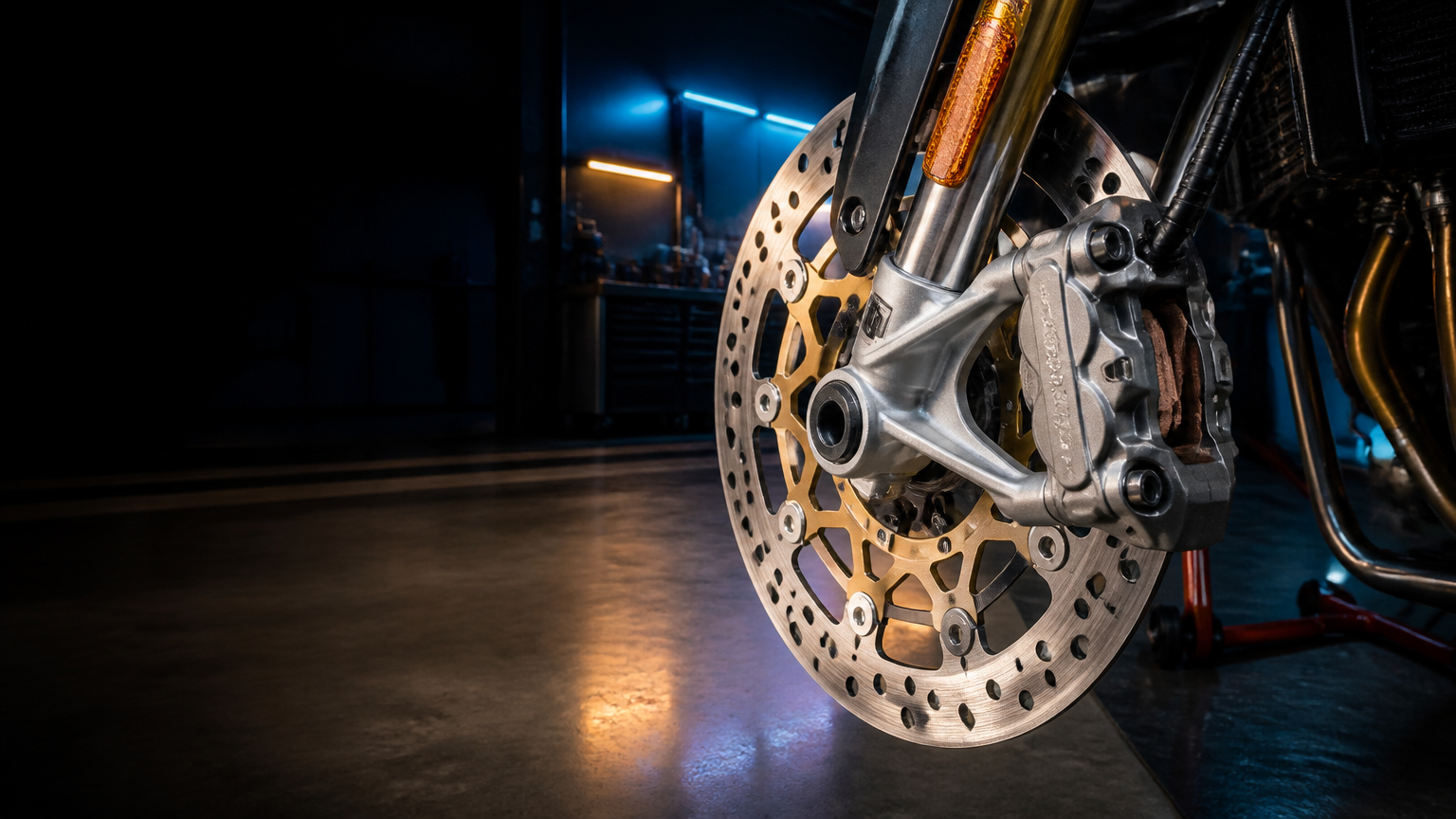
We treat brake work with the seriousness it deserves. That means we don't just swap pads and hand it back — we look at the rotor, the fluid, the lines, the caliper pistons, and the lever feel as one connected system, because a fresh pad against a warped rotor or through mushy old fluid is still a compromised brake. That standard is central to our Miami service department, and it's why riders trust us with the work that actually matters. Bought the bike somewhere else? Makes no difference — we service any motorcycle, and brakes are exactly the system worth doing right no matter where it came from.
From routine pad-and-fluid work to a full performance brake upgrade, we do all of it front and rear, on every platform we service. Here's the core menu.
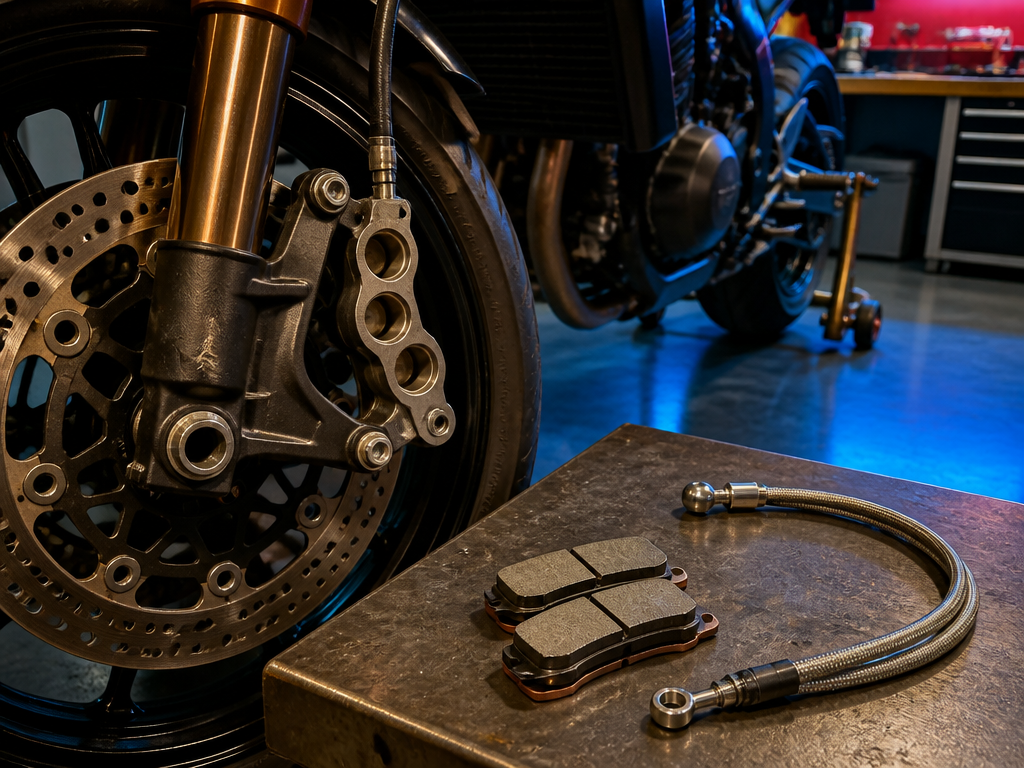
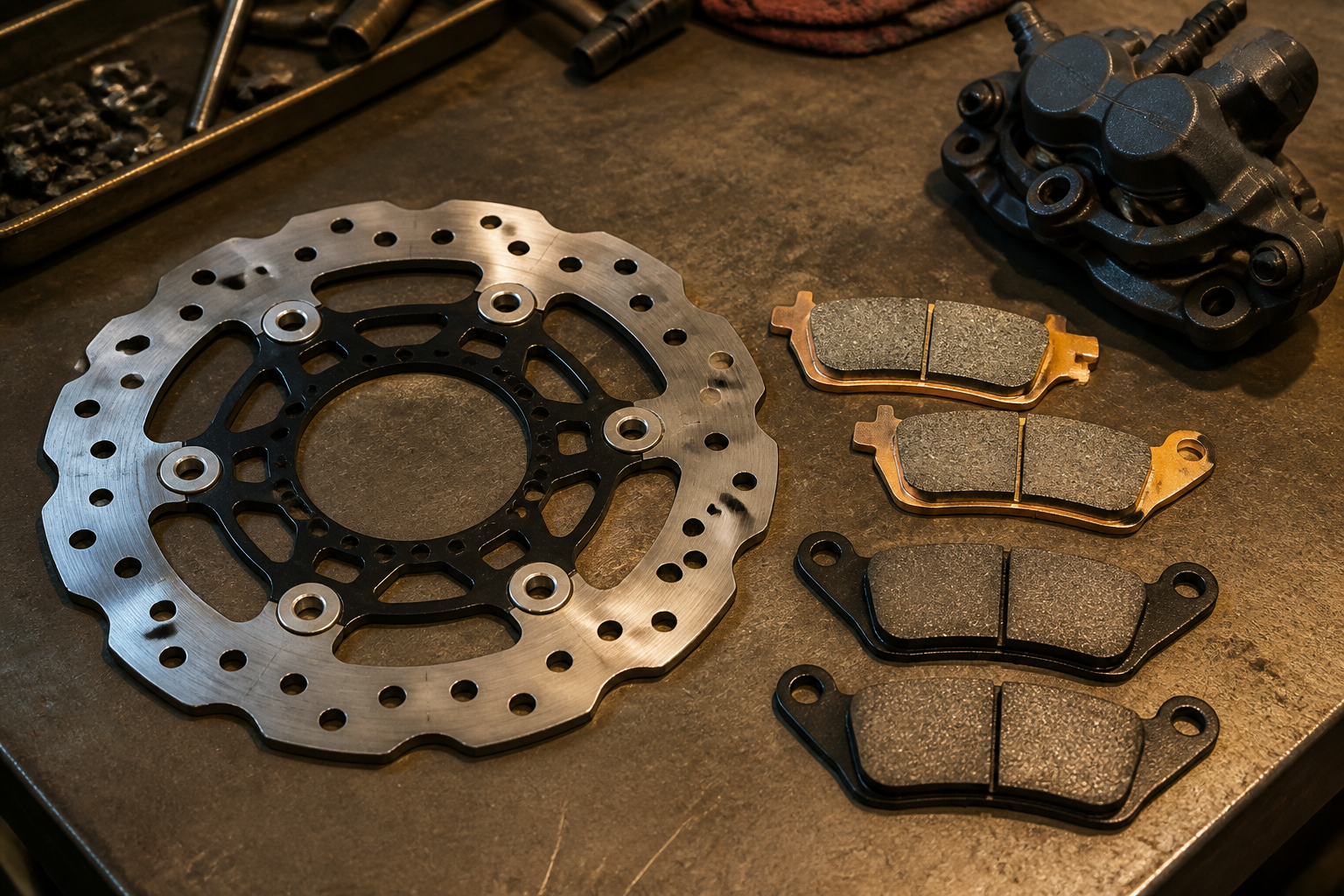
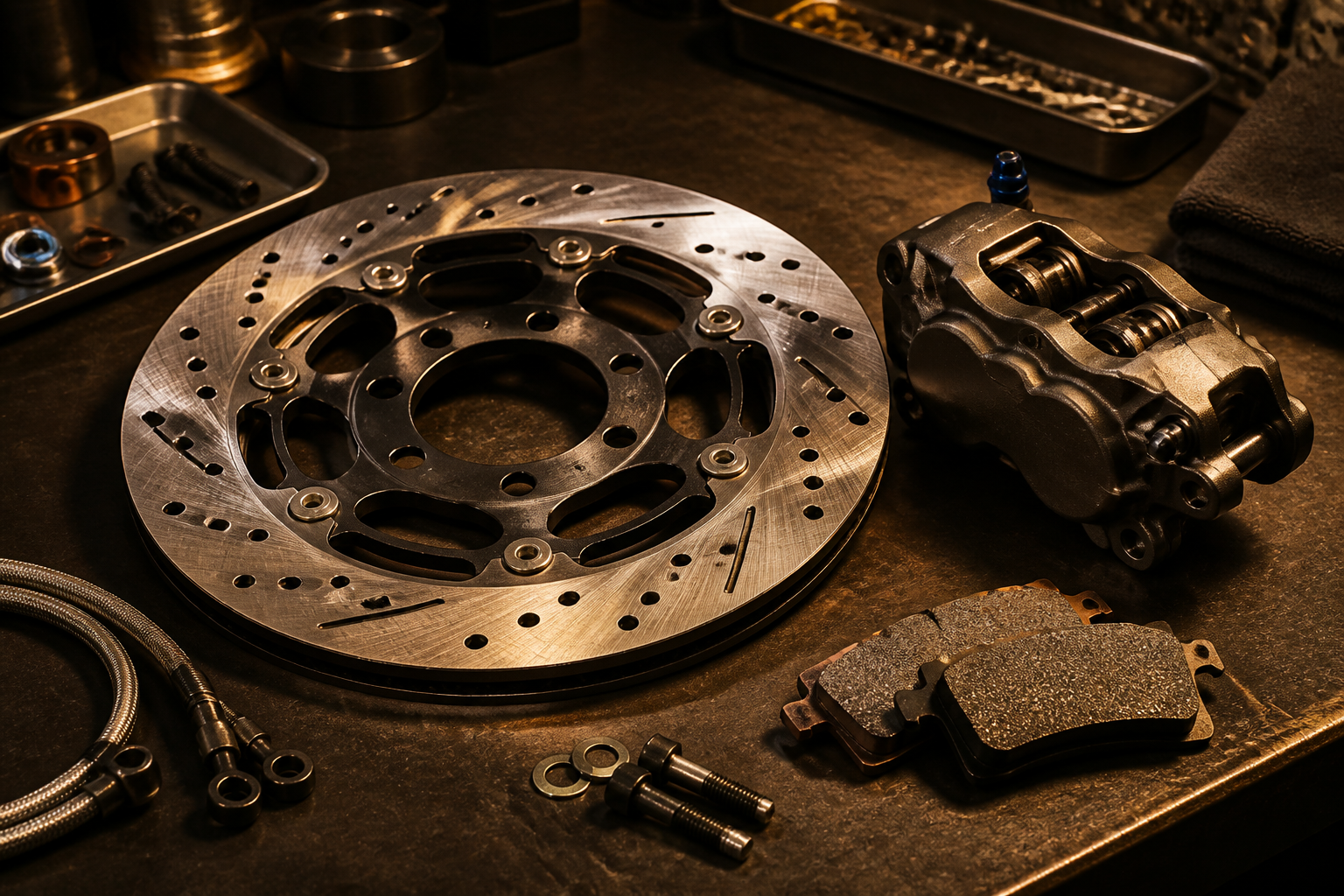
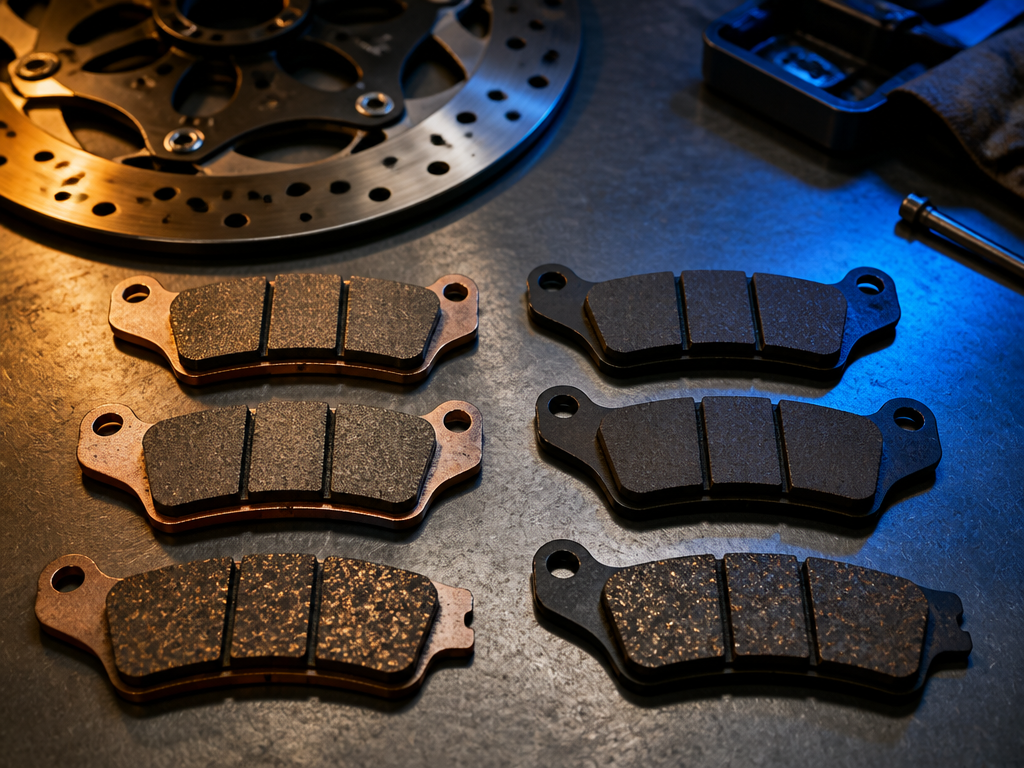
Pad replacement with the right compound for your bike and riding, plus rotor inspection for thickness, warp, and scoring. We catch a dying rotor before worn pads destroy it — often while a wheel's off for a tire change.
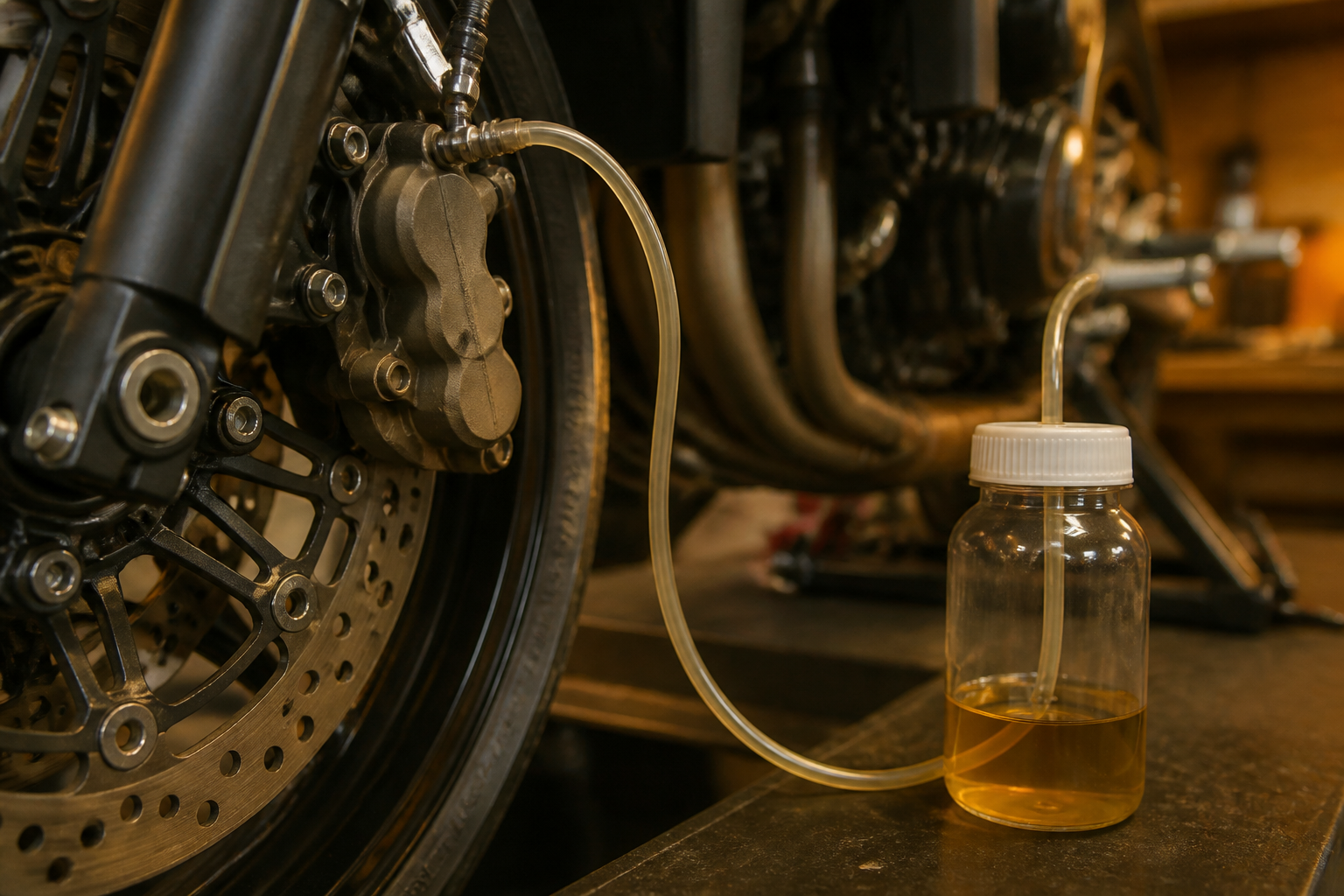
Fresh DOT-spec fluid, properly bled, restores a firm lever and a high boiling point — critical in humid Miami. It's routine maintenance that riders skip until the lever goes soft on a hot day.
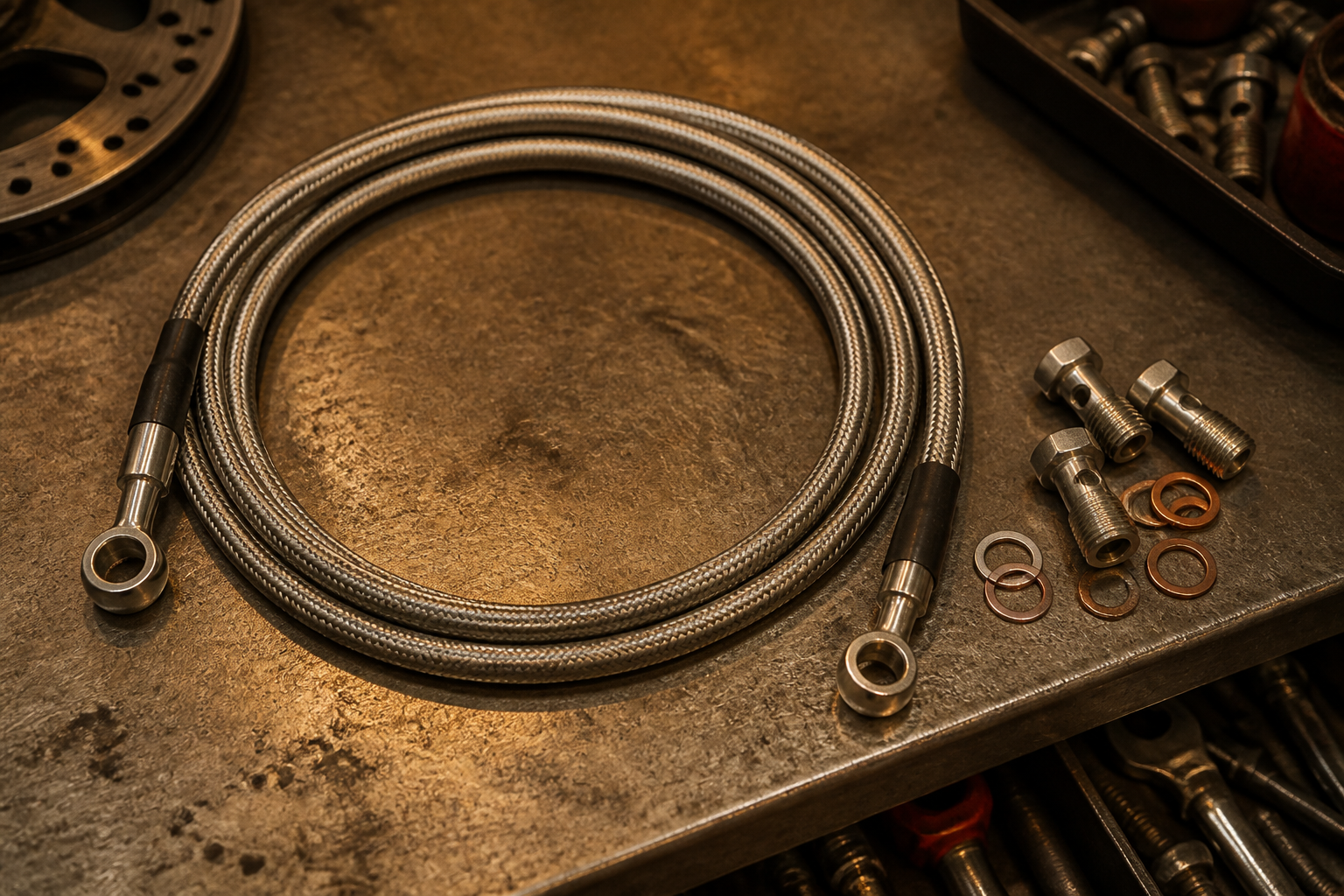
Stainless braided lines don't swell under pressure the way stock rubber does, so the lever firms up and modulation gets far more precise. One of the best braking improvements per dollar there is.
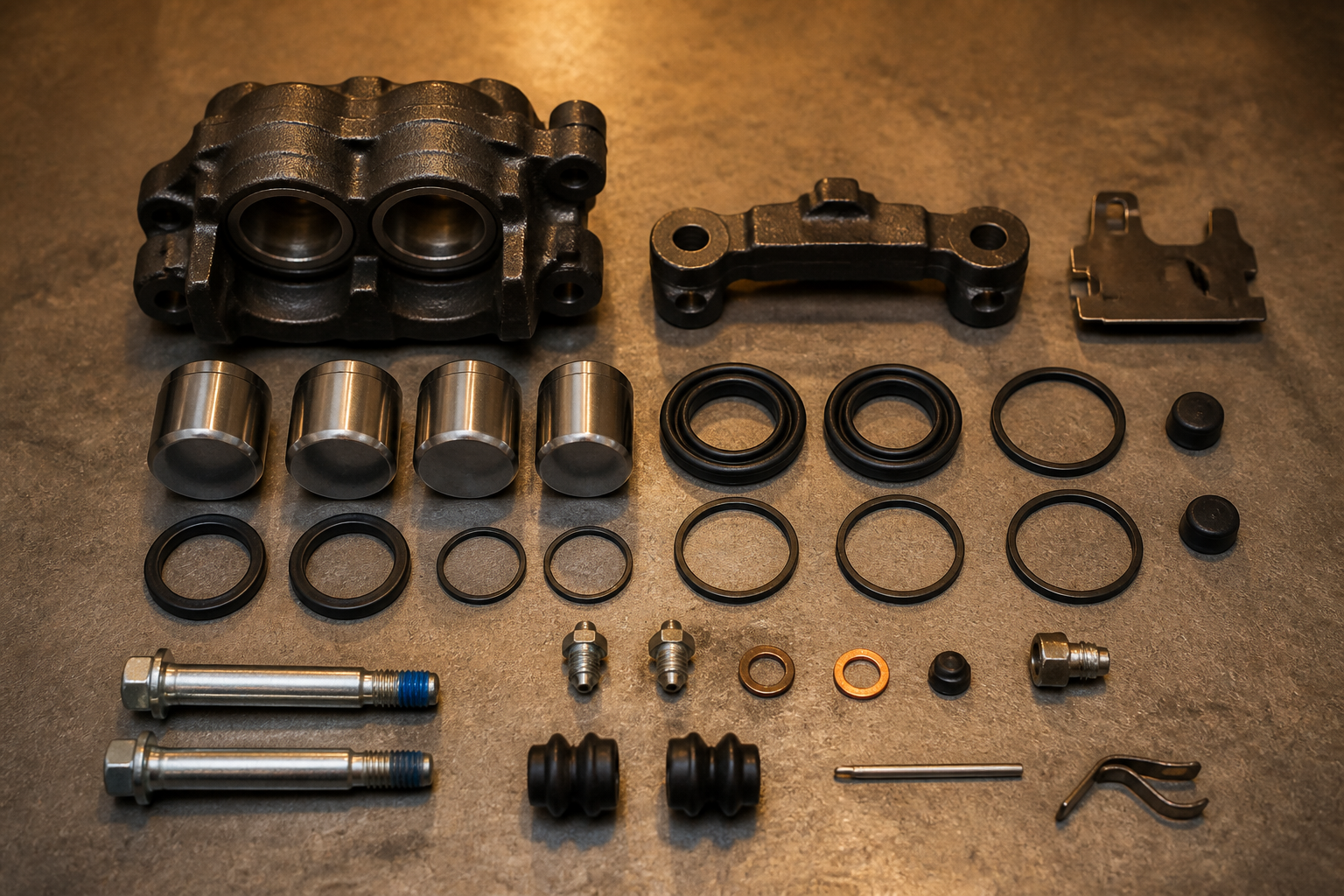
Sticking pistons and weeping seals kill braking and drag pads. We clean, rebuild, and reseal calipers and master cylinders — especially valuable on Miami bikes fighting salt-air corrosion.
Sintered high-performance pads, upgraded rotors, and caliper upgrades for riders who want more bite and fade resistance — dialed in for street or track on sport bikes and fast road riders.
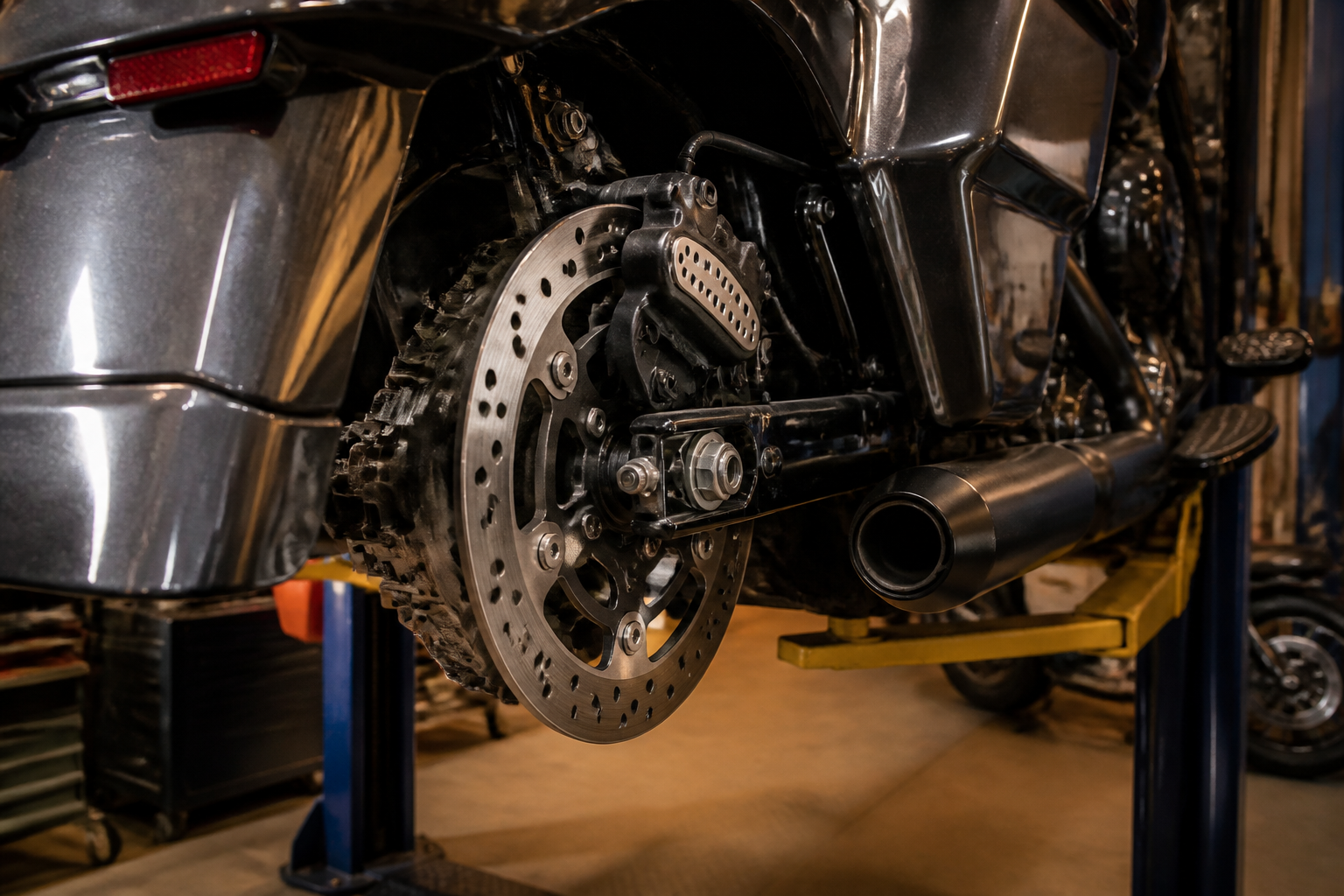
Heavy touring bikes and baggers demand more from their brakes, and ABS/linked systems need the correct bleed procedure. We service both to spec so the safety electronics keep working.
The right brake setup depends entirely on what you ask of it. A commuter and a weekend canyon rider both want good brakes, but they want different things — the commuter values consistent, quiet, long-lasting pads and a firm lever in traffic; the aggressive road or track rider wants maximum bite, fade resistance, and feel at the edge, and will accept more rotor wear and noise to get it. Buying the wrong end of that trade leaves you disappointed in a perfectly good part.
Start with the cheapest, highest-impact steps almost everyone benefits from: fresh fluid and quality pads. From there, braided lines are the next upgrade that transforms lever feel for street and sport riders alike. Sintered performance pads and rotor upgrades come into play when you're braking hard and repeatedly — spirited road riding on a sport bike, or hauling down a loaded touring bike from highway speed. We'll talk through how you actually ride and build the system up in the order that gives you the most improvement for the money, not just the most expensive parts.
A little brake vocabulary helps you understand what your bike needs — and spot a shop that actually knows the system.
Sintered (metallic) pads bite harder, resist fade and wet weather, and last long — ideal for heavy or hard-braking use. Organic pads are quieter and gentler on rotors. Matching pad to bike and riding is the point.
Glycol fluids absorb water, which lowers the boiling point and causes fade. DOT 5.1 has a higher wet/dry boiling point than DOT 4. DOT 5 is silicone and not interchangeable — never mix types.
Rubber lines expand under pressure, wasting lever force as flex. Stainless-braided lines hold their shape, sending more of your input straight to the pistons for a firmer, more precise lever.
Rotors have a minimum thickness stamped on them; below it they must be replaced. A warped rotor pulses the lever and can't be trusted — we measure rather than eyeball.
The loss of braking from overheated pads or boiling fluid — the lever goes long or the bite disappears. Fresh fluid, the right pads, and good rotors are how you keep it from happening.
Anti-lock and combined systems modulate pressure electronically and need a specific bleed procedure. Serviced correctly they're a major safety asset; bled wrong, they trap air and feel awful.
Because brake wear is gradual, a careless brake job can feel fine leaving the shop and betray you months later. On the one system where that matters most, here's the standard we hold.
South Florida asks a lot of a brake system, and it does it all year. The two biggest factors are heat and humidity, and they attack the brakes from opposite directions. Humidity gets into the brake fluid — glycol fluid is hygroscopic and pulls moisture straight out of our thick air — and once fluid has absorbed water it boils at a lower temperature. Combine that with the constant heat of stop-and-go traffic on the Palmetto or crawling across a causeway in August, and you have the exact recipe for brake fade: a lever that goes long or a bite that fades away right when a car pulls out in front of you. This is why we flush fluid more often here than a manual written for a temperate climate recommends.
Then there's the environment working on the hardware itself. Salt air near the beaches and barrier islands corrodes caliper pistons and hardware, causing pistons to stick — which drags the pads, glazes them, wears the rotor, and quietly steals braking power and fuel economy. Frequent rain means you're routinely braking on wet roads where pad compound and fresh, effective pads matter most, and the painted lines and polished intersections of a Miami commute are slick enough that a marginal brake system is a real liability. Year-round riding also means no winter break for the brakes to rest — the wear just keeps accumulating. We build our brake service around these realities: fresh fluid on a Miami-appropriate schedule, corrosion-aware caliper service, and pads and lines chosen for the wet, hot, salty conditions your bike actually rides in — not a spec sheet from somewhere with seasons.
Measure pads and rotors, check fluid condition, lines, and caliper function.
Replace wear items, flush fluid, and rebuild or upgrade as the system needs.
Bleed to a firm lever with the correct procedure for ABS or linked systems.
Bed in new pads and road-test so the brakes are right before pickup.
We service and upgrade the brakes on what you ride — regardless of where it came from.
"Braided lines, fresh fluid, and better pads on my ZX-6R and the lever feel is night and day. I didn't realize how mushy it had gotten until they fixed it. Feels like a new bike into corners."
— Andre P., Kendall
"My Street Glide's rear caliper was dragging from corrosion and another shop just wanted to sell pads. These guys rebuilt the caliper and bled it right. Stops straight and strong now."
— Rob C., Miami Lakes
Squealing, a longer lever pull, reduced stopping power, or visible pad material under about 2mm are all signs it's time. A pulsing lever can mean a warped rotor, and a spongy lever often points to old fluid rather than pads. We check pad thickness, rotor condition, and fluid on any service visit and give you an honest read — worn pads are cheap; the rotor they destroy if ignored is not.
Yes — braided stainless lines are one of our most common brake upgrades. Stock rubber lines swell slightly under pressure, which softens the lever; braided lines don't, so you get a firmer bite and much better feel and modulation. It's one of the biggest improvements per dollar you can make to how a bike stops, especially paired with fresh fluid and quality pads.
More often than a dry-climate manual suggests — usually every one to two years here. Brake fluid is hygroscopic, meaning it pulls moisture out of the air, and South Florida's humidity does that fast. Water-laden fluid boils at a lower temperature, so it can fade exactly when you brake hard in traffic or on a hot day. Fresh fluid is one of the cheapest safety upgrades there is.
Yes. Brake service and upgrades are open to any motorcycle regardless of where you bought it. Whether you want fresh pads and fluid or a full braided-line and performance-pad upgrade, we'll spec it to your bike and how you ride — no dealer-purchase requirement, ever. Bring us the bike and parts you already have, or let us source the right components; either way the work is done to the same safety-critical standard, and we'll tell you honestly what your brakes actually need versus what's optional.
Yes — full front and rear brake service and upgrades on every category we work on, from single-disc commuters to dual-front-caliper sport bikes and heavy baggers. We service and rebuild calipers and master cylinders, clean and lubricate slide pins, and set everything up as a balanced system rather than just slapping pads in one end.
Yes. We service ABS-equipped and linked/combined braking systems, including the correct bleed procedure those systems require — which is not the same as a standard bleed and is where a lot of shops get it wrong. Fluid, pads, and lines are all serviced with the ABS system properly accounted for so the safety electronics keep working as designed.
Brake service shares a teardown with the work around the wheels, so it's smart to bundle. If your rubber's due, a tire change puts the wheels off anyway — the ideal moment to inspect rotors and pads; and since brake fluid rides on the same clock as your other fluids, folding it into a full maintenance and major service keeps everything on one schedule and one drop-off.
Based on Biscayne Blvd in Miami's MiMo corridor, we handle brake service and upgrades for riders throughout Miami-Dade.
Book brake service or an upgrade in Miami — pads, fluid, braided lines, and performance work done to a safety-critical standard.
Book Your Service