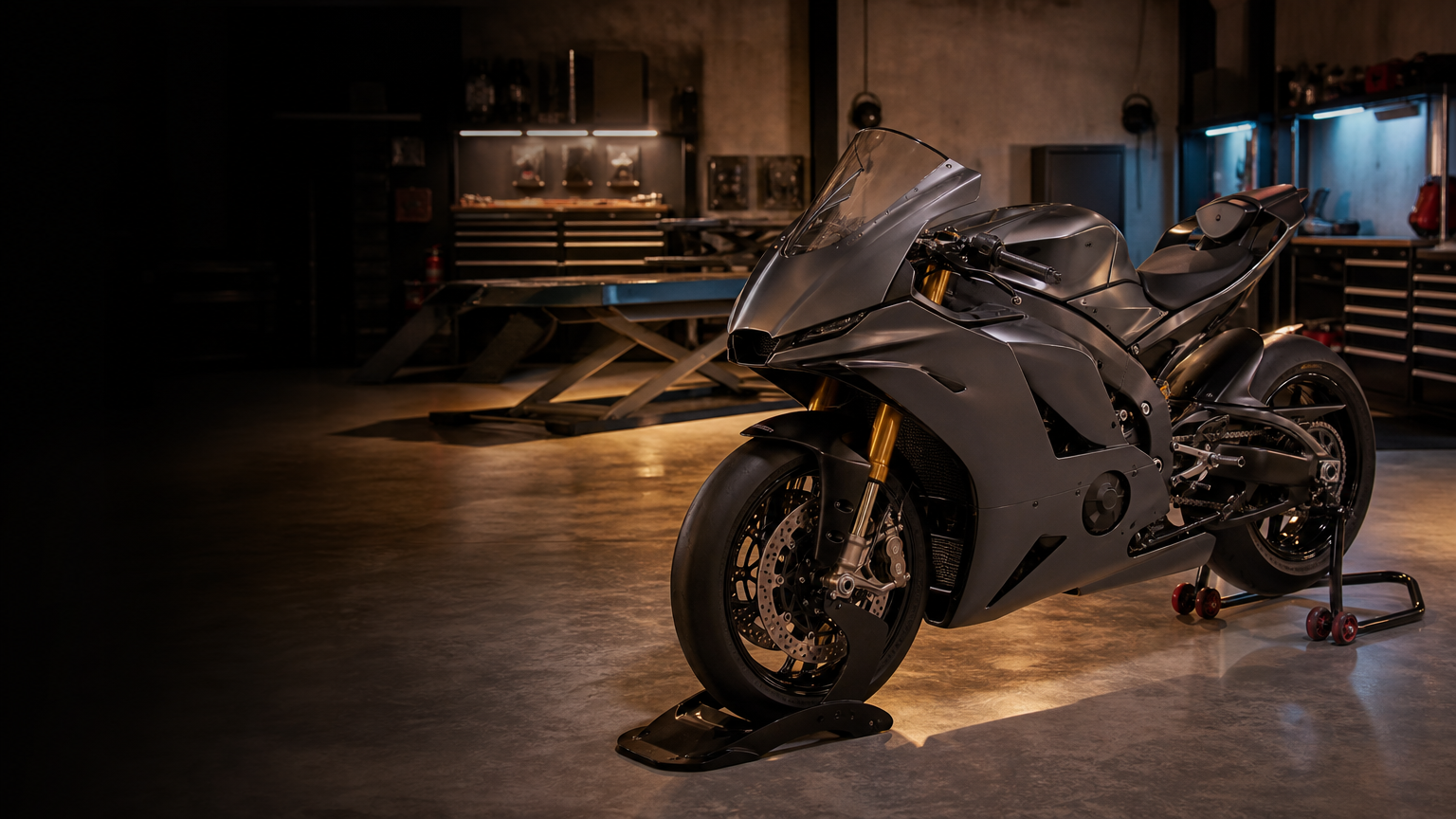
Flash · Suspension · Track Prep
Sport Bike Service & Track Prep in Miami
Flash tunes, suspension setup, and track prep — real sport bike capability at dealer throughput, without the specialist waitlist and the boutique markup.
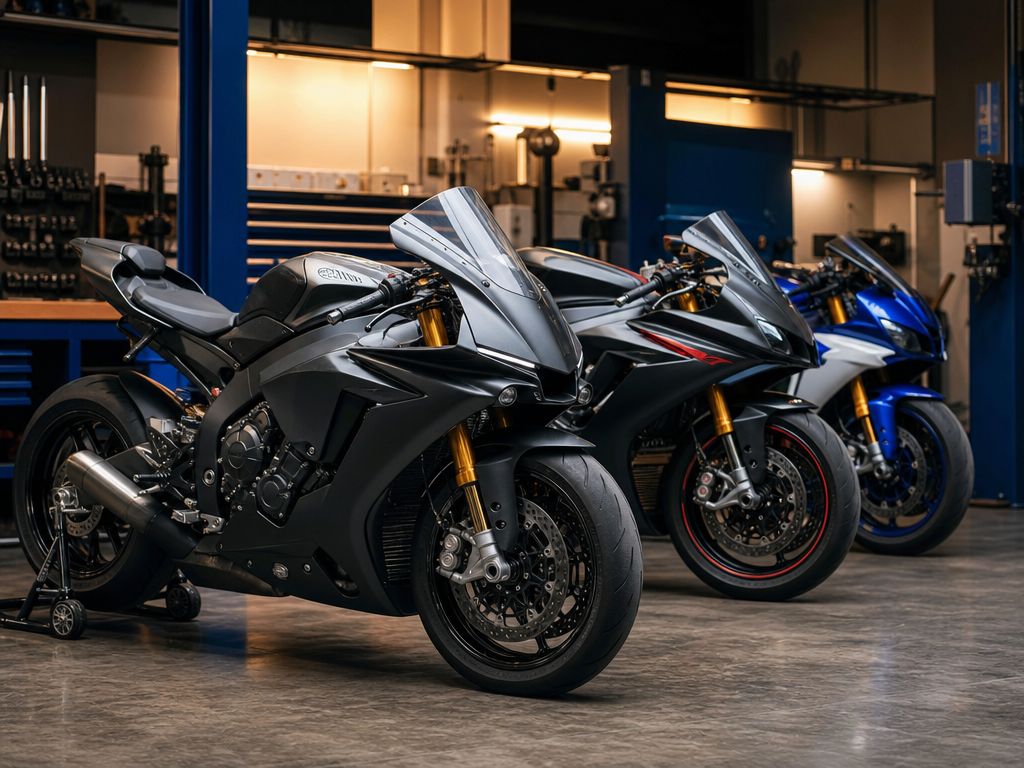
Most Miami shops treat an R6 or a GSX-R like a commuter that happens to have fairings: book it in, change the oil, hand it back. But the riders on these bikes — the causeway crowd at 6 AM, the Ducati owners who want the bike to feel like what they paid for, the regulars chasing lap times at Homestead — know the difference between a bike that got serviced and one that got set up. They can tell in the first mile which one they got back.
We built this side of the shop for those riders. Not because sport bikes are trendy, but because most of them are stuck choosing between the dealer that buries service behind a sales floor and the boutique specialist who books four months out at double the rate. There's a lane in the middle — full capability, dealer throughput, a fair rate, and we service your bike no matter where it came from. That middle lane is the whole reason our Miami service department exists, and it's exactly what sport riders need. If your bike came from somewhere else, that's fine — we service any motorcycle.
A sport bike isn't one job — it's a stack of specialized ones, and the shop that does them all under one roof is the shop that can make the bike work as a system. Here's the full menu we run for sport and hyper-naked platforms, and what goes into each.
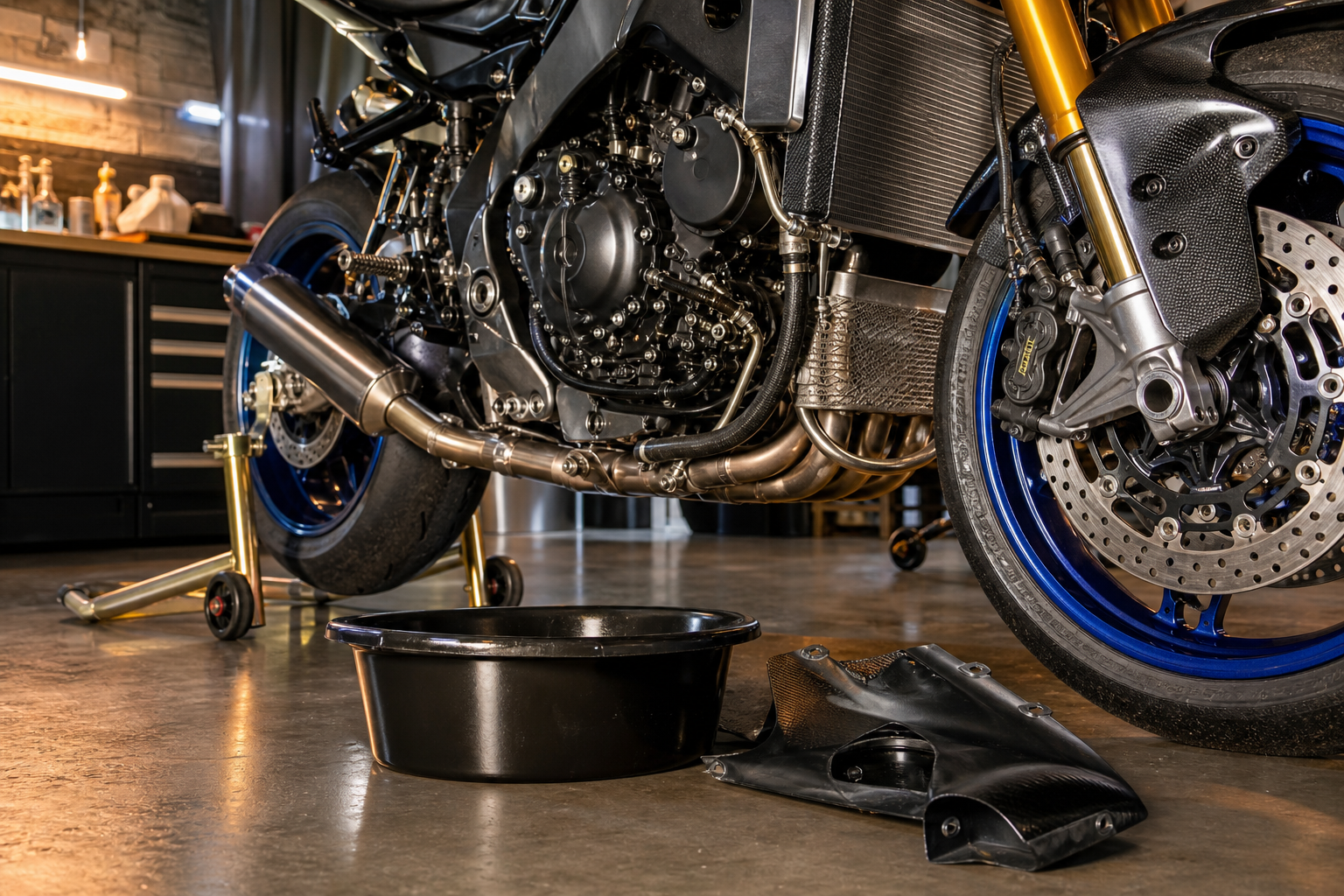
We set sag and damping for your weight and pace, safety-wire the drain and fill plugs and oil filter, flush to a high-temp brake fluid, and go over the whole bike so nothing shakes loose at pace. First track day through club racing.
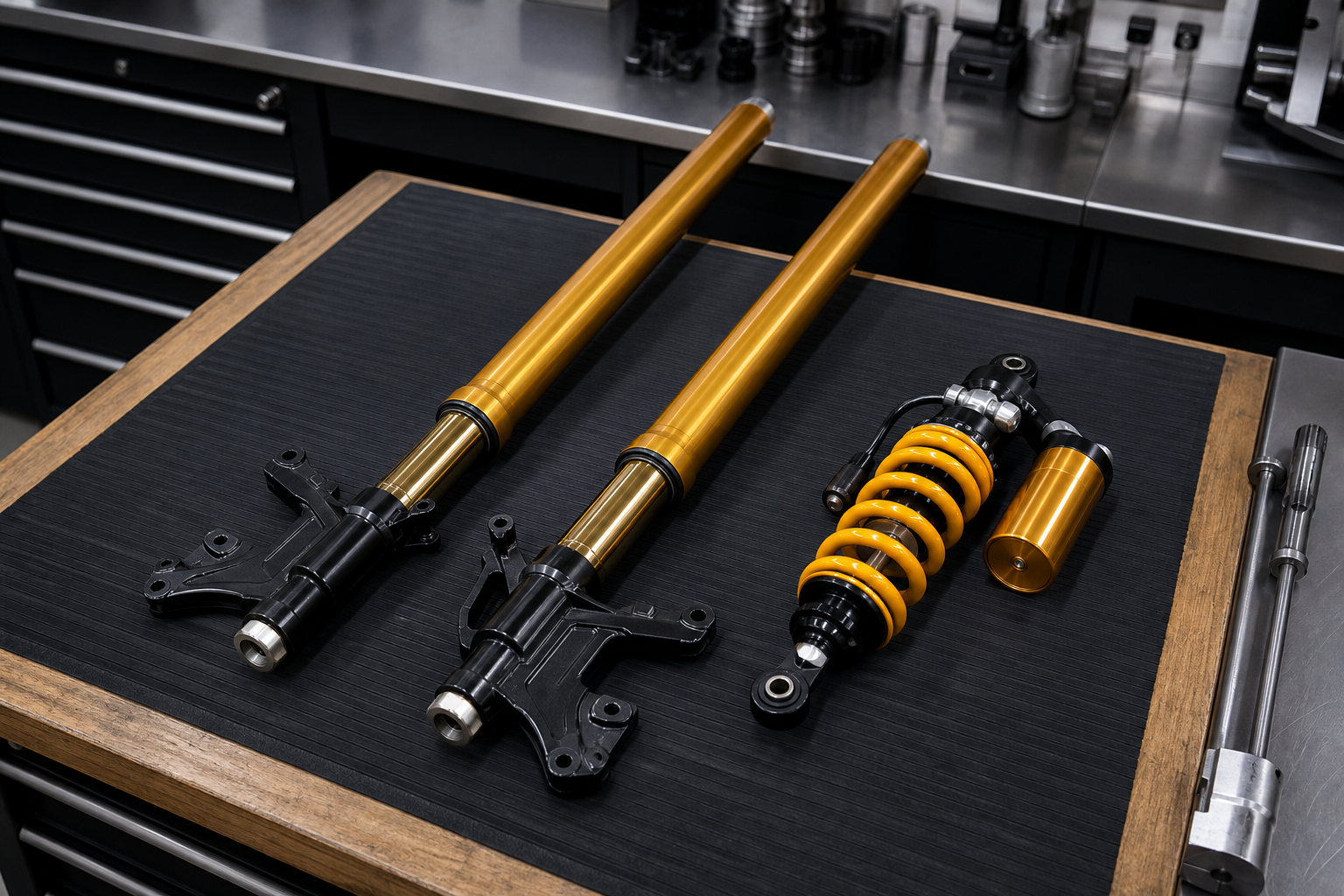
Factory suspension is valved for an average rider you probably aren't. We handle full fork and shock service, revalving, and rebuilds — Öhlins and K-Tech included — and spring the bike to your actual weight so it uses its travel.
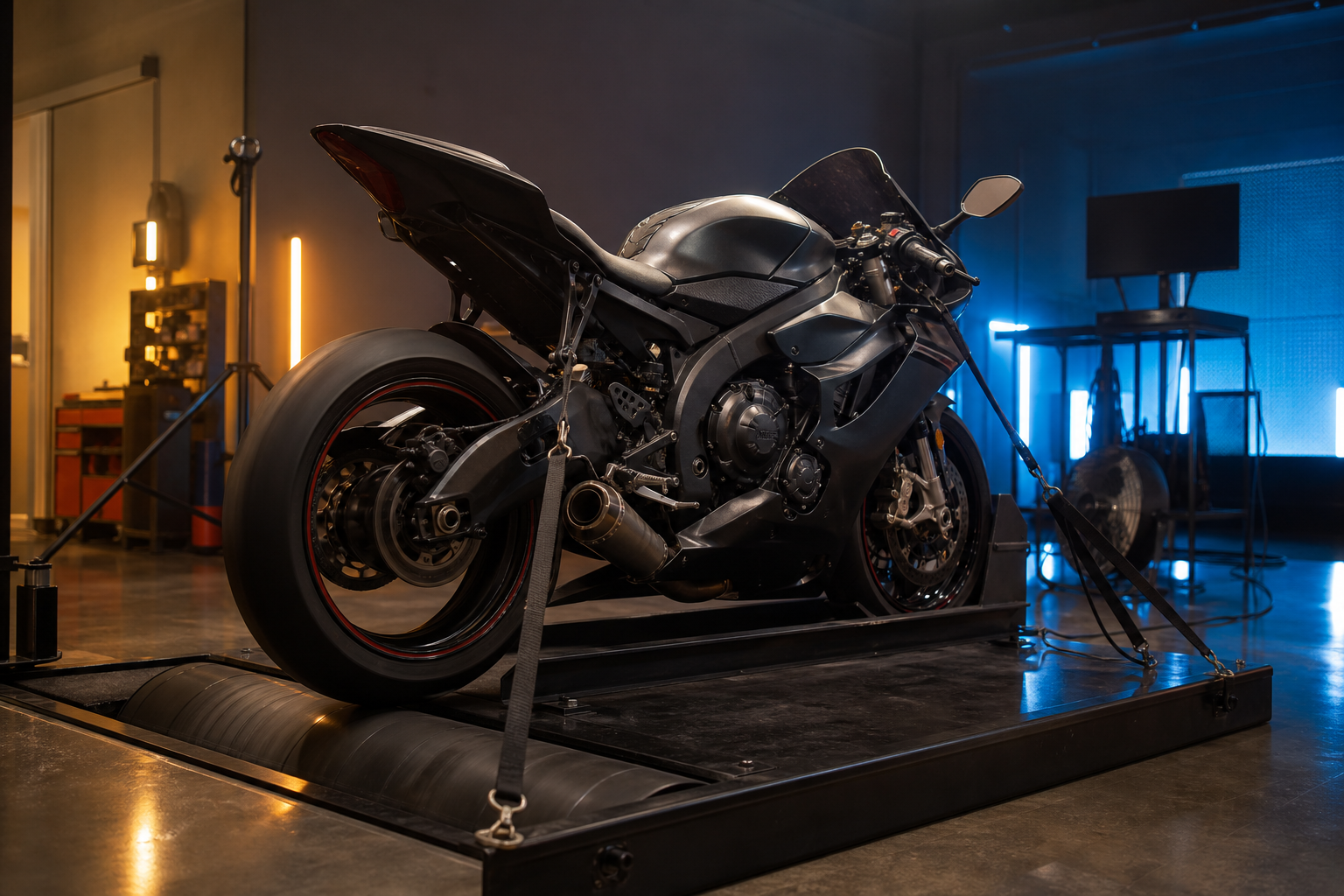
Stock maps are strangled by emissions. We run ECU flash and dyno tuning in-house with Woolich, FTECU, and Dynojet — verified on our own dyno, not a mailed file — to sharpen throttle, kill decel popping, and fuel around your exhaust.
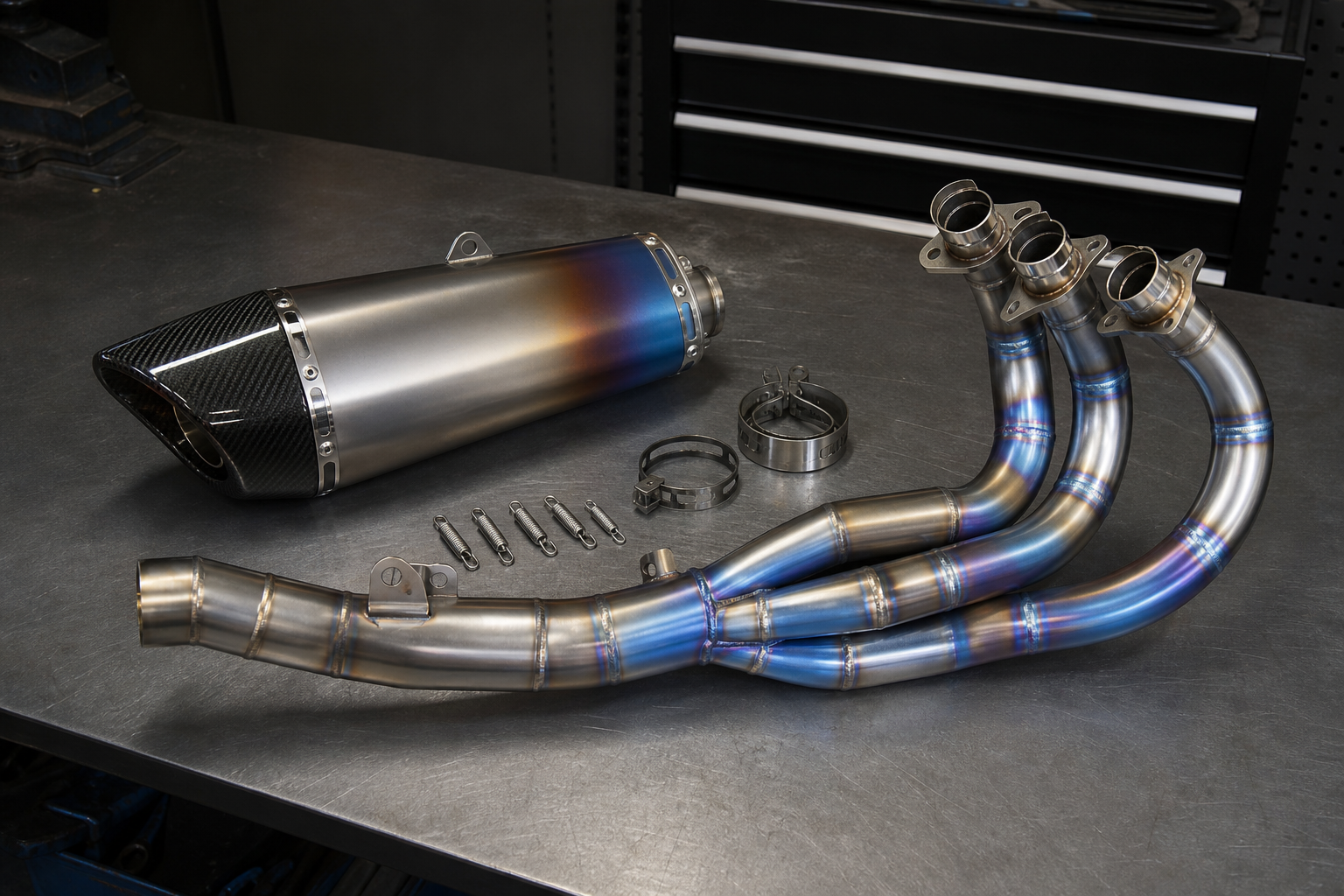
Slip-ons and full systems from Akrapovič, Yoshimura, and SC-Project drop weight and free up airflow — but a full system needs a tune. We install the exhaust and tune the fueling together so you dyno the combination once.
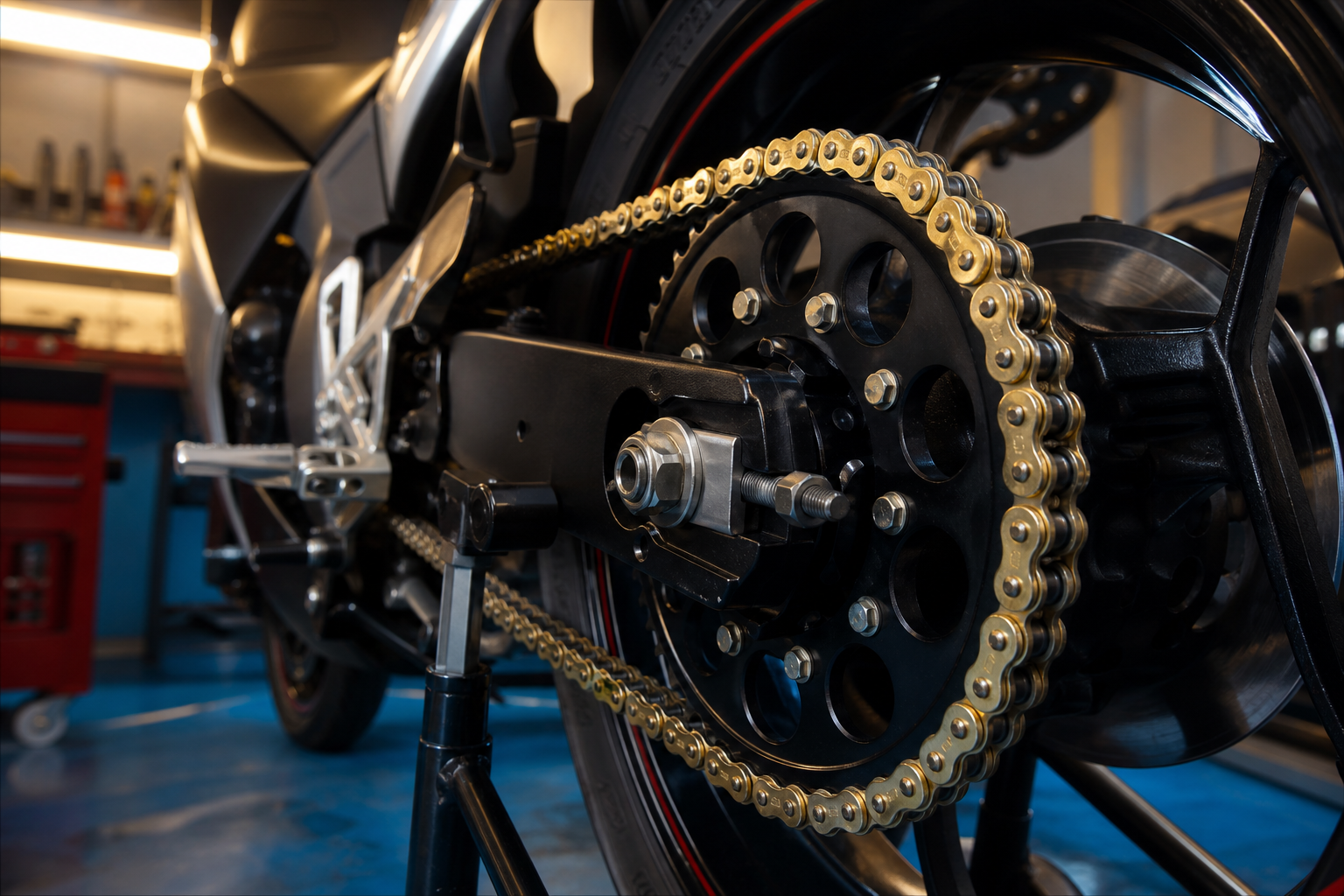
Sport bikes eat chains — hard launches, high revs, and salt air are a bad combination. We do chain, sprocket, and wheel bearing service with RK and DID chains and can regear for the acceleration that actually matters on the street.
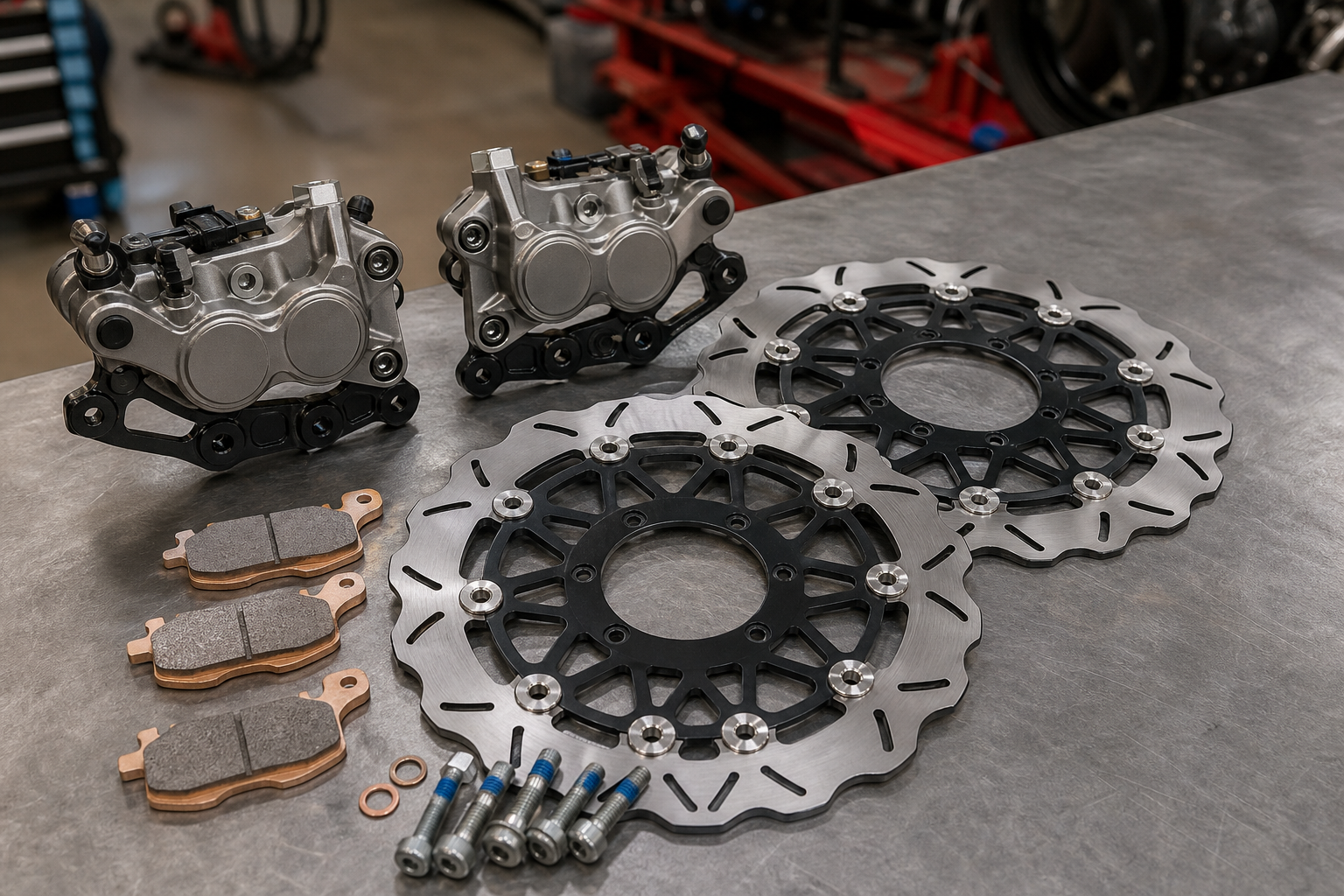
The brakes are the last thing you want fading mid-session. Full brake service and upgrades — EBC and Galfer sintered pads, stainless HEL lines that kill the spongy factory feel, Brembo master and caliper work, high-temp fluid.
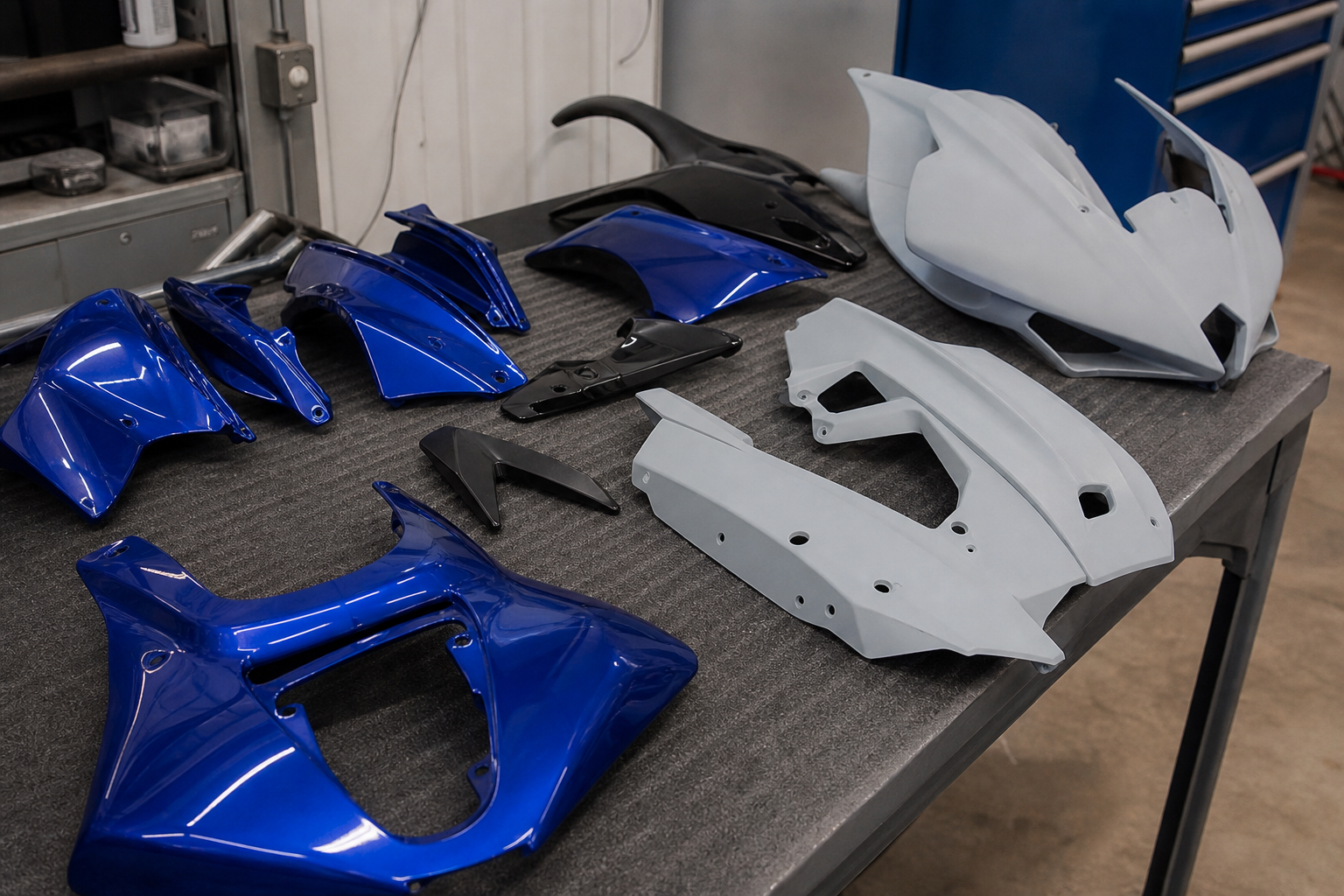
A low-side does more than crack plastic. We handle crash, collision, and fairing repair — bodywork, bent levers and rearsets, and the subframe and fork inspection a body-only shop skips. We work with insurance.
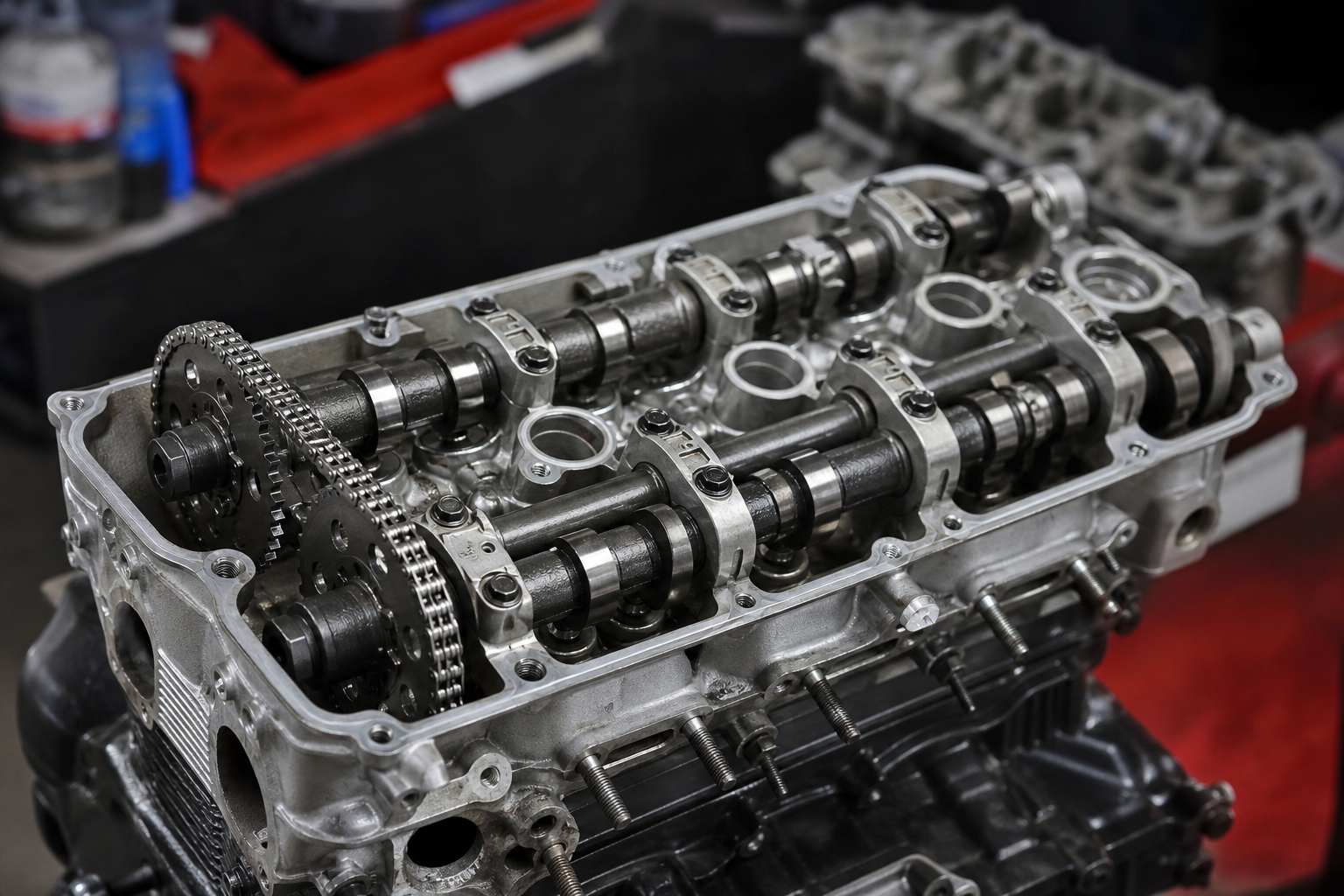
High-revving engines run tight valve clearances that want checking on schedule. We handle valve inspections and shim adjustments as part of major-interval maintenance — inline-fours and Ducati Desmo — and only shim what's out of spec.
Sport bikes are built for one thing: performance at the limit. Sharp steering geometry, high-revving engines that make peak power near redline, aggressive brakes, and a chassis that rewards precise inputs. That focus is why they're so satisfying to ride well — and why they punish neglect faster than any other category. A cruiser forgives a tired chain and soft suspension for years; a sport bike just gets vague, slow, and eventually unsafe.
Every service decision on one of these bikes should protect or sharpen that edge, not blunt it. The right spring rate instead of the factory guess. A dyno-verified tune instead of a downloaded map. Sintered pads and steel lines instead of whatever's cheapest. Done right, the bike feels tighter and more alive than the day you bought it. Done lazily, it feels like every other tired sport bike on Craigslist — and we're not interested in building the second one.
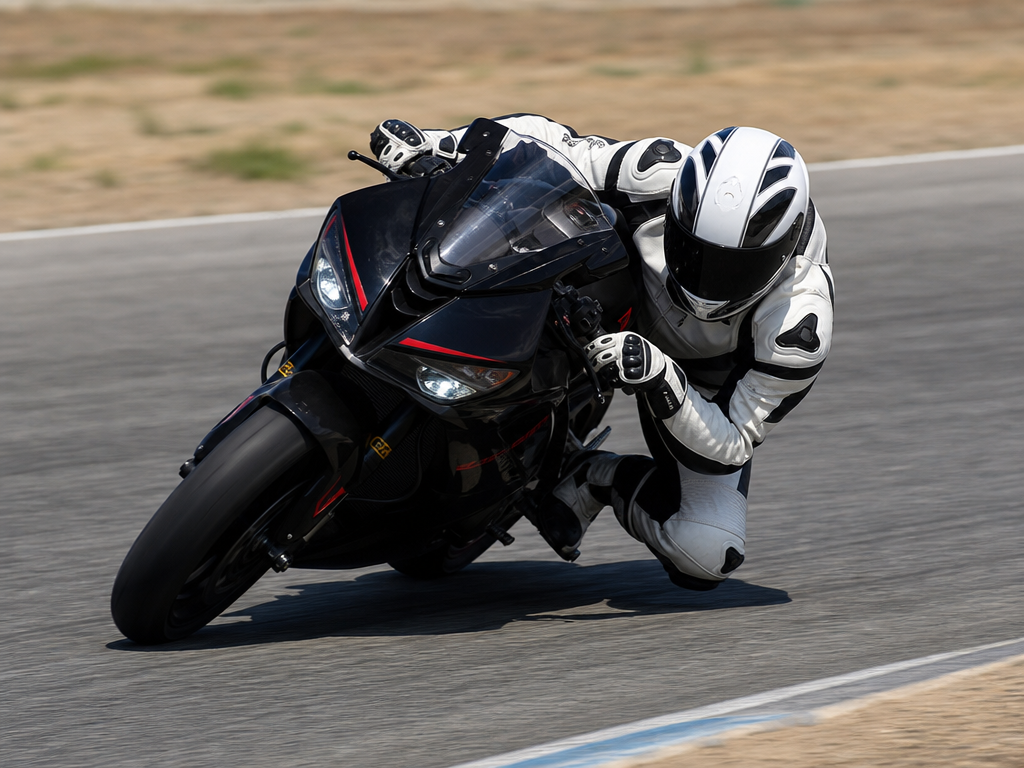
After fifteen years of Miami sport bikes rolling through the door, the same handful of issues account for most of the work. None are mysteries — they're the predictable result of how these bikes get ridden, and every one is a specific service, not a vague "it needs work."
The single biggest thing that separates a sport bike that works from one that fights you isn't horsepower — it's whether the bike is set up for you and your riding, or for the anonymous average rider the factory assumed. Two riders on identical GSX-Rs can have completely different bikes underneath them depending on suspension, gearing, tune, and rubber. Here's how we think through it, and how you should too before you spend money.
Everything flows from this. A bike ridden hard on Miami streets and causeways wants a setup that's compliant over expansion joints, brakes that come up to temperature quickly, and a tire that grips when it's cold at a stoplight. A dedicated track bike wants stiffer springing, more aggressive damping, and a tire that lives in a hotter operating window. Most riders are honestly "80% street, a few track days a year" — a real, tunable target. The mistake is buying a full track setup for a bike that mostly sees traffic, then wondering why it's harsh and greasy on cold tires.
Before a single performance dollar makes sense, the suspension has to be set to you. That starts with sag — how much the bike settles under its own weight and under yours in full gear. If your sag is wrong, every other adjustment is a guess stacked on a guess. A rider 40 pounds over or under the factory assumption needs different springs, not just different clicker settings, and no amount of preload will fix a spring that's fundamentally wrong. This is the cheapest, highest-impact change on the whole bike, and it's the first thing we do in a suspension setup.
An ECU flash is worth real money in throttle response and drivability, especially once you've opened up the exhaust. But sequence matters. A slip-on alone usually doesn't demand a tune; a full system leans the bike out and genuinely needs one to run safely. If you're planning both an exhaust and a flash, do them together so we dyno-tune the finished combination once. Flashing a bone-stock bike gets you cleaner fueling and no deceleration popping — nice, but modest. Flashing around a full exhaust is where the bike transforms.
The right tire is the one that fits how you ride, in the tire selection guide sense — a dual-compound sport tire for mixed street use, a track-day compound only if you're actually generating the heat to use it. Gearing is the same logic: dropping a tooth on the countershaft or adding teeth out back trades a top speed you'll never use for acceleration you'll feel every day. And if you're shopping for a used sport bike, get it inspected first — these bikes hide crash damage better than anything else on two wheels, so a pre-purchase inspection is the difference between buying a clean bike and buying someone's straightened-out mistake.
Sport bike work comes with its own vocabulary, and knowing it helps you talk to any shop — and judge whether they actually know their craft. Here are the terms that come up most when we spec a setup or a tune.
How far the suspension compresses under the bike's own weight (static sag) and under the bike plus rider in full gear (rider sag). It's the foundation of every suspension setup — targets are usually around 30–35mm of rider sag at the rear. Wrong sag means the spring rate is wrong, and no clicker adjustment fixes that.
The adjustment that changes ride height and sag by pre-compressing the spring — but not the spring's actual stiffness. Preload sets where in the travel the bike rides; it can't turn a soft spring into the right one. Riders often chase preload to fix a spring-rate problem and never get there.
Compression damping controls how fast the suspension compresses over a bump; rebound controls how fast it extends back. Too little rebound and the bike pogos; too much and it packs down and chatters. Adjustable forks and shocks let us dial both to your pace — the biggest ride-quality lever after springs.
A quickshifter cuts ignition for a fraction of a second so you can upshift without the clutch; an auto-blipper matches revs on downshifts. Many bikes have the hardware but leave features locked or crude from the factory — an ECU flash can enable, smooth, or refine them.
A clutch that partially disengages under hard engine braking, so aggressive downshifts don't lock or hop the rear wheel into a corner. Standard on most modern sport bikes; when it's worn or set up wrong, you get rear-wheel chatter on corner entry that unsettles the whole bike.
The PAIR (secondary air) system injects air into the exhaust to burn off unburnt fuel for emissions — and it's the usual cause of loud popping on deceleration, especially with an aftermarket exhaust. We address it in the flash rather than with a band-aid block-off plate.
Softer compounds grip harder but wear faster and want heat to work; a track tire is dangerous cold on the street. A "heat cycle" is one full warm-up and cool-down — track tires lose peak grip after a number of them, which is why a "one track-day-old" tire isn't as fresh as the tread suggests.
The countershaft (front) and rear sprocket tooth counts that set your overall gearing. Fewer front teeth or more rear teeth quicken acceleration and lift the tach at a given speed; the reverse relaxes it. A cheap way to make a bike feel stronger where you ride — part of chain and sprocket service.
We see the results of the other shops' shortcuts every week, usually when a rider brings us a bike to fix after someone else "tuned" or "set up" the thing. These aren't nitpicks — they're the difference between a bike that's genuinely dialed and one that just got an invoice. Here's what to watch for.
Plenty of shops will load a generic file for your model and call it a tune. But your bike, your exhaust, your altitude, and Miami's air aren't the average the file assumes — and a lean map is how engines get hurt. How we do it: every flash is verified on our own dyno and adjusted to your actual bike and exhaust, so the fueling is right across the whole range, not just on paper.
Turning adjusters is easy and looks like work. But if the spring rate is wrong for your weight, no clicker setting will ever make the bike right — you're just choosing which way it's wrong. How we do it: we set sag first, correct the spring rate to your gear-on weight, and then tune damping. The foundation before the fine-tuning, in that order, every time.
New fairings and a straight lever make a crashed bike look fixed. But a low-side can tweak a subframe, bend a fork leg, or knock the frame out of true — and none of that shows through fresh plastic. How we do it: our collision work checks fork straightness, subframe, and frame alignment before we sign off, so you're not riding a hidden problem at speed.
A sport engine will run fine right up until tight valves start burning and you're into a top-end job. The check is cheap insurance; the failure is not. How we do it: we track your valve interval against your specific platform, inspect on schedule as part of major service, and only shim what's genuinely out of spec — no upsell, no guesswork.
The specialist shops that can do this work often make it miserable to access: months-long waits, double the hourly rate, and a cold shoulder if the bike came from somewhere else. How we do it: we run the same capability at dealer throughput and a fair rate, and we service your bike wherever you bought it. That's the whole point — any motorcycle, any origin, no attitude.
Riding a sport bike in Miami is a different job than riding one in Denver or the Northeast, and it changes how these bikes should be serviced. The first factor is simple: we ride year-round. There's no winter layup here, which means Miami sport bikes rack up heat cycles on tires, oil, and brake fluid that a seasonal bike never sees. Fluids a northern rider changes "every spring" need a calendar of their own down here, and a tire that looks fine on tread depth may be well past its useful grip after a full South Florida season.
Then there's the salt air. We're a coastal city, and the humidity carries salt inland far past the beach. It's brutal on the parts already working hardest — exposed chains and sprockets corrode and stiffen, fasteners seize, radiator fins and brake calipers pit. It's why we push chain care and drivetrain inspection harder here than a shop in a dry state would, and why we use quality hardware when we button a bike back up. The cheap stuff doesn't survive a Miami summer.
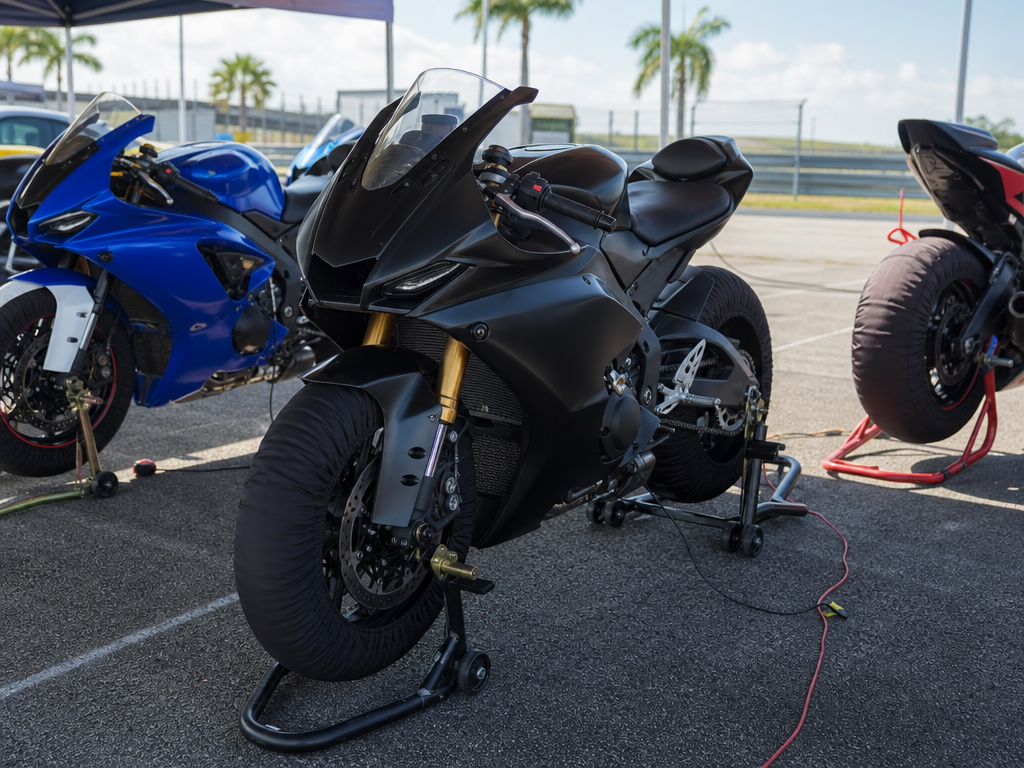
The scene itself shapes the work too. Miami is canyon-less — there are no mountain roads to carve — so the performance appetite channels into two places: the street and the track. Homestead-Miami Speedway and the region's road courses run track days that draw a serious crowd, and we prep a steady stream of bikes for them: sag set, safety-wired, track rubber mounted, brakes bled. On the street side, the causeways, Key Biscayne, and the early-morning runs toward the Keys are where these bikes actually get ridden, hard and often. And because ethanol pump fuel sitting in a tank through a humid week goes off faster than people expect, we see more fuel-system and cold-start gremlins than you'd think for a place that never gets cold. All of it feeds back into how we set a bike up: for a rider out in the heat and the salt every week of the year, not for a spec sheet written somewhere it snows.
Sport engines spin higher and run tighter tolerances than almost anything else we service, and Miami's year-round riding stacks the miles on fast. That combination means the intervals that matter — oil and filter, chain adjustment and lubrication, brake fluid, coolant, and valve inspections — come up sooner in real time than the owner's manual implies, because the manual assumes a temperate climate and a winter break you don't take here.
We don't believe in blanket-servicing a bike to run up an invoice, and we don't believe in ignoring a due valve check because the bike "feels fine." We match the schedule to your specific platform and how you ride, keep records so nothing gets missed, and tell you what's actually due versus what can wait. The full breakdown of what each interval covers lives on our maintenance and major service page.
You don't have to do everything at once — the smart way to build a sport bike is in stages, where each step is complete and rideable on its own and sets up the next. Here's the path we walk most riders through, from a first meaningful upgrade to a genuine track weapon.
A slip-on exhaust and a proper ECU flash — the highest value-per-dollar step on any sport bike. Sharper throttle, cleaner fueling, no deceleration popping, and a real gain you feel in normal riding, all while staying street-legal.
A full exhaust system with a dyno-verified custom tune, plus brake lines and pads so the bike stops as hard as it now goes. This is where the bike stops feeling stock and starts feeling built.
Full suspension revalve and springing to your weight, track-compound tires, gearing dialed to the course, safety wiring, and a pre-track inspection. Now it's a bike you can lean on at Homestead with confidence.
Not sure which stage fits your riding or your budget? That's the conversation we have every day — tell us how you ride and we'll map the honest version of it, not the maximum invoice.
We service the full sport and supersport landscape, from track-focused liter bikes to premium Italian twins. These are the core platforms we know inside out — each with its own service page covering model-specific work.
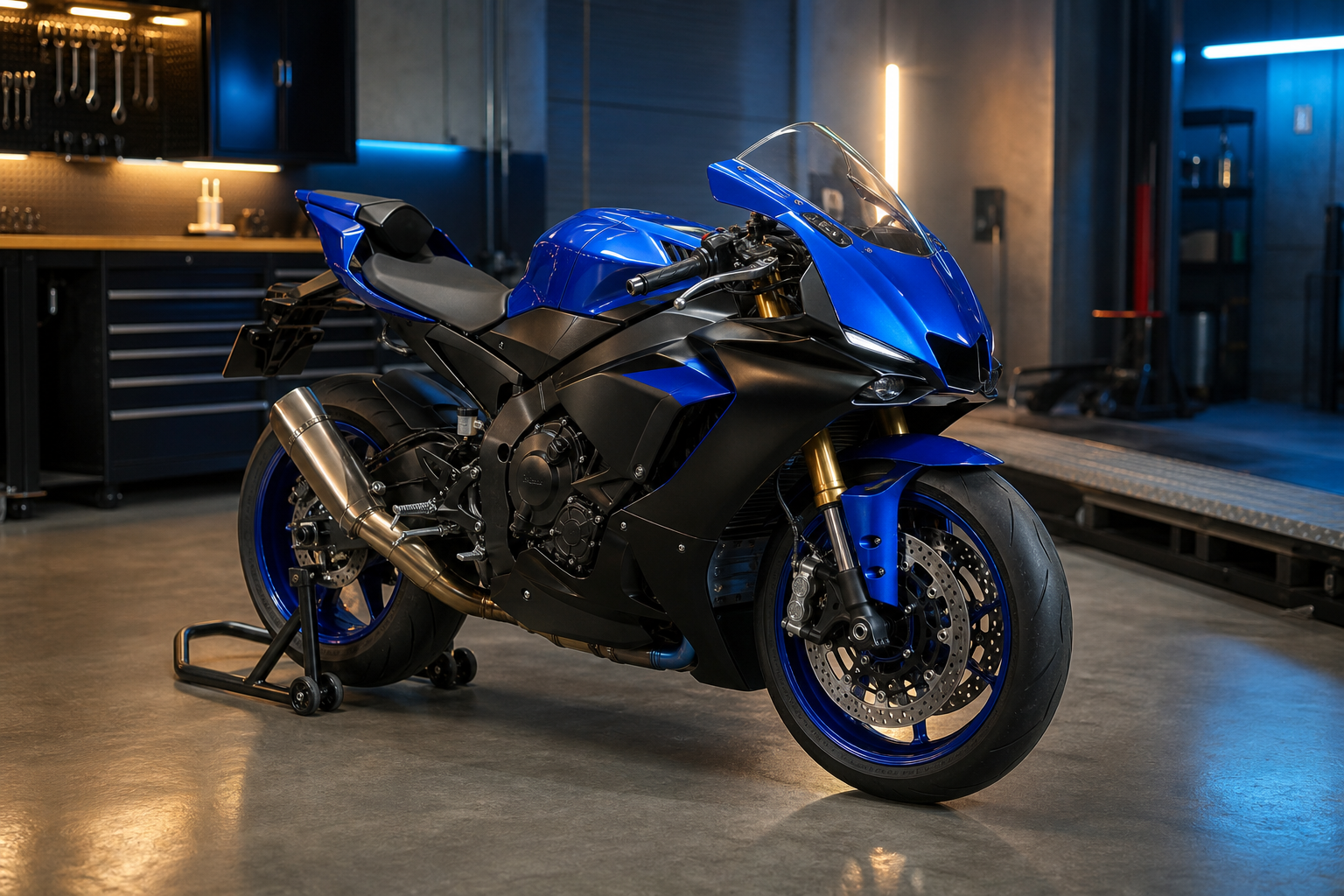
R1, R6, and R7 service, crossplane-engine tuning, and track setup for one of the most track-ridden platforms in Miami.
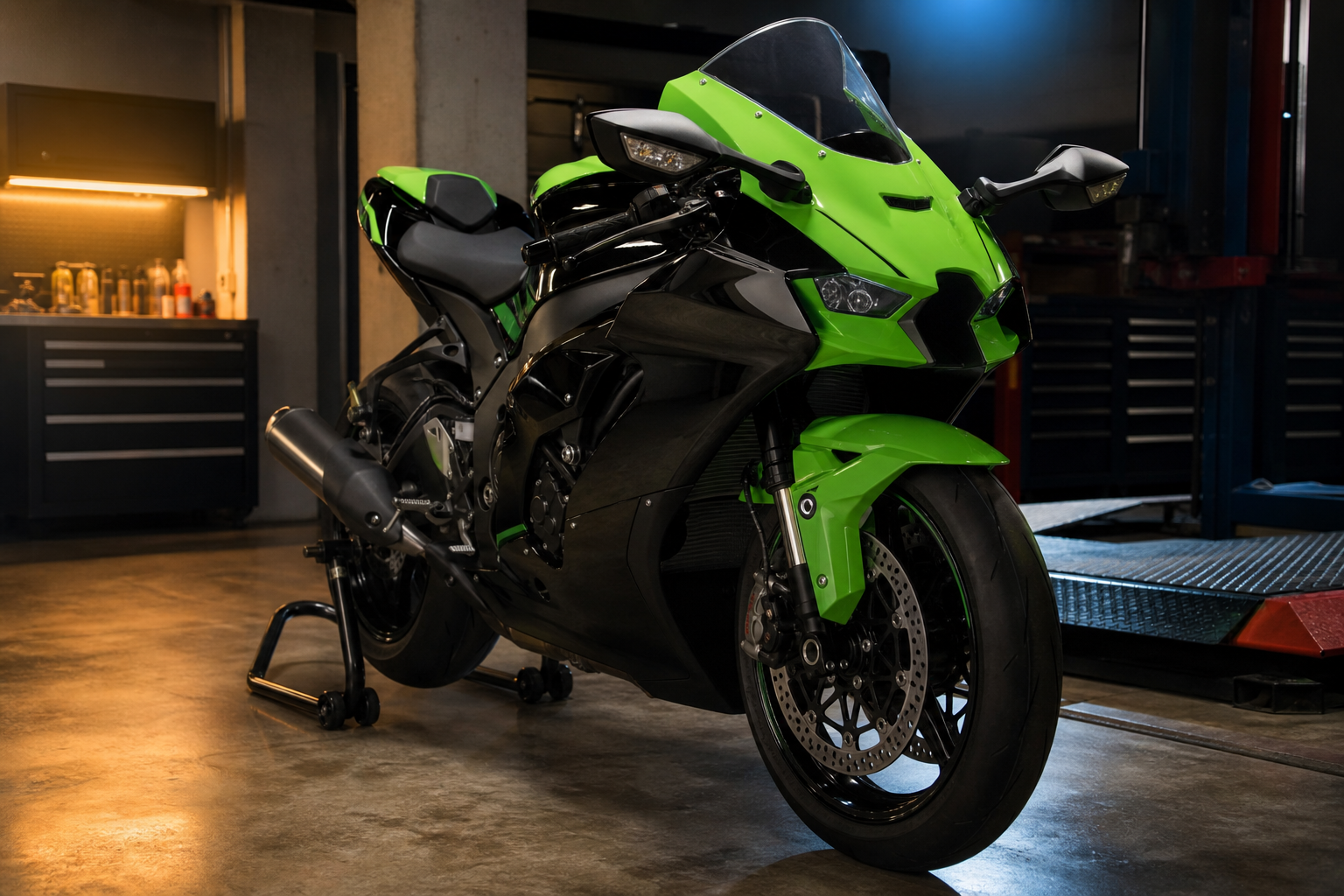
ZX-6R and ZX-10R service, flash tuning, and suspension work for Kawasaki's supersport and superbike line.
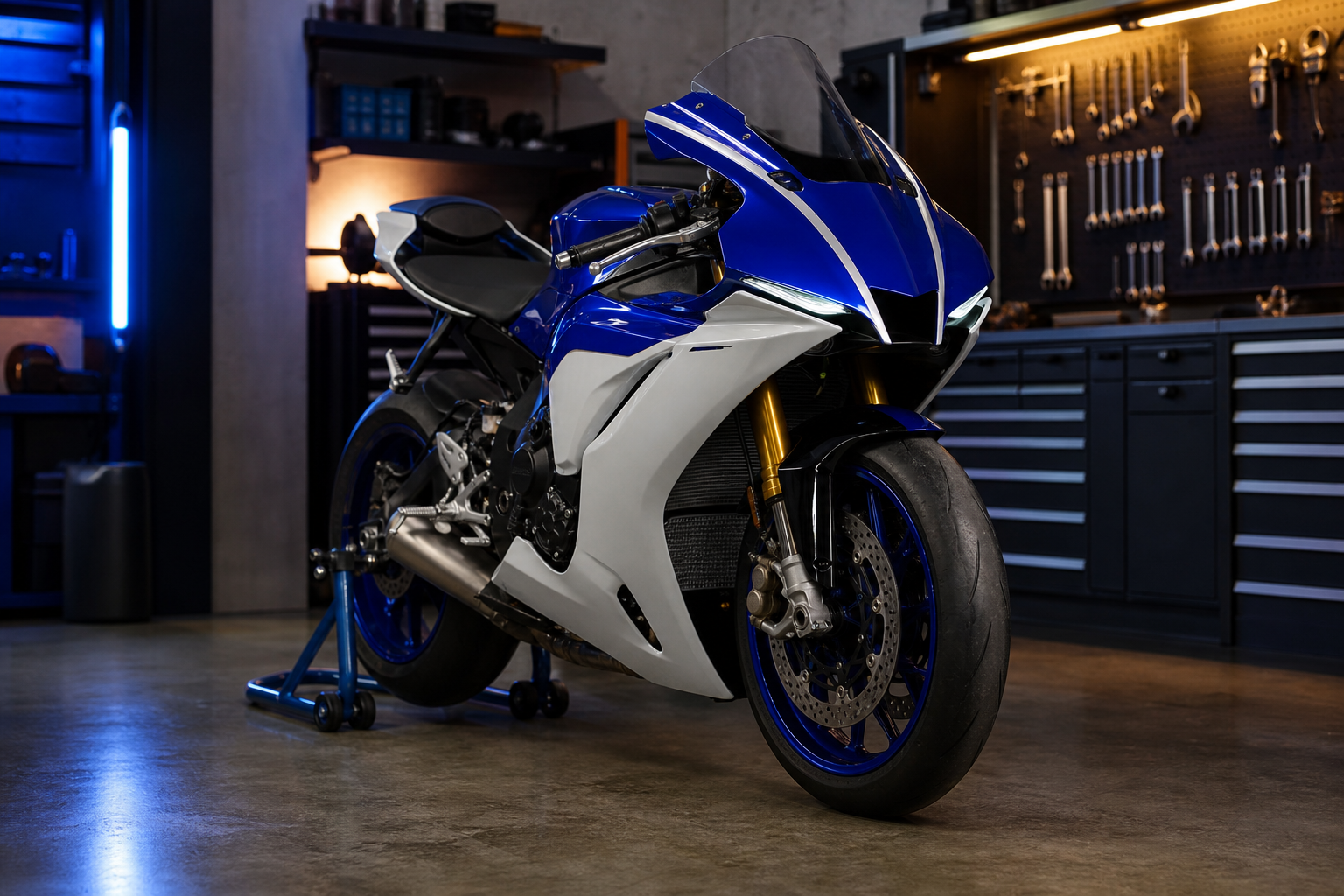
The long-running GSX-R 600, 750, and 1000 — serviced, tuned, and geared for how they're actually ridden here.
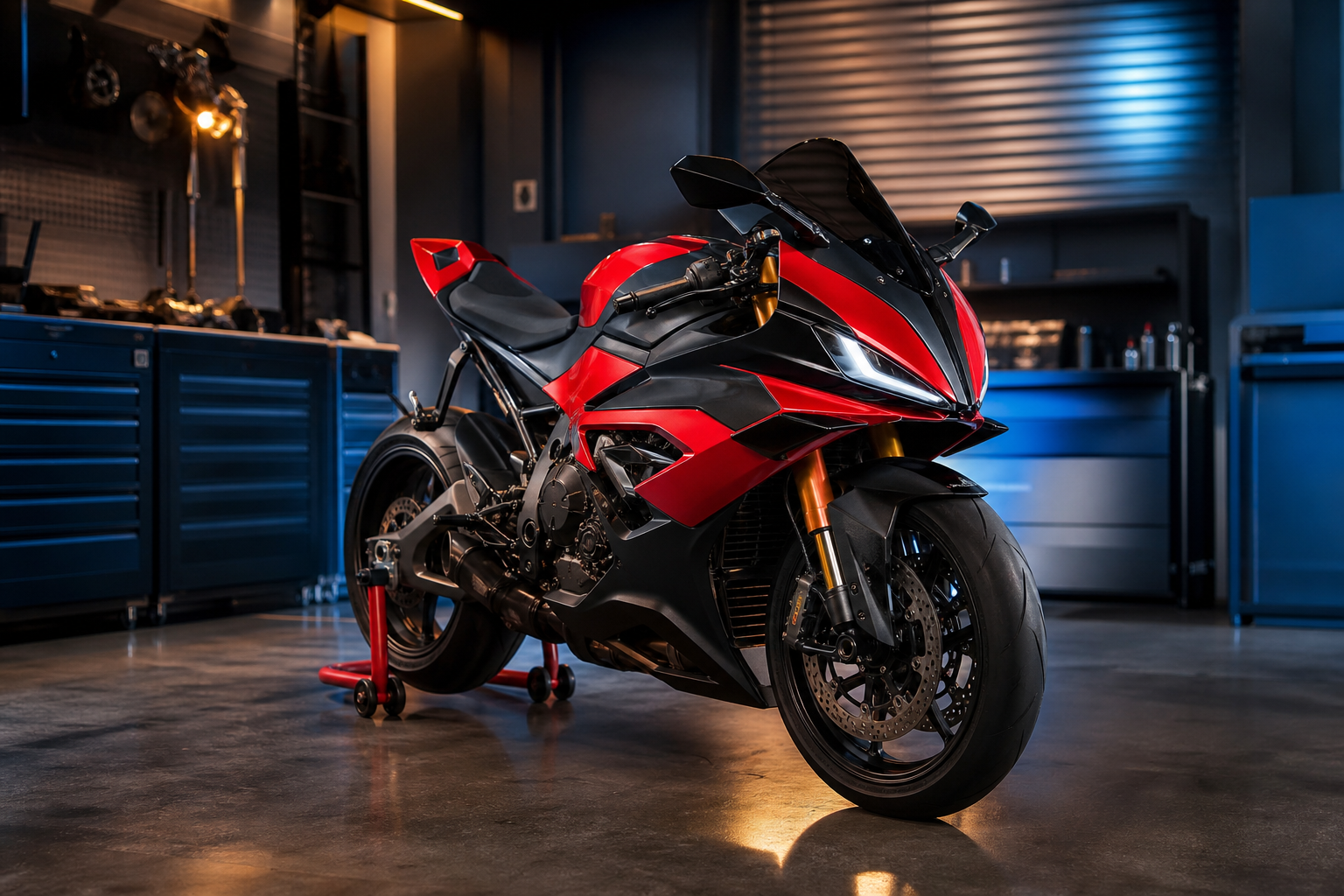
CBR600RR, CBR1000RR, and the broader CBR lineup — reliable platforms that reward proper setup and maintenance.
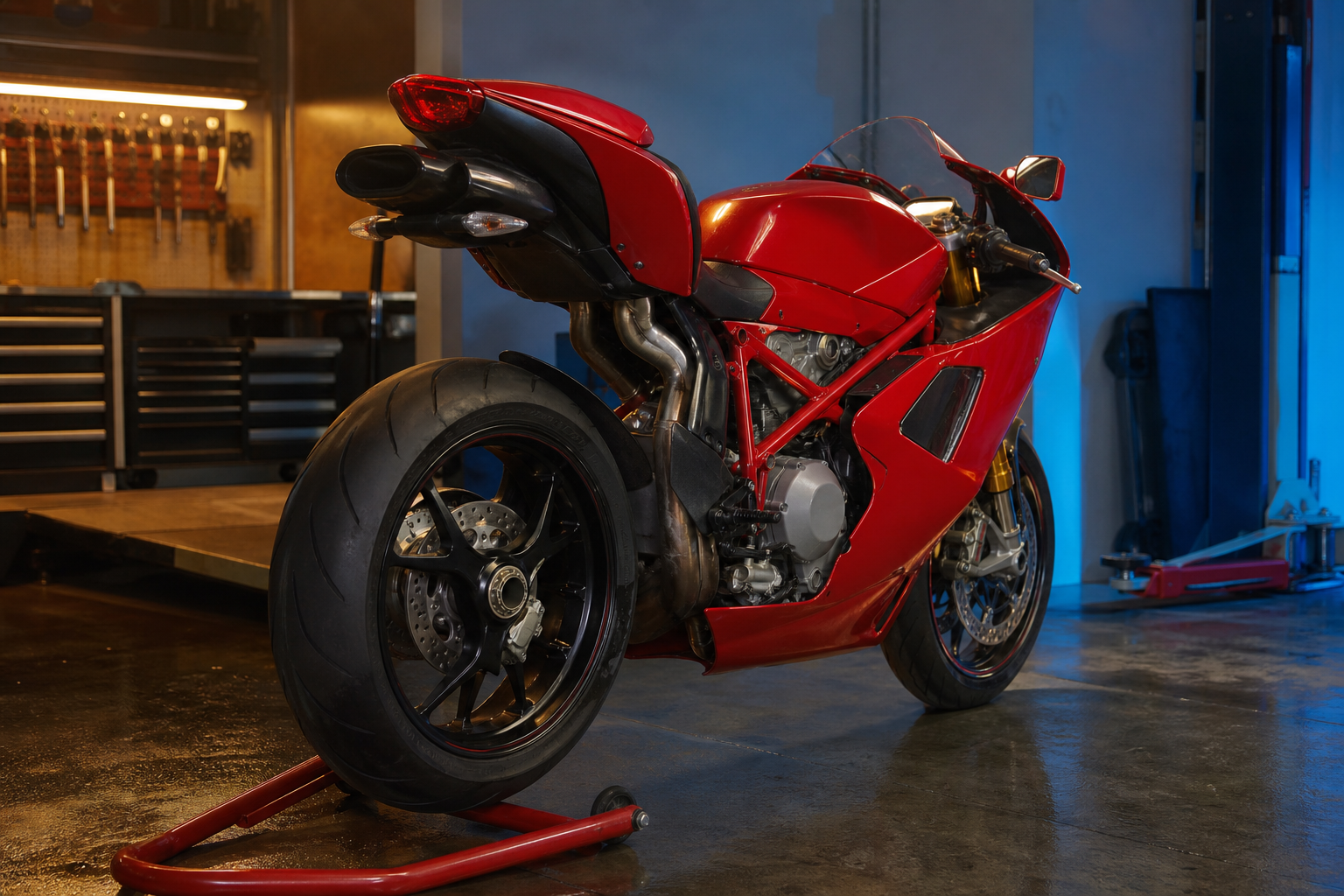
Premium sport and hyper-naked service, including Desmodromic valve work, for Ducati's core Miami lineup.
No mystery, no runaround. Sport bike work should be as precise as the bikes themselves, and that starts with how the job is quoted and communicated. Here's how a service goes at Biscayne Moto Works, whether it's a chain and tires or a full Stage 3 build.
We start with how you ride and what the bike's doing. A quick assessment tells us what it actually needs versus what can wait.
You get a clear scope and quote before we start — no surprise line items, no "while we were in there" without a call.
Tuning verified on the dyno, suspension set to your weight, everything torqued to spec. Updates as we go, not silence.
We road-test, confirm it's right, and walk you through what we did — so you leave knowing exactly what changed and why.
We didn't build this reputation on a sales floor — we built it one dialed-in bike at a time, with riders who came in skeptical after being burned by a wait, a bad tune, or a "didn't buy it here" runaround somewhere else. Here's what a few of them had to say.
"Took my ZX-10R here after a specialist quoted me a three-month wait just for a flash. Biscayne had it dyno-tuned in a few days and it pulls cleaner everywhere — crisp off idle, no flat spot in the midrange, and the deceleration popping is gone. It finally feels like the bike I thought I bought."
— Marcus D., Kendall · ZX-10R
"I'm 210 in gear and my R6 always felt like it was riding someone else's suspension. They set my sag, resprung the forks to my actual weight, and revalved the shock — first shop that measured instead of just turning clickers and handing it back. Completely different bike on the causeway now."
— Priya S., Miami Beach · Yamaha R6
"Low-sided my Panigale and thought it was totaled. They caught a tweaked subframe the first estimate from another shop completely missed, handled the insurance side for me, and gave it back straight and tight. I didn't even buy the bike there — didn't matter to them one bit. Customer for life."
— Anthony R., Doral · Ducati Panigale
Sport bike specialists can genuinely do the work — but they book out for months, charge a premium hourly rate, and too often make you feel like a second-class customer if the bike didn't come from their floor. The big multi-line dealers are the opposite problem: they'll take anyone's bike, but real sport tuning and suspension work isn't their strength, and service sits in the shadow of the sales department.
We built the lane in between on purpose. Real dyno and suspension capability, run at dealer throughput and a fair rate, with the sport knowledge to back it up — bought here or bought anywhere else. That's not a slogan; it's the reason a rider chooses us over the two easier-to-find options. You get the specialist's skill without the specialist's wait, markup, or attitude.
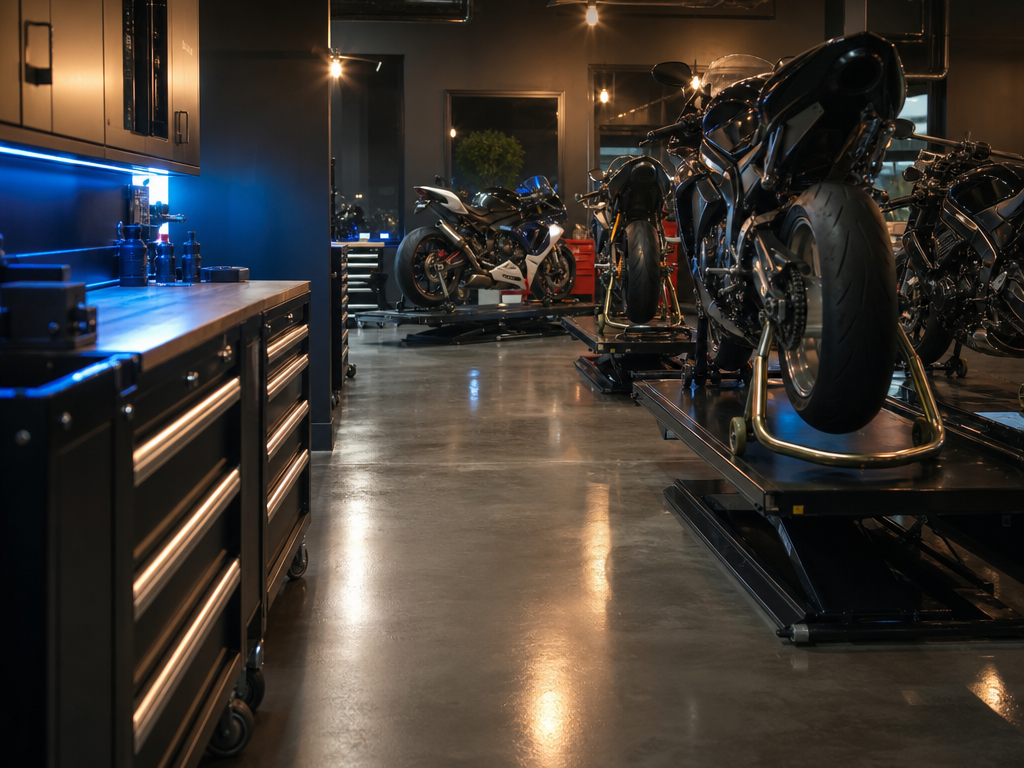
We service what you ride — regardless of where you bought it.
We service Yamaha R-Series (R1, R6, R7), Kawasaki Ninja ZX (ZX-6R, ZX-10R), Suzuki GSX-R, Honda CBR (600RR, 1000RR), and Ducati Panigale and Monster, plus other major sport and hyper-naked platforms. We're a full-service shop with dyno and suspension capability in-house, so you get real sport bike work without hunting for a single-brand specialist.
Yes. We do full track-day prep — sag and damping setup for your weight and pace, tire selection and fitment, safety wiring of drain and fill plugs, brake fluid flush, and a pre-track inspection so nothing lets go at Homestead. You don't need to book a specialist months out; we turn track prep around on a normal service schedule.
We can. We run flash and dyno tuning in-house using platform tools like Woolich Racing, FTECU, and Dynojet, verified on our dyno rather than a generic map emailed to you. A flash wakes up throttle response, kills deceleration popping from the PAIR system, and lets us dial fueling around your exhaust. See our performance and dyno tuning page for the full breakdown.
Ideally we tune around the exhaust you're actually running. A slip-on alone usually doesn't require a full tune, but a full system leans out the fueling and really wants a flash to run right and safely. If you're planning both, do the exhaust and the flash together so we dyno the finished combination once instead of tuning twice.
Yes, and it's one of the most common reasons sport riders find us. A low-side can crack fairings, bend levers and rearsets, and hide subframe or fork damage under fresh plastic. We inspect the structure, not just the bodywork, and we handle insurance-covered work. See our crash, collision and fairing repair page for how we approach it.
It depends on the platform, but sport engines spin higher and run tighter valve clearances than most bikes, so the checks matter. Many inline-fours want a valve inspection in the 16,000 to 26,000-mile range, and Ducati's Desmodromic system is on its own schedule entirely. We check the interval against your specific model as part of major service and only shim what's actually out of spec.
Absolutely — sport bikes hide crash history better than any other category, because a repainted fairing can cover a bent subframe, tweaked forks, or a dropped-then-straightened frame. Our pre-purchase inspection checks the structure, the forks, the chain and sprockets, and the ECU history so you know what you're buying before the money changes hands.

Based on Biscayne Blvd in Miami's MiMo corridor, we serve sport riders throughout Miami-Dade — from the causeway crowd to the Homestead track-day regulars.
Flash, suspension, track prep, or a full stage build — tell us how you ride and we'll build the honest version of it.
START YOUR BUILD