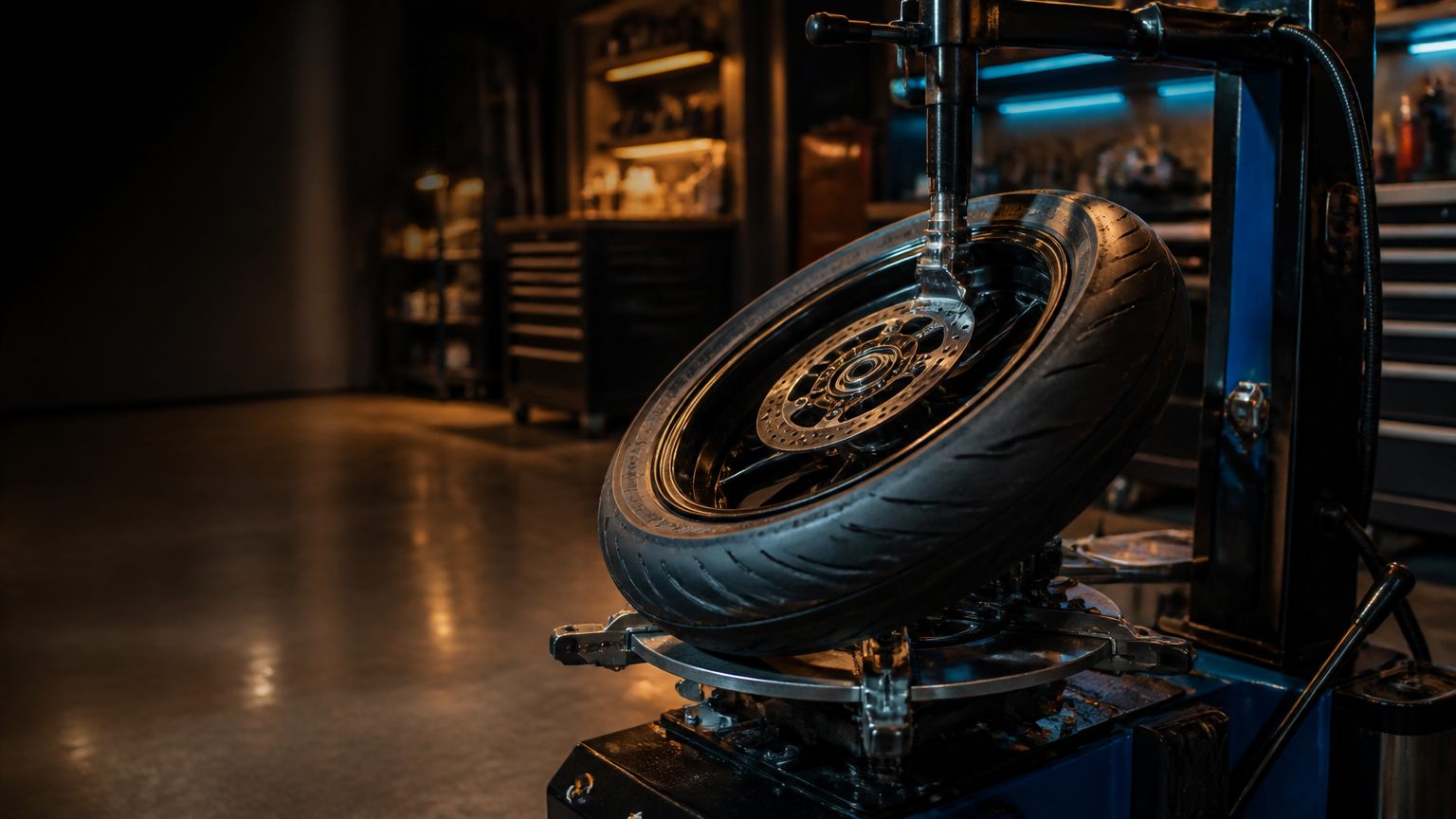
Tire service is the most frequent reason a rider walks into any motorcycle shop — and it's also the easiest service to do carelessly. A poorly balanced wheel or an incorrectly seated bead doesn't just wear unevenly; it changes how the bike steers, how it holds a line through a sweeper, and how confident you feel grabbing the front brake at a light. Two contact patches the size of your palm are the only thing connecting you to the road. We don't treat that like a swap-and-go.
For a lot of riders, a tire change is the first job they ever bring us. It's also the fastest way to find out whether a shop is paying attention. That's why every tire job here runs as a full wheel-off inspection, not just a rubber replacement — and it's the same standard whether you're a first-time visitor or a fifteen-year regular. If this is how we handle the routine work, you already know how we'll handle the big stuff. That's the whole idea behind our Miami service department, and it's exactly why so many riders start here with tires and never leave. Bought the bike somewhere else? Doesn't matter — we service any motorcycle.
"Tires" isn't one job — it's a different job on a bagger than it is on a supersport, and different again on a big-tank adventure bike. We stock and mount across all four riding categories, plus the repair, valve, and wheel work that lives right next to a tire change. Here's the full menu.
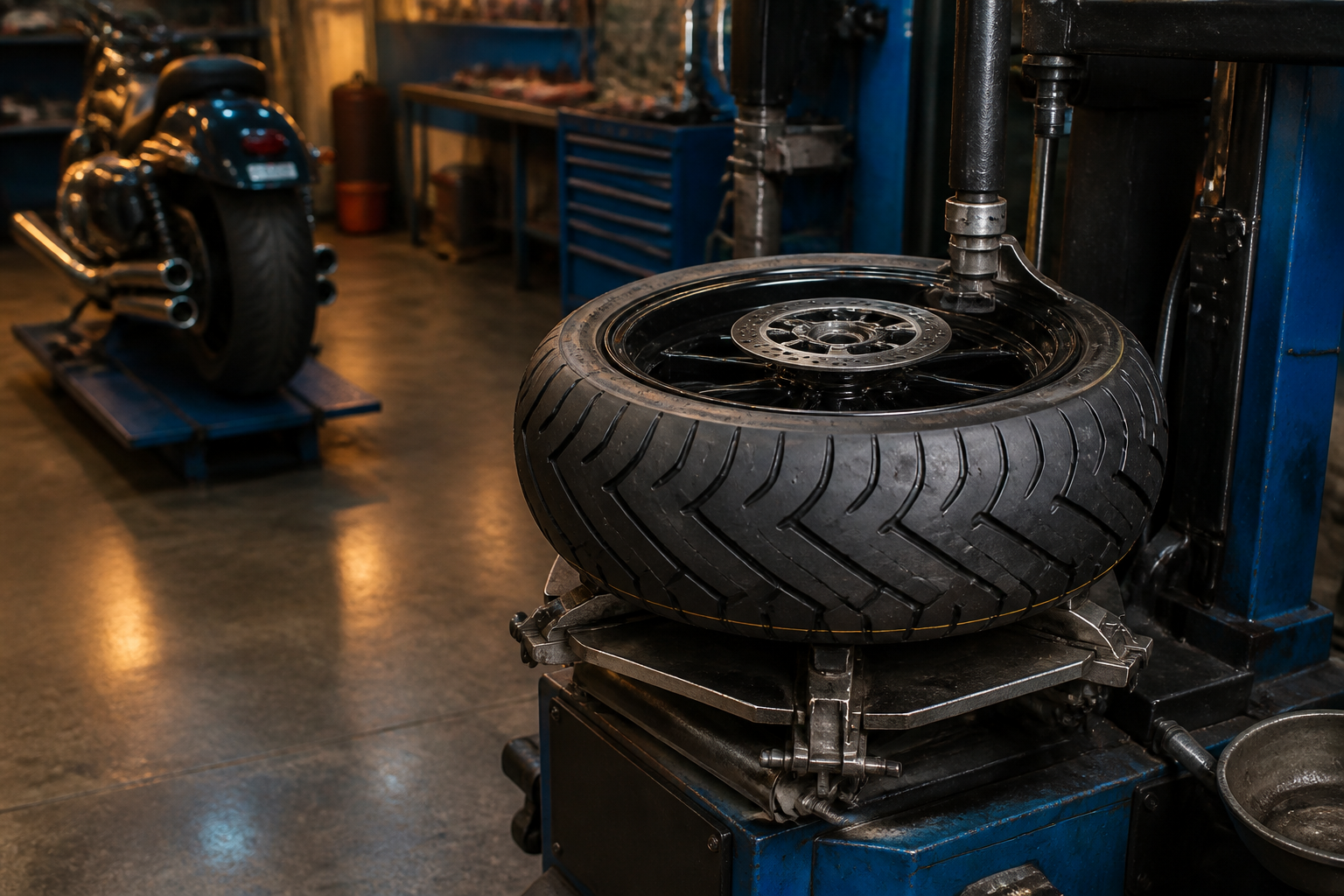
Wide rear fitments, heavy baggers, and loaded touring rigs need correct load-rated rubber and pressure set for real weight — two-up and packed, not the number on a generic chart. Common work for our cruiser and bagger and touring riders.
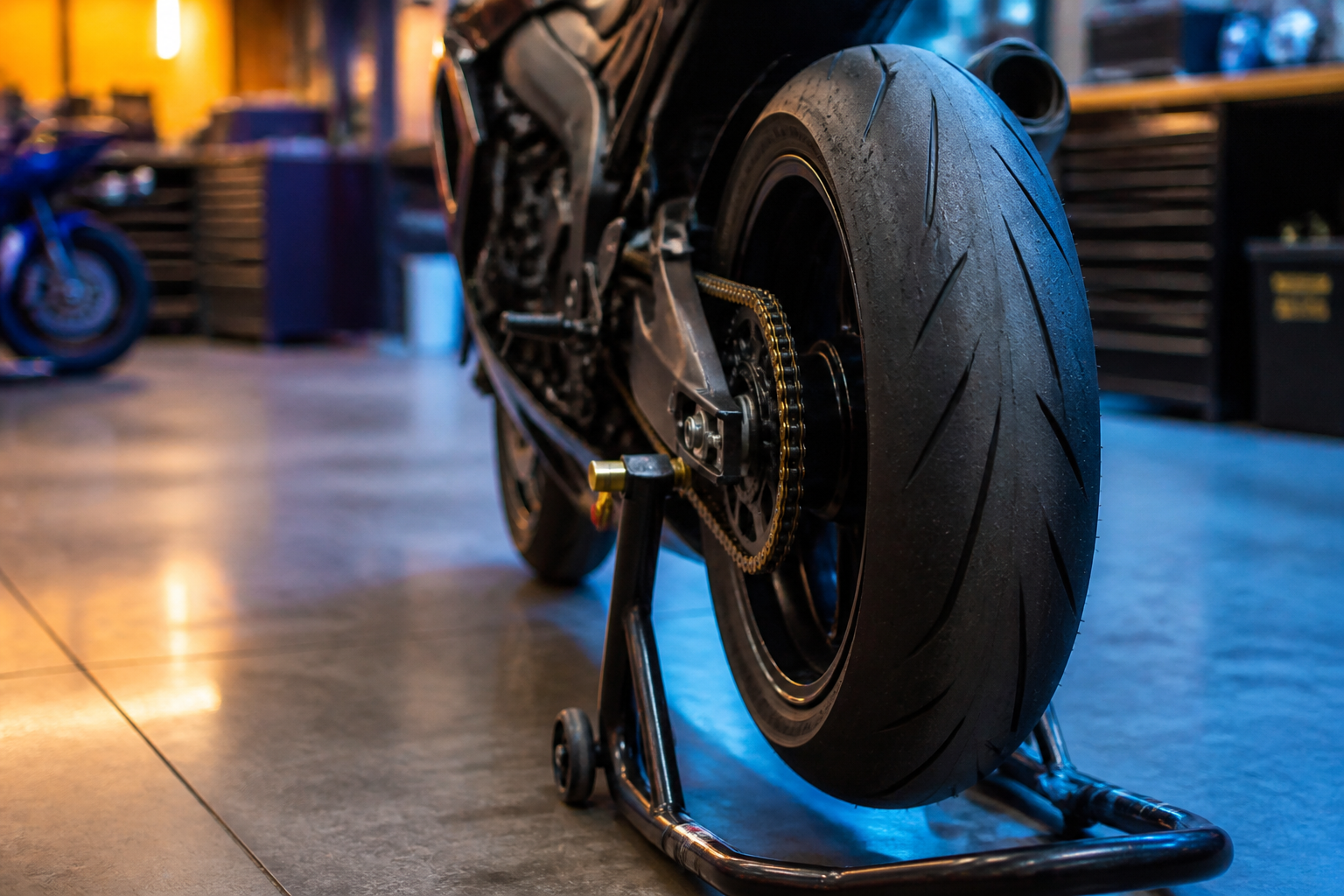
Sport and supersport rubber lives and dies on correct mounting, precise balance, and pressures matched to street or track use. We handle street sport tires and track-day sets for sport bikes, including hot-pressure targets and DOT-race fitments.
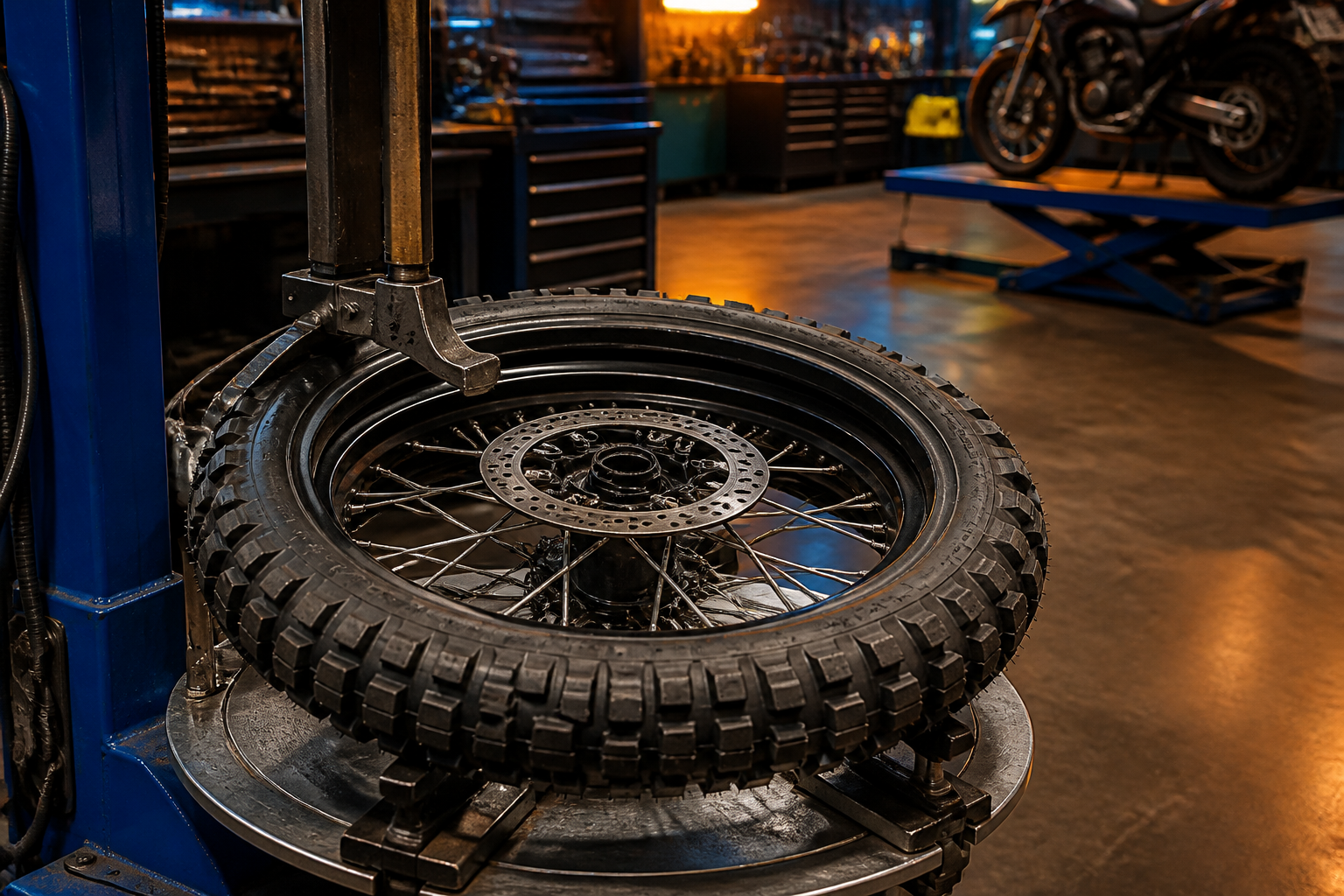
Big adventure bikes run everything from 90/10 street to aggressive knobbies, tubed and tubeless, on 19–21" fronts. We mount and balance the full range for adventure and dual-sport riders and match the tire to how far off pavement you actually go.
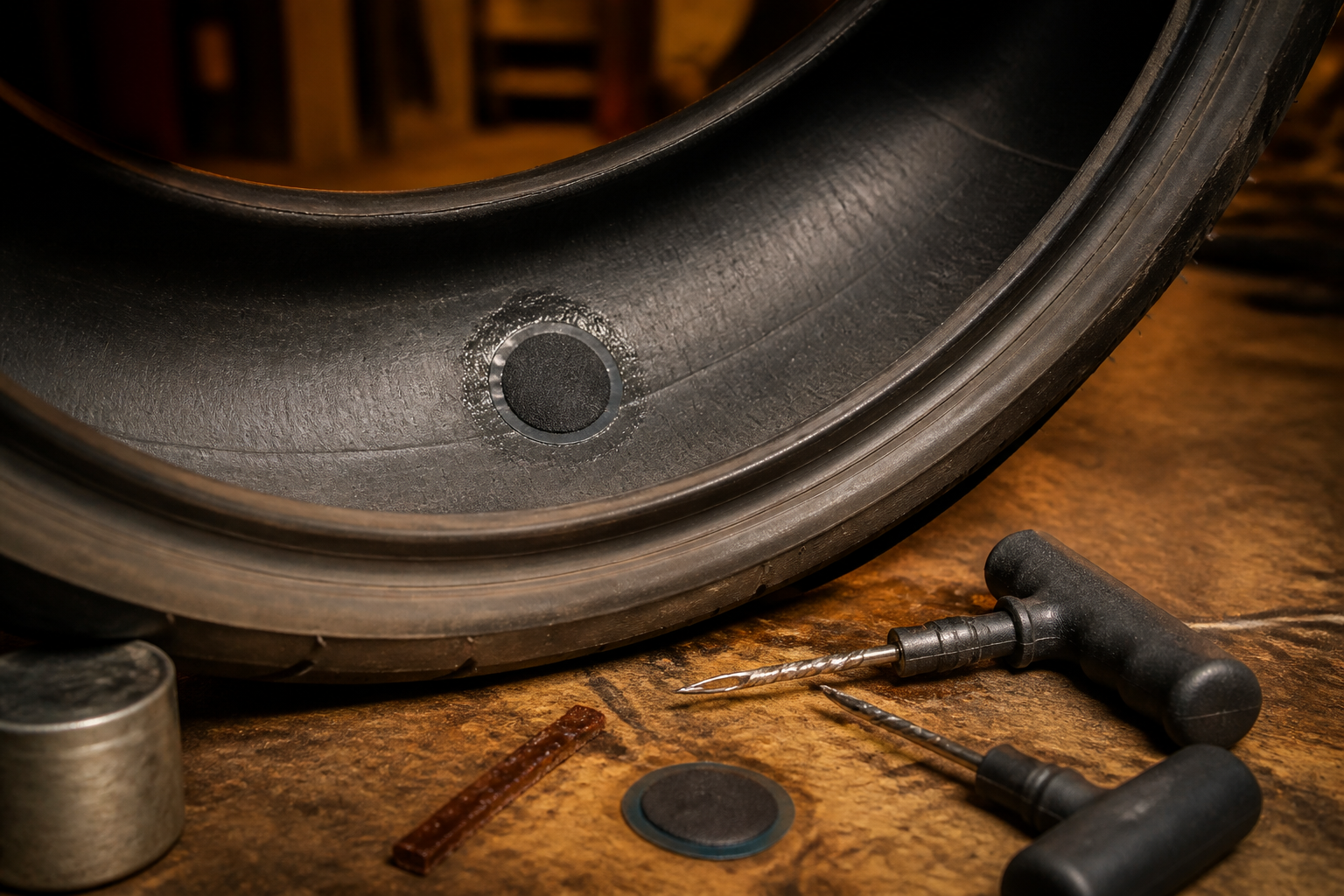
Not every puncture is repairable, and a sidewall puncture never is. We inspect from the inside, do proper plug-patch repairs where the location and size allow, and tell you straight when a tire needs replacing instead of a roadside-plug gamble.
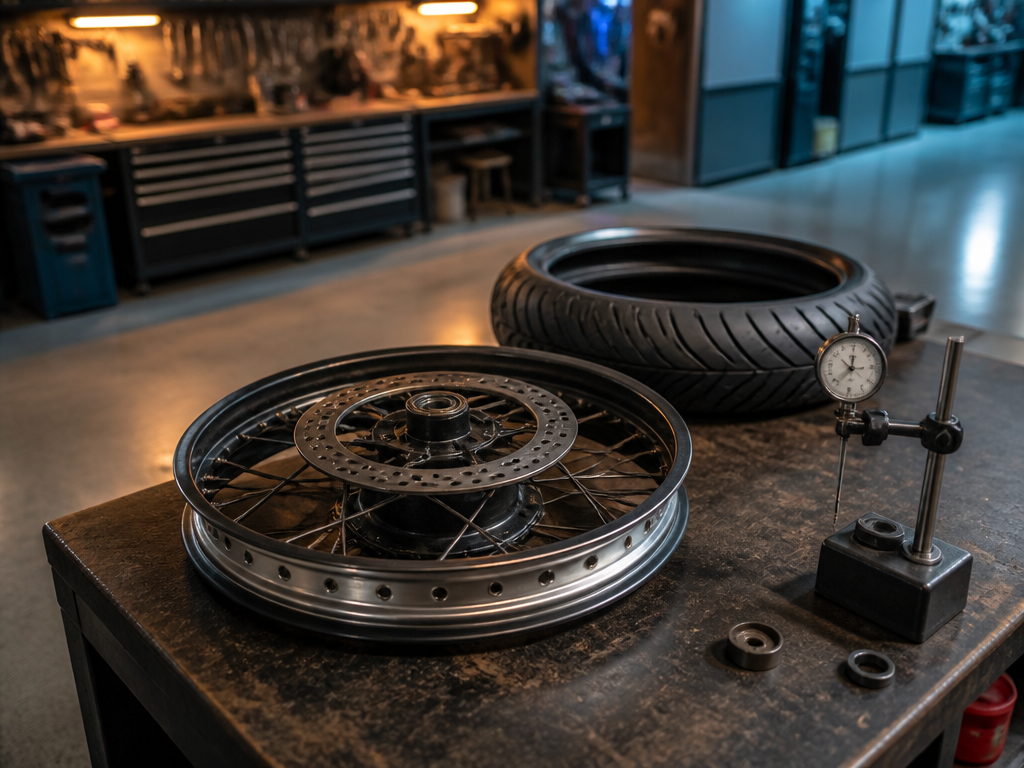
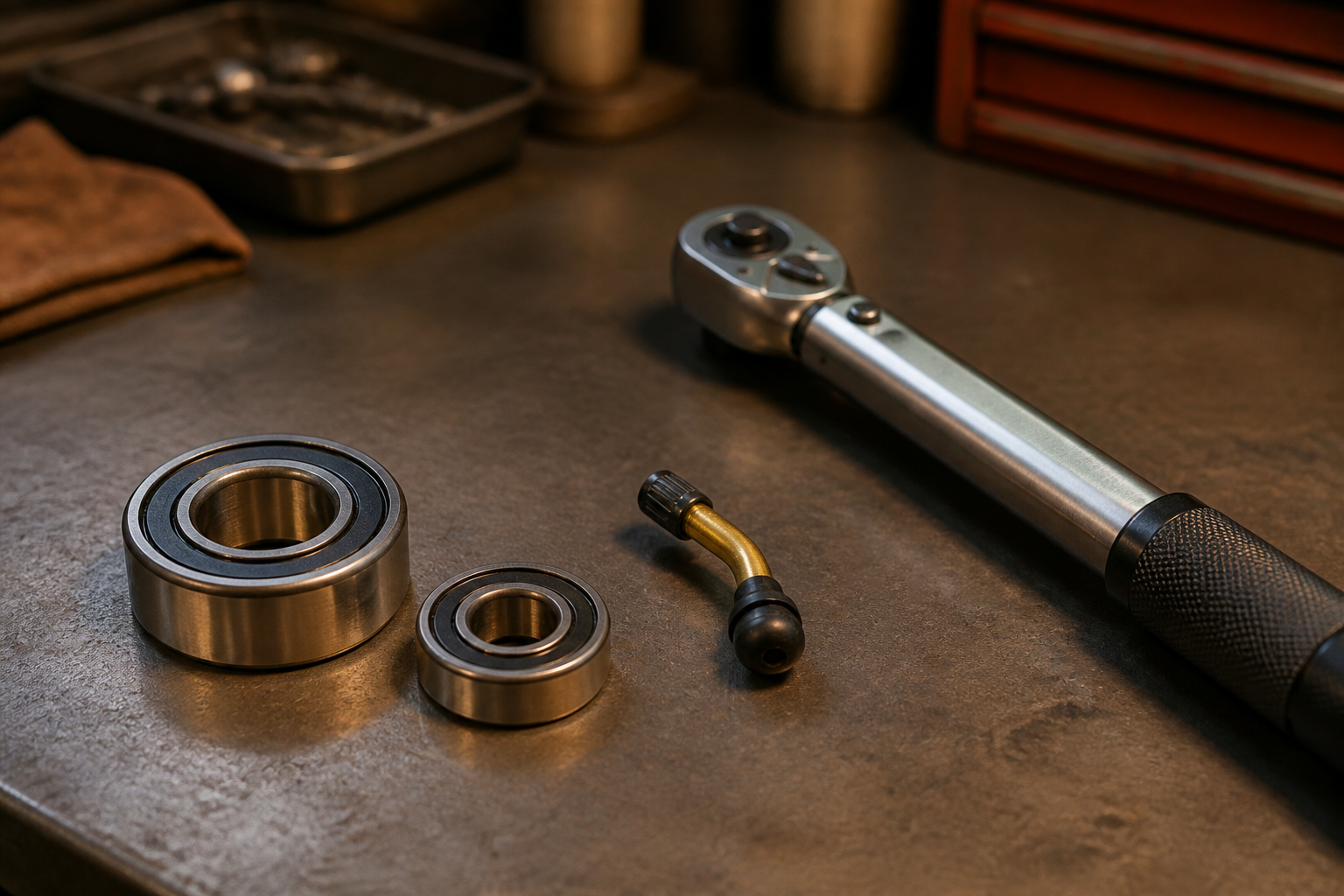
With the wheel off, we check bearings for play and roughness, replace valve stems as a matter of course on new installs, and verify balance after mounting. It's also the ideal moment to eyeball rotors and pads — see brake service if we spot wear.
We carry and order every major brand and will tell you honestly which tire fits your bike and your riding — not just what's on the shelf. Not sure what you want? Start with our tire selection guide, then we'll dial in the exact size.
The best tire isn't the grippiest one or the longest-wearing one — it's the one that matches how you actually ride. A sport-touring rider putting on highway miles wants mileage and wet grip; a canyon-and-track sport rider wants a softer compound and will happily trade tread life for edge feel. Picking one benchmark and ignoring the other is how people end up disappointed in a perfectly good tire.
Start with your riding split — commute, weekend backroads, two-up touring, occasional track, or real dirt — then weigh compound versus mileage, and finally match the load and speed rating to your bike and how you load it. Sizing has to be right too: going wider than the rim and swingarm were designed for changes the profile and dulls the steering. We walk every customer through this at the counter, and our full motorcycle tire selection guide lays out the trade-offs by category if you want to read up before you come in. Tires also don't live in isolation — the way a bike uses them depends on suspension setup, so if you're chasing a handling complaint we'll look at both.
A little vocabulary makes tire decisions a lot easier — and it helps you read your own rubber between visits. Here are the terms that actually matter when you're standing over your bike wondering whether it's time.
A code like 180/55 ZR17 tells you section width (mm), aspect ratio (sidewall height as a % of width), construction, and rim diameter. Matching it to your bike — or knowing why you'd change it — is the whole game.
The load index and speed letter (e.g. 73W) set the maximum weight and sustained speed the tire is built for. Drop below your bike's spec to save money and you've quietly downgraded its safety margin.
Radials run cooler and grip harder for sport and modern bikes; bias-ply carries load well and suits many cruisers and classics. The right choice follows the bike's design, not a blanket "newer is better."
Softer compounds grip more and last less; some sport tires use dual compounds — harder center, softer shoulders. Track tires also lose peak grip after enough heat cycles even with tread left.
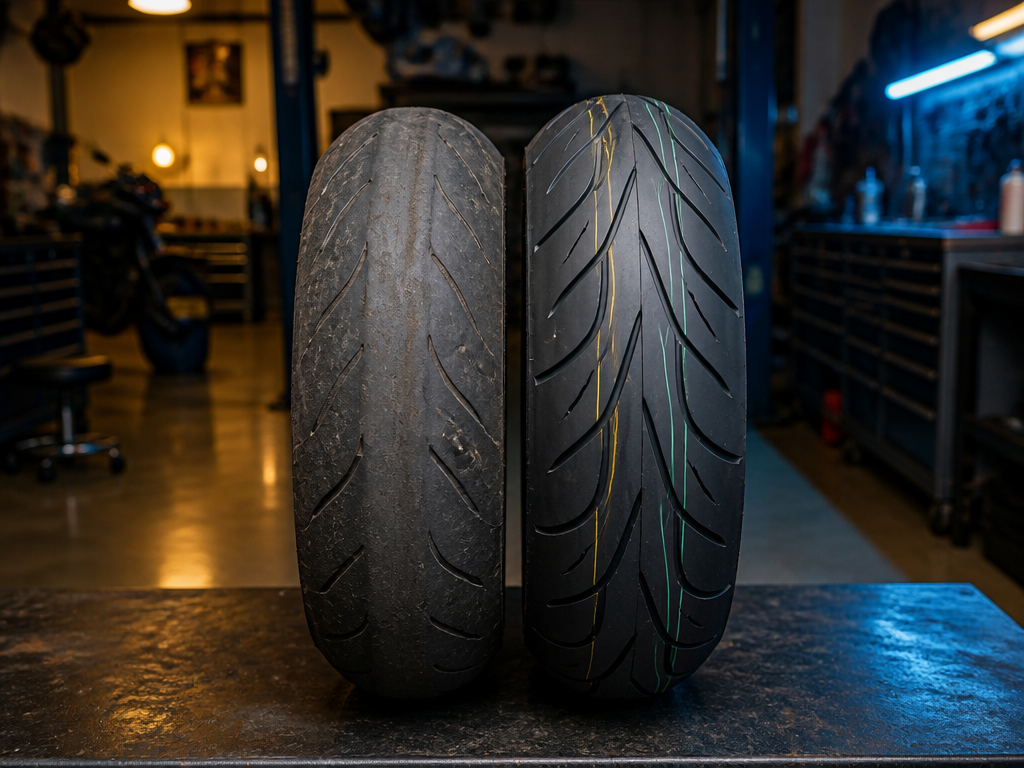
2/32" is the practical wear limit, but the four-digit DOT date code matters just as much here — a tire more than about five to six years old can be unsafe with tread to spare, especially in Miami sun.
Wear patterns tell a story: a squared-off center means lots of straight highway miles; cupping can point to suspension or pressure issues; flat spots come from sitting. We read them during every change.
Tire work looks simple from the waiting area, which is exactly why it's the service most often rushed. The difference between a good tire job and a careless one is invisible until it shows up in how the bike behaves — or in a second repair a month later. Here's the line we hold.
Miami is one of the hardest environments in the country on motorcycle tires, and most riders here underestimate it because the wear doesn't always show up as bald tread. Our sun is relentless and year-round — there's no winter layup where the bike sits in a cool garage. Sustained heat and intense UV break rubber down from the outside in, so a tire hardens, glazes, and loses grip on a timeline that has nothing to do with how many miles you've ridden. We regularly pull tires with plenty of tread that are simply too old and too hard to trust, and the date code tells the story every time.
Then there's how we ride here. Three hundred and sixty-five riding days means the causeway commuters, the weekend Keys runs, and the Homestead track crowd are all putting real cycles on their rubber all twelve months. Afternoon downpours arrive fast and turn the painted lines, manhole covers, and diesel-slick intersections into genuine hazards — wet grip and honest tread depth aren't a nice-to-have on these roads, they're the whole point. Standing water on the Palmetto and I-95 after a storm punishes worn or under-inflated tires, and grooved concrete expressway surfaces set up a wander that a squared-off tire makes worse.
Heat also drives pressure. A tire that's correct in an air-conditioned garage reads high after twenty minutes baking on hot asphalt, so we set cold pressures with Miami's ambient temperatures in mind rather than a generic spec sheet from somewhere with actual seasons. Salt air near the beaches and barrier islands works on wheels, valve stems, and bearings, too, which is one more reason the wheel-off inspection that comes with every tire change matters more here than it would up north. We've built our tire service around the way South Florida actually treats rubber — because pretending Miami is the same as anywhere else is how riders get surprised.
Read current tread, wear pattern, and date code; check the wheel and bearings with the tire off.
Seat the bead correctly, fit a new valve stem, and torque every fastener to spec.
Static or dynamic balance verified on the wheel, not assumed off the box.
Cold pressure set for your bike and load, plus a quick safety once-over before pickup.
We service what you ride — and mount what you bring — regardless of where it came from.
"Went in for a rear tire on my Road Glide and they caught a wheel bearing starting to go while it was apart. Would've been a whole second job if they'd just slapped the tire on like the last place did."
— Marcus D., Miami Shores
"Brought my own track tires and they mounted and balanced them same day, set my hot pressures, and didn't give me the runaround about not buying the rubber from them. Straight-up shop."
— Priya S., Kendall
Most tire jobs are done same-day, often within a couple hours once we have the tire in hand. If we're mounting a set you brought in and the bike is here, you can frequently wait on it. Full-day turnaround only happens when we have to order a specific size or find something during the wheel-off inspection worth telling you about first.
We stock and order tires across cruiser, touring, sport, and ADV/dual-sport categories, and we work with every major brand — Michelin, Dunlop, Pirelli, Metzeler, Bridgestone, Continental, and Shinko among them. If we don't have your exact size on the shelf, most fitments arrive in a day or two.
Yes. We mount customer-supplied tires as well as tires we sell, at the same standard — new valve stem, verified balance, torque to spec. We'll tell you honestly if a tire you bought online is the wrong spec for your bike or is already aged out of its safe service window before we put it on.
Tread depth below 2/32", visible cracking in the sidewall or tread grooves, cupping or flat-spotting, and a hardened, shiny surface are all signs. Age matters as much as tread here — a tire with plenty of tread can still be unsafe. We'll check tread, date code, and wear pattern and give you an honest read during any visit, no pressure to replace early.
Yes — sustained heat and intense UV age rubber faster here than in cooler climates, even on low-mileage tires. It's common to see South Florida bikes need tires for age and hardening before they ever wear the tread out, especially on machines that sit in the sun between rides. We check the date code, not just the tread depth.
Not always. Rear tires typically wear about twice as fast as fronts, so replacing the rear alone is normal and fine when the front still has good tread, even rubber, and no age cracking. What you want to avoid is a brand-new tire paired with a hardened or squared-off one — that mismatch shows up in how the bike turns. We'll tell you which case you're in.
Always. The tire being off is the one moment the wheel bearings, rotors, sprocket, cush drive, and valve stem are all easy to inspect, so we check them every time. Catching a notchy bearing or a worn cush drive during a routine tire swap saves you a second teardown and a second labor charge down the road.
A tire visit is the natural moment to knock out the work that lives right next to the wheels. If your rubber's due, it's often worth pairing it with a maintenance and major service to cover fluids and intervals in one drop-off, checking your brake pads and rotors while the wheel is already off, and reading our tire selection guide if you're still deciding what to run next.
Based on Biscayne Blvd in Miami's MiMo corridor, we mount and balance tires for riders throughout Miami-Dade.
Book your tire service in Miami today — any brand, any bike, mounted and balanced the way it should be.
Book Your Service