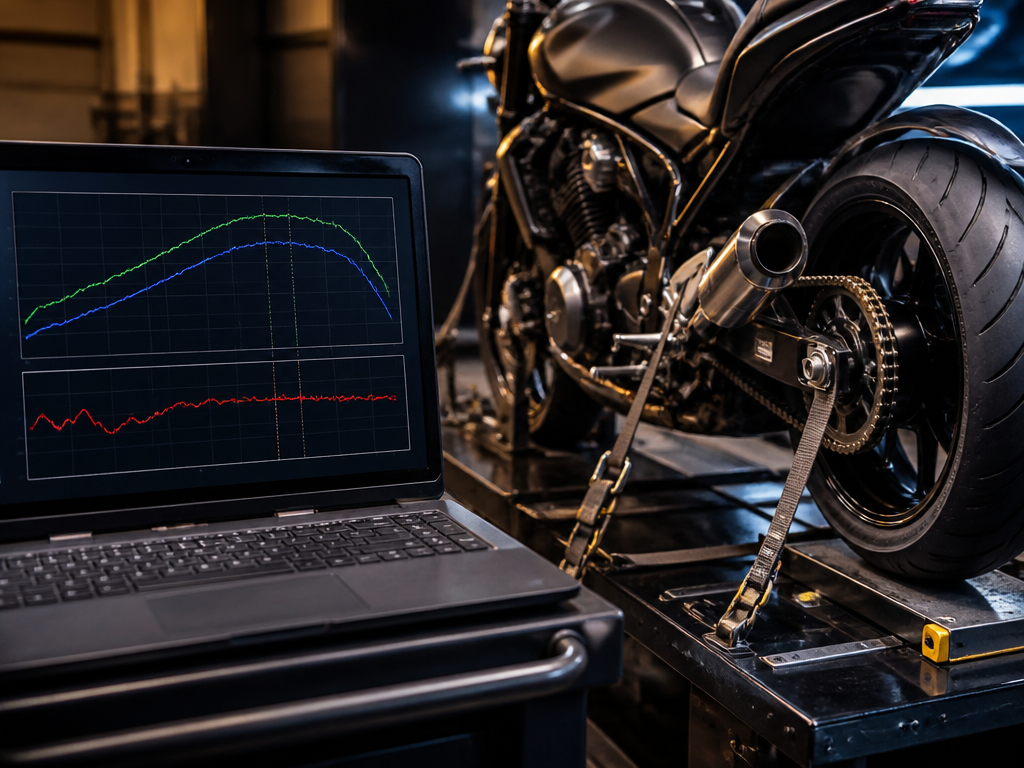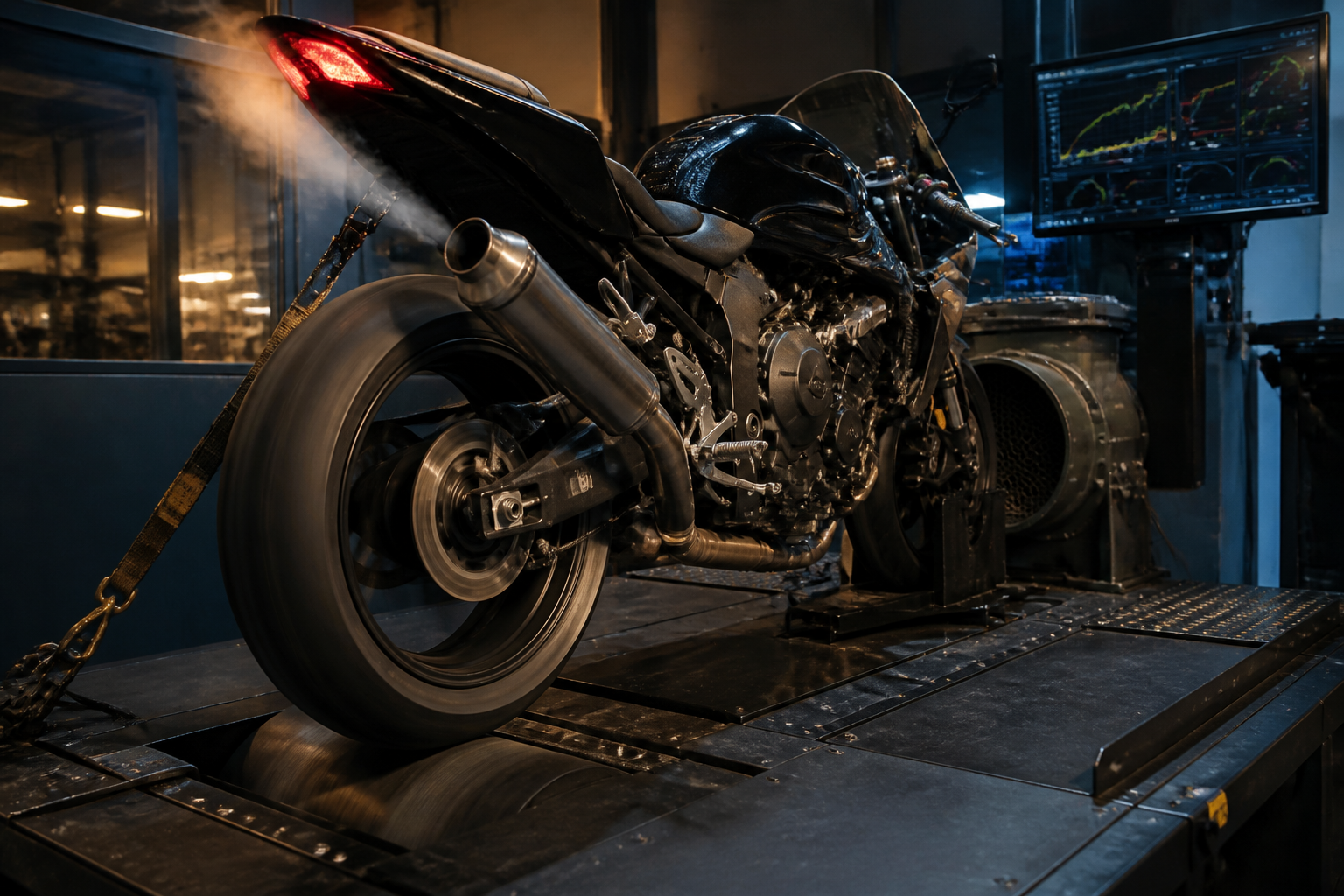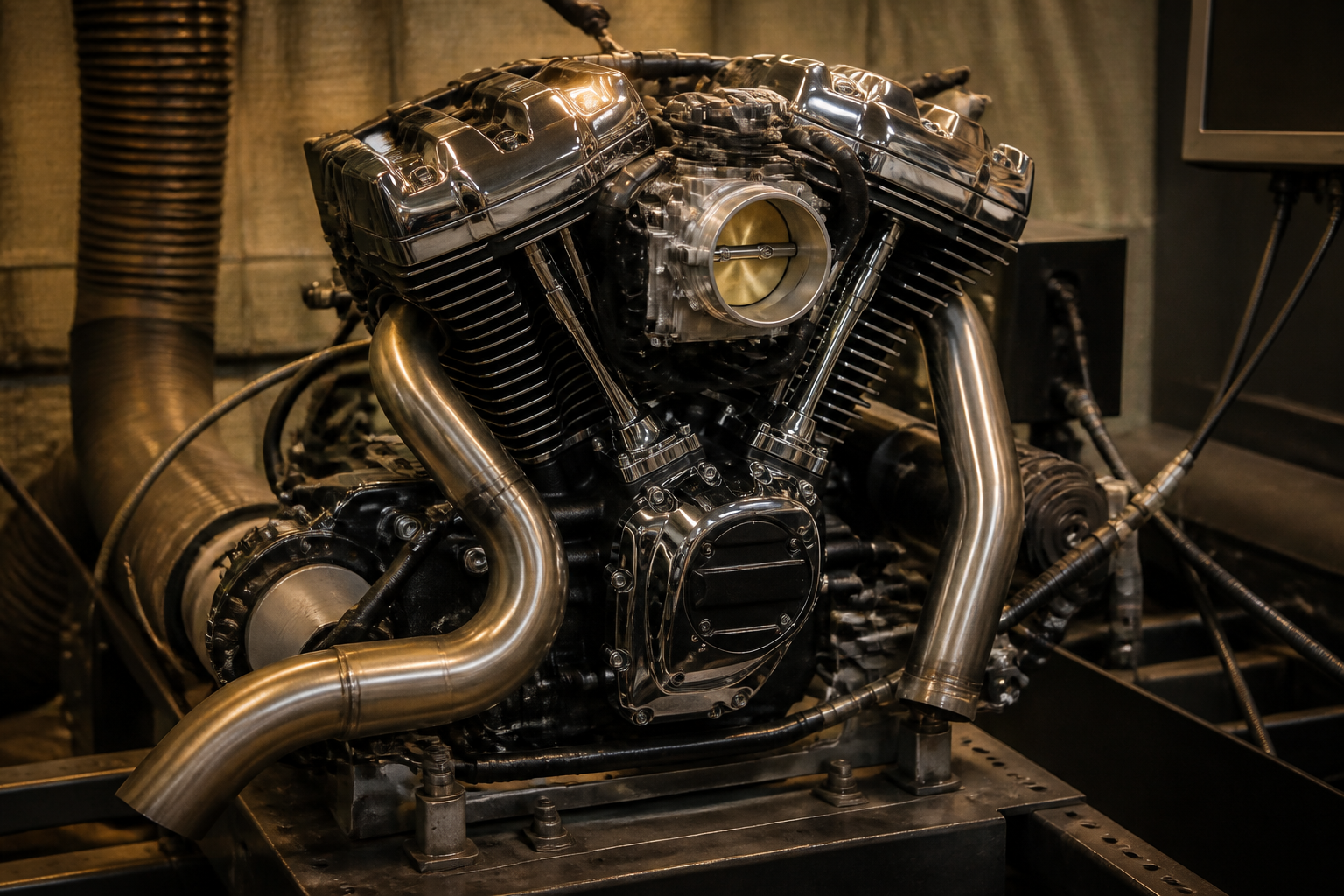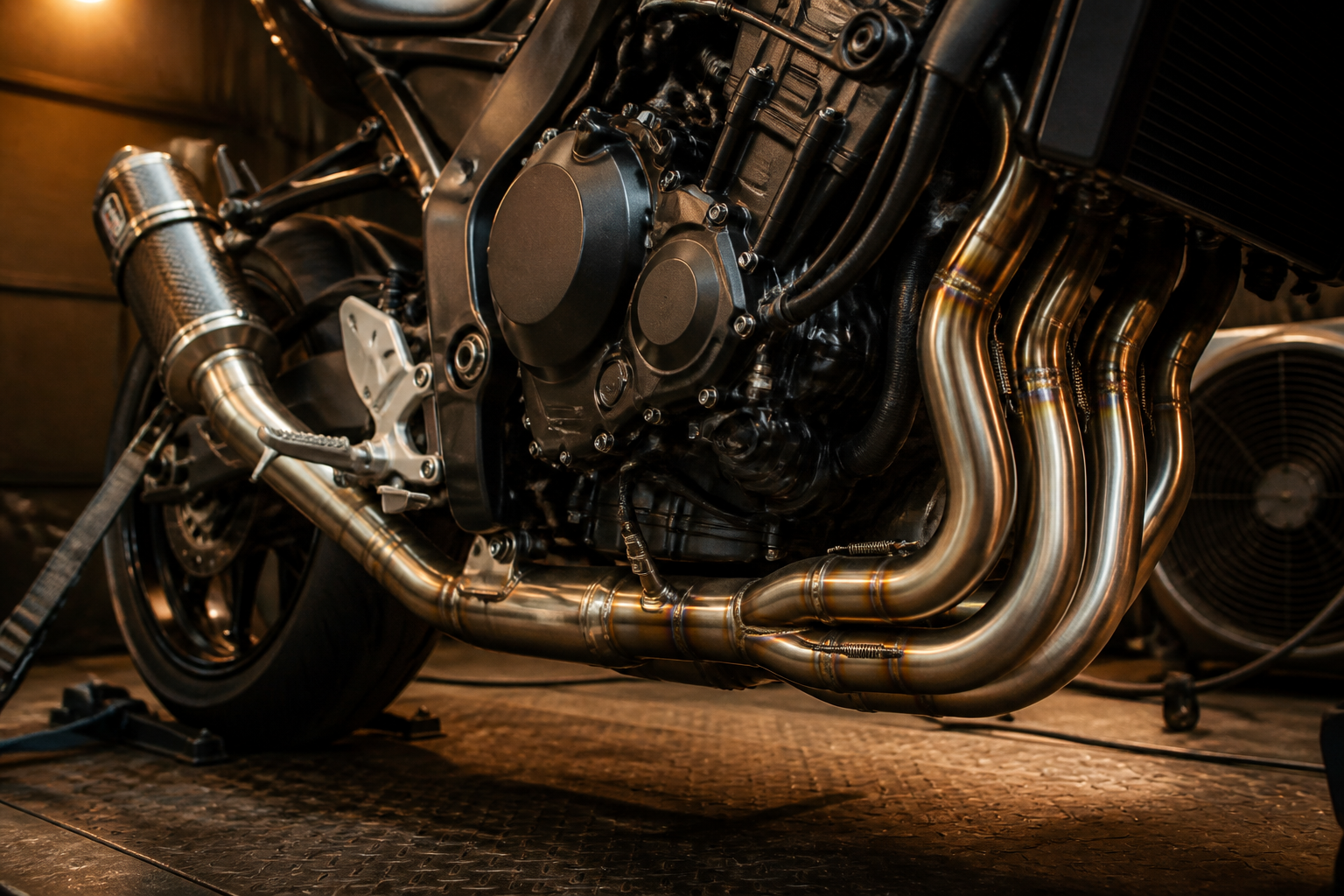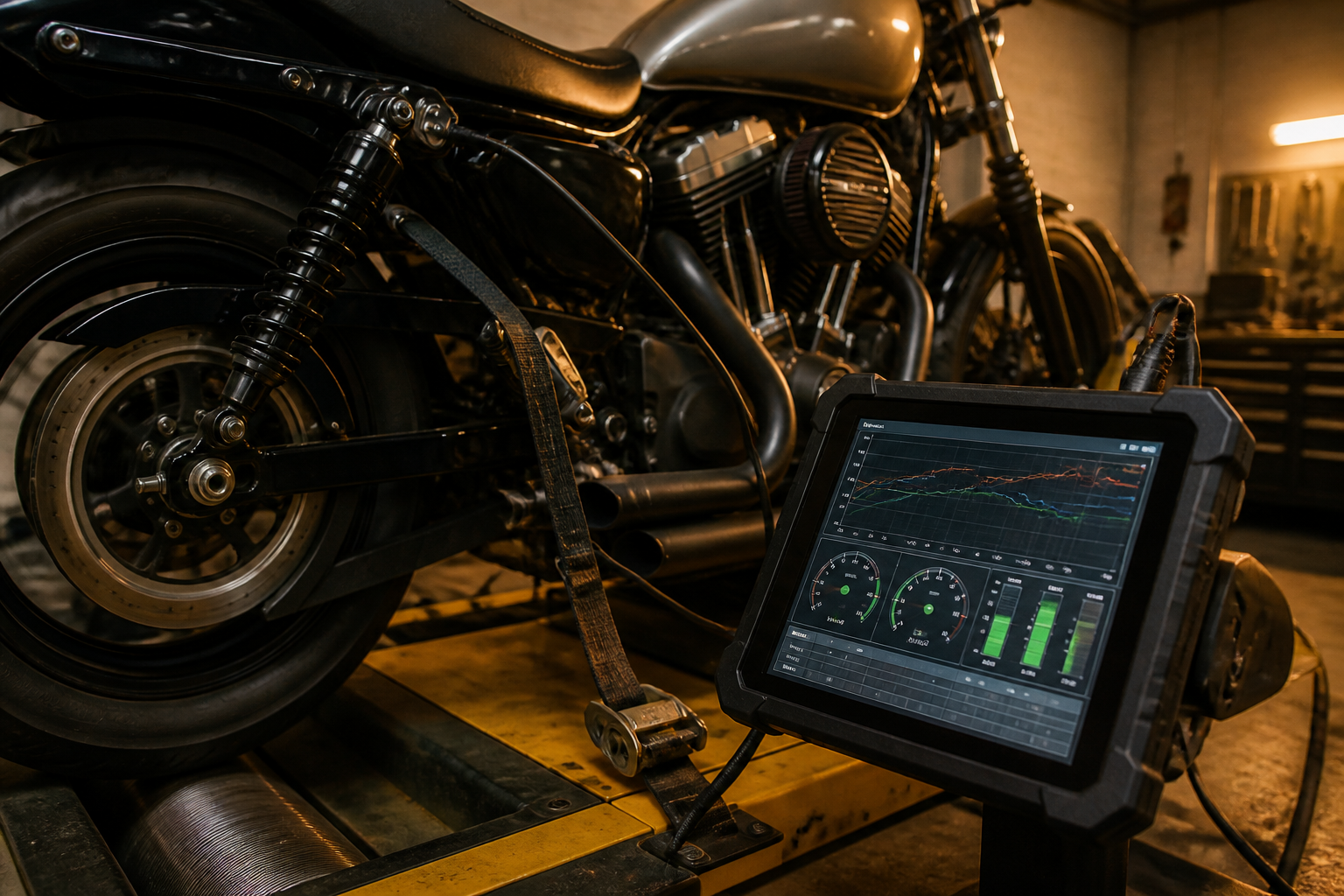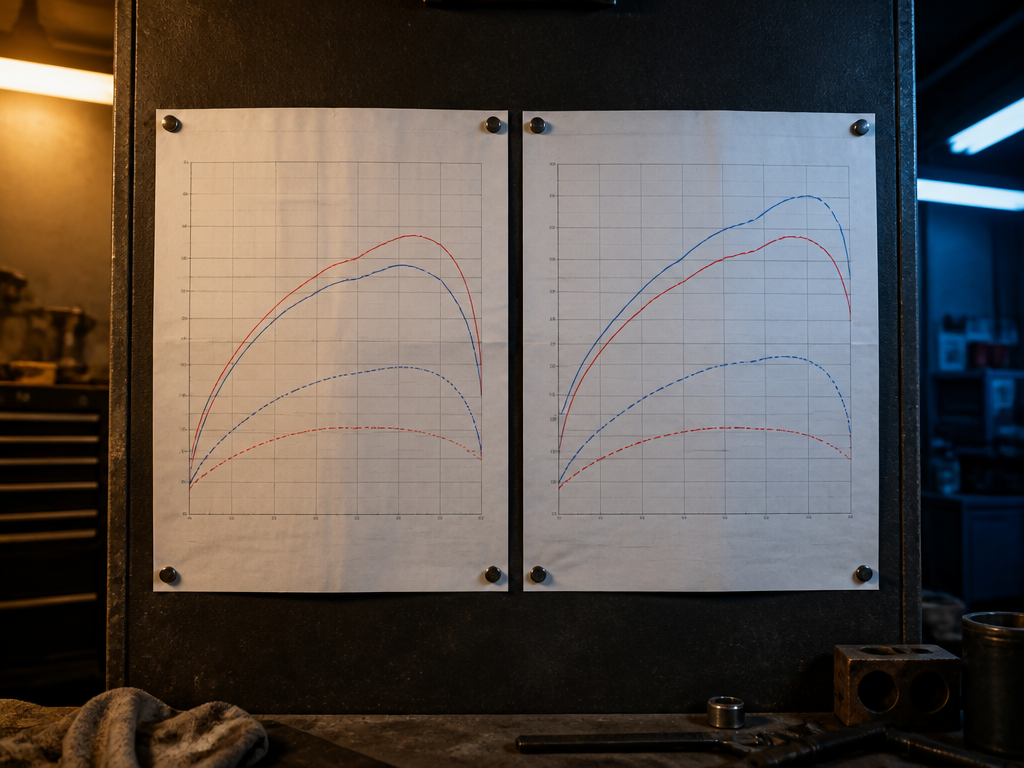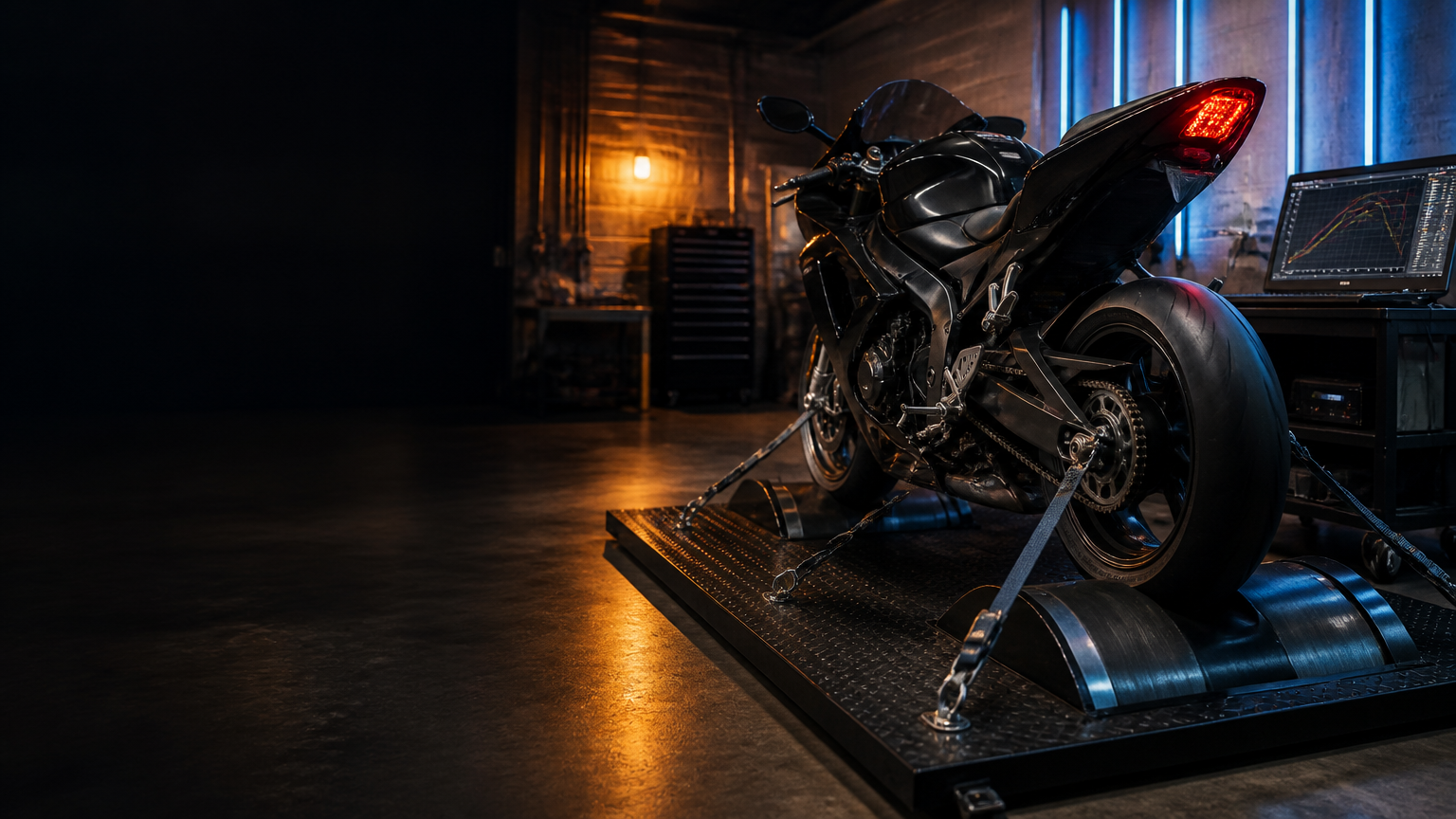
There's a world of difference between "tuning" and a file someone downloaded and flashed onto your bike without ever starting the engine. A real tune is measured. We strap the bike to the dyno, run a baseline pull to see exactly what it's making and how it's fueling, then dial the map across the whole rev range and prove the result with an after pull. You leave with numbers and a graph, not a claim — and a bike that runs the way it should everywhere you actually ride, not just at the peak.
That measured approach is the whole point. A generic map can't know your exhaust, your intake, your fuel, your altitude, or the thick Miami air — so at best it's a guess, and at worst it runs your engine lean or rich where you can't feel it until something's damaged. We tune to your specific combination and verify it's safe. It's the same data-driven standard that runs our Miami service department, and because we service any motorcycle, we'll tune a bike whether we built it or you rolled it in full of parts from three other shops.
From a clean-up flash on a stock bike to a full custom dyno tune on a built engine, we do the range — and we do it on the dyno, with data. Here's the menu.
Baseline pull, custom fueling and timing across the whole range, and verified after pulls. The gold standard — a map built for your exact bike and mods, proven with real numbers.
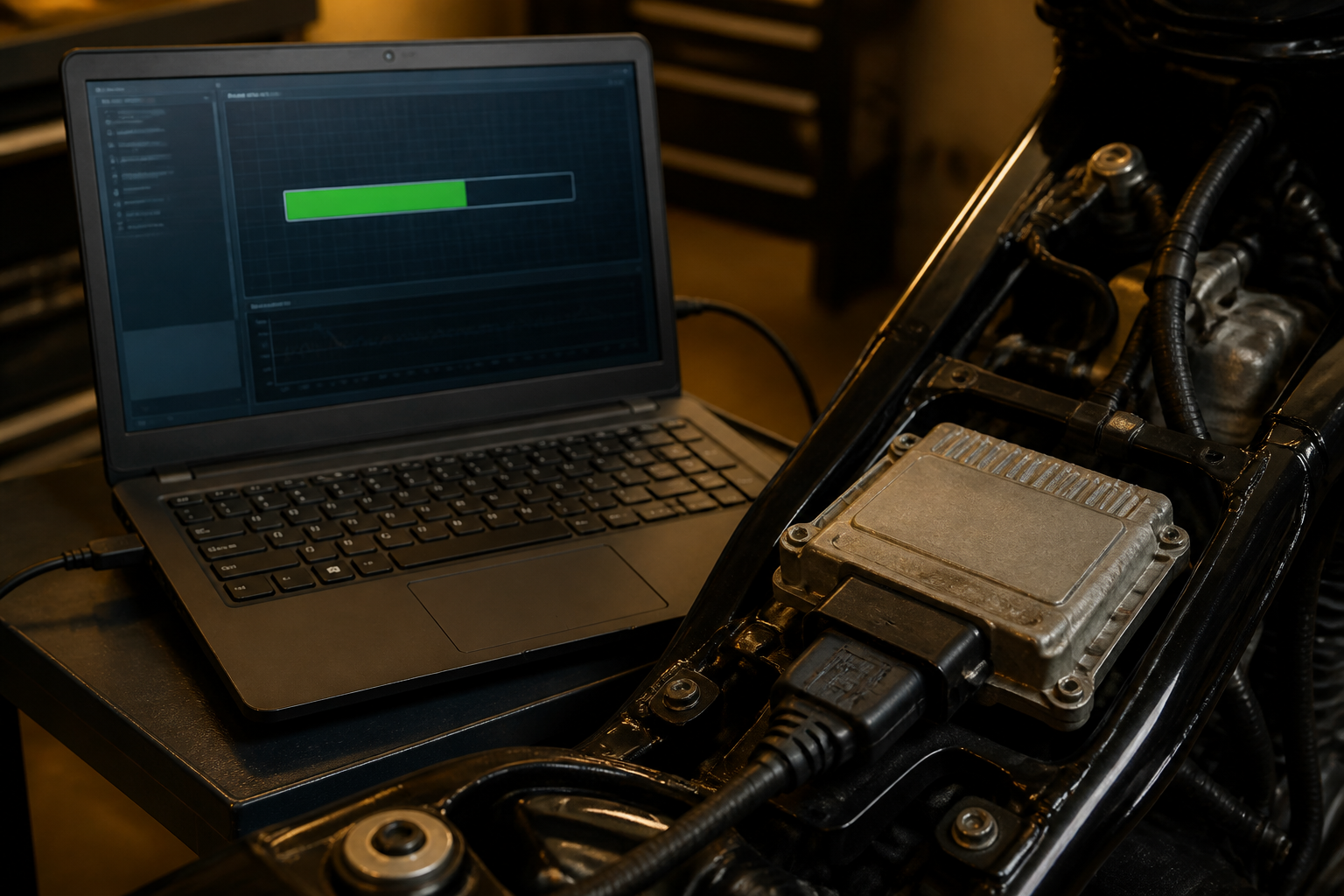
Removing factory restrictions, deleting a restrictive rev limit or de-cat error, and cleaning up fueling — verified on the dyno so the flash is safe, not just aggressive.
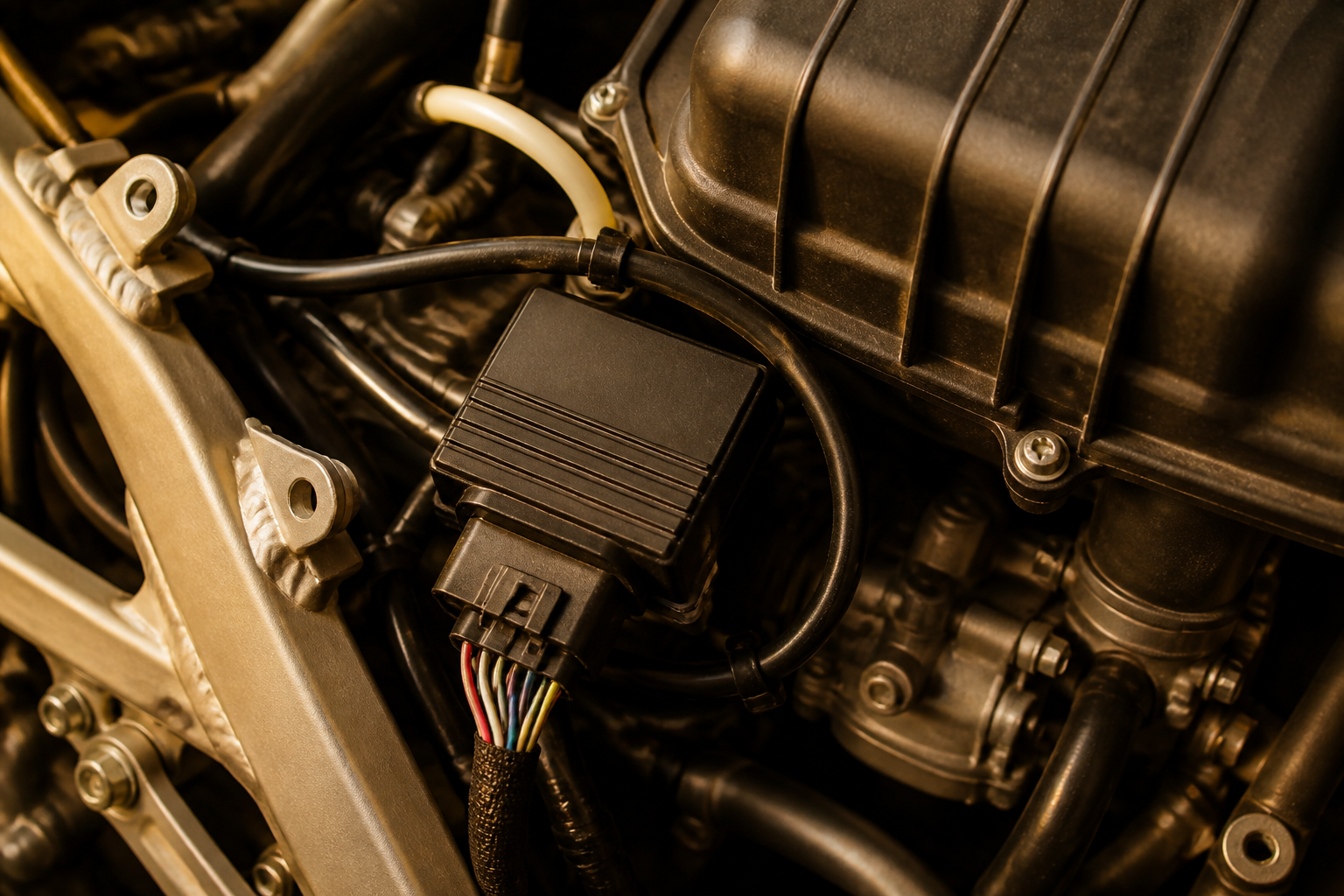
Power Commander, auto-tune, and piggyback fuel modules installed and dialed with a wideband, smoothing fueling and throttle response through the whole range.
The tune that makes a Harley stage kit actually deliver — cam, intake, and exhaust changes dialed together so the parts work as a system, not against the stock map.
A new exhaust system or intake changes the fueling the engine needs. We install and tune them together so you get the full gain and clean running, not a lean stumble.
Snatchy throttle, surging, and excess engine heat are often a fueling problem, not a mechanical one. When it's a fault first, our diagnostics sort it, then we tune it out.
Not every bike needs the same tune, and spending smart means matching the work to your build. A well-developed ECU flash is a great value on a stock or lightly modified bike — it cleans up known factory issues like snatchy throttle and excess heat and frees up the easy gains. But a flash is a pre-built calibration; it isn't measured against your specific machine. Once you've added an exhaust, intake, cams, or a stage kit, the interactions between those parts are unique to your bike, and only a custom dyno tune measures and optimizes them.
The rule of thumb: the more modified the bike, the more a full custom dyno tune pays for itself. A sport bike with a full system and intake wants a custom map to be safe and make its numbers; a cruiser or bagger with a stage kit absolutely needs one. We'll look at your bike and your goals and tell you honestly whether a flash gets you there or whether the custom tune is the right spend — and we'll plan the exhaust and other mods in an order that avoids tuning twice.
A little tuning vocabulary makes it obvious who's measuring and who's guessing. These are the terms behind a real dyno tune.
The mix of air to fuel the engine burns. Too lean makes heat and risks damage; too rich wastes power and fouls. Tuning is largely about holding a safe, effective AFR everywhere — measured with a wideband.
The tool that reads actual AFR in real time during a pull. Without it, a tuner is guessing; with it, every change is verified against what the engine is really doing.
The tables that tell the ECU how much fuel and how much spark advance to deliver at every rpm and throttle position. Dialing both is the heart of the tune — power and safety live here.
Closed loop lets the ECU self-correct fueling from its sensor at light load; open loop follows the map at higher demand. A good tune addresses both regions, not just wide-open throttle.
The before-and-after dyno runs that prove what a tune did. No baseline means no honest claim about gains — real shops show you both curves.
Uncontrolled combustion that destroys engines — driven by too much timing, lean fueling, or bad fuel. Safe tuning keeps a margin away from it, which blind maps often don't.
A downloaded map costs less up front and can cost far more later. Here's the difference between a measured dyno tune and a file flashed on faith.
Tuning isn't climate-neutral, and Miami's climate is a genuine variable most riders never think about. An engine makes power by burning air, and the density of that air changes with temperature, humidity, and altitude. Our hot, thick, humid air is meaningfully different from the cool, dry conditions a generic map was likely developed in — so a file that hits its numbers in a temperate state can run off-target here. That's exactly why a dyno tune matters more in South Florida, not less: we measure and correct for the air your engine is actually breathing, on the day, in this place.
Heat compounds it. Sitting in Miami traffic on a 92-degree afternoon puts an engine under real thermal load, and a lot of what riders complain about — excessive engine heat radiating onto their legs, surging at low speed, a snatchy on/off throttle — is a fueling problem the factory left conservative or a bad map made worse. A proper tune can dramatically improve how a bike behaves and how much heat it throws in stop-and-go conditions, which in our climate is a quality-of-life upgrade, not just a power one. Ethanol pump gas is another local reality; a tune accounts for the fuel you're actually running. We tune for the way your bike lives here — hot, humid, ridden year-round, and stuck in real traffic — so the result is a bike that's not just more powerful on paper but genuinely better to ride on a Miami summer day.
Strap the bike to the dyno and pull to see what it makes and how it fuels.
Dial fueling and timing across the range with a wideband on the pipe.
After pulls confirm the gain and a safe AFR everywhere you ride.
Confirm real-world manners, throttle feel, and heat before pickup.
We tune what you ride — including bikes built with parts from anywhere else.
"Full system and a custom dyno tune on my Street Triple. They showed me the before and after graphs — real gains and the snatchy throttle is completely gone. Runs cooler in traffic too."
— Devon R., Wynwood
"Had a stage kit installed elsewhere that ran terrible on the shop's flash. These guys put it on the dyno and actually tuned it. Night and day — finally feels like the parts I paid for."
— Louis T., Hialeah
Real dyno tuning, verified with pulls before and after — not a canned map applied blind. A generic file downloaded off the internet doesn't know your exhaust, your intake, your fuel, or the Miami air; a dyno tune measures what your specific bike actually does and dials fueling and timing to it. You get before-and-after numbers you can see, not a promise.
Yes, when it's done correctly with fueling and timing verified on the dyno — which is exactly what we check. A responsible tune makes more power by cleaning up fueling and removing factory restrictions, while keeping the engine in a safe air/fuel and timing window. The danger comes from blind, aggressive maps run without verification, and that's the opposite of how we work.
It depends on your bike and its supporting modifications, but most riders see a meaningful, verifiable gain in horsepower and torque — and just as importantly, smoother throttle response, cleaner fueling, and reduced engine heat. On many bikes the biggest improvement isn't peak horsepower at all; it's how much better the bike runs everywhere in the rev range you actually use.
Not necessarily — we can tune a stock or slip-on setup and still clean up fueling and response. That said, a full exhaust system usually unlocks more from a tune, and the two work best planned together. If you're building toward more power, we'll map out the smart order so you don't pay to tune the same bike twice. Even on a completely stock bike, a good tune is often worth it just for the throttle feel and heat improvements alone.
Yes. We regularly tune around existing intake, exhaust, cam, and stage-kit setups — including work done at other shops. A dyno tune is how you finally get all those parts working together as a system instead of fighting a factory map that has no idea they're there. Bring us a bike full of mismatched mods and we'll make it run right.
A typical custom dyno tune is a same-day job — usually several hours of baseline pulls, tuning, and verification runs — though it varies with the bike and how far the build goes. We'd rather take the time to get the fueling and timing right across the whole range than rush a pull and hand it back. You'll leave with the data from your session and a clear picture of what your bike actually makes.
A tune is the final step that makes hardware deliver. A new exhaust system changes the fueling the engine needs, so it belongs in the same plan; a Harley stage kit isn't finished until it's tuned; and when a running problem turns out to be a fault rather than fueling, our diagnostics sort it before the dyno session so you tune a healthy engine.
Based on Biscayne Blvd in Miami's MiMo corridor, we tune bikes for riders throughout Miami-Dade.
Book a dyno tune or ECU flash in Miami — verified numbers, safe fueling, and a bike that runs right.
Book Your Service