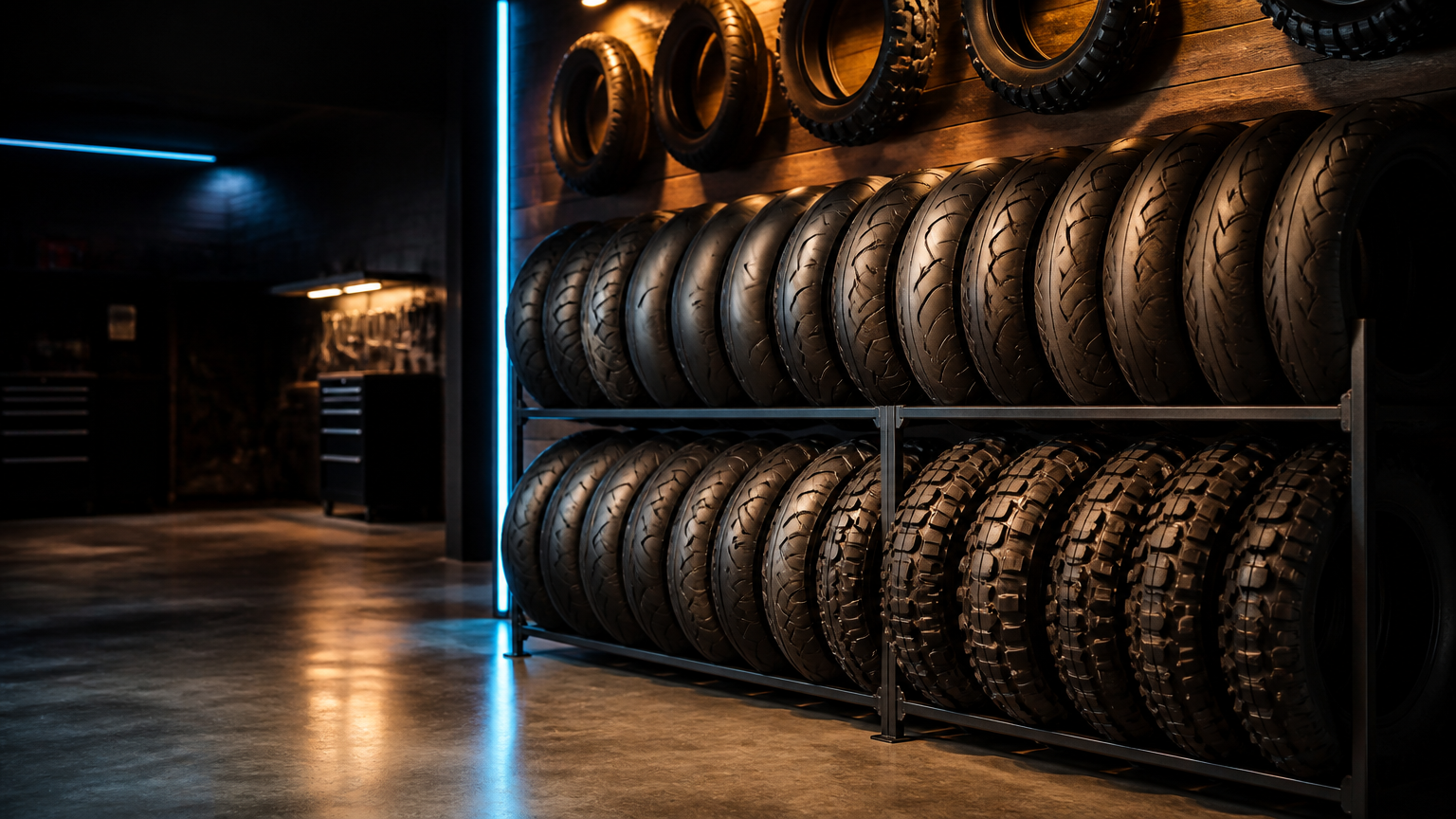
There's no single "best" motorcycle tire — there's only the best tire for how you ride, and the fastest way to end up disappointed is to buy on someone else's benchmark. A track-compound tire on a commuter will age out before it wears out and never see the heat it needs to grip; a hard-wearing touring tire on a canyon carver will feel numb and vague. Grip, mileage, wet performance, and price are trade-offs, and choosing well means being honest about your real riding, not your aspirational riding.
This guide is here to make that choice clear. We'll walk through the categories, the trade-offs that actually matter, and the terms you'll see on the sidewall — and then, when it's time, we'll match a specific tire to your bike and mount it right. That straight-talking, no-upsell approach is how our Miami service department handles everything, and when you're ready, our tire mounting and balancing service does the install. Whatever you ride and wherever you bought it, we service any motorcycle.
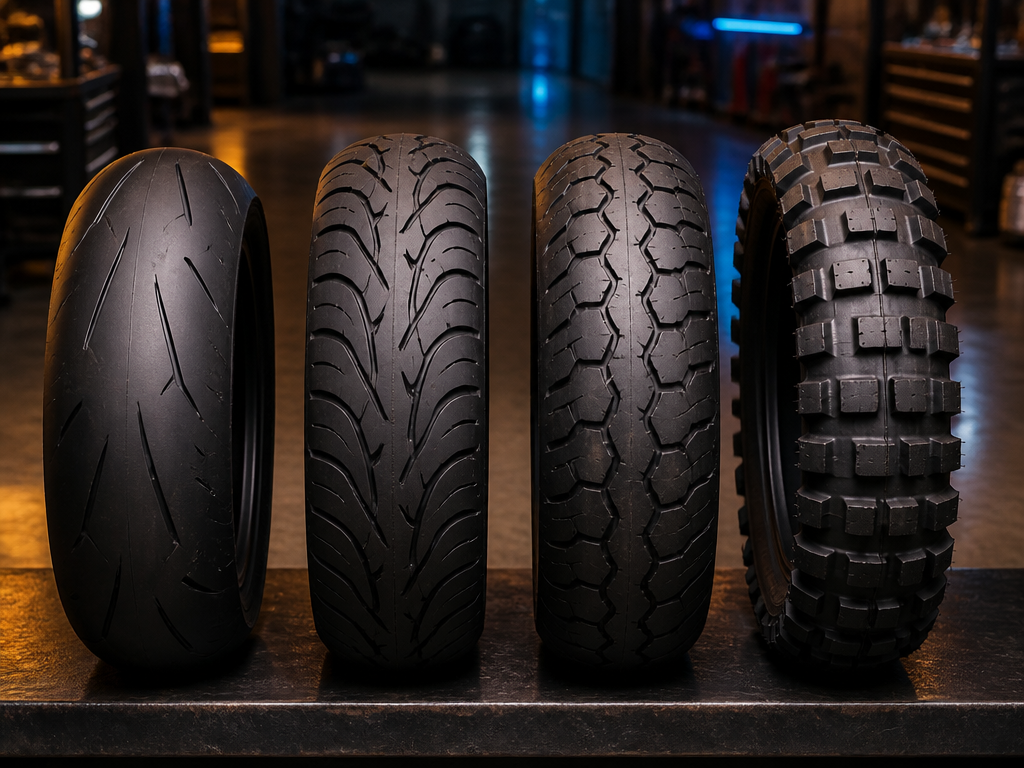
Each riding style asks something different from a tire. Here's how the categories break down and what to prioritize in each.
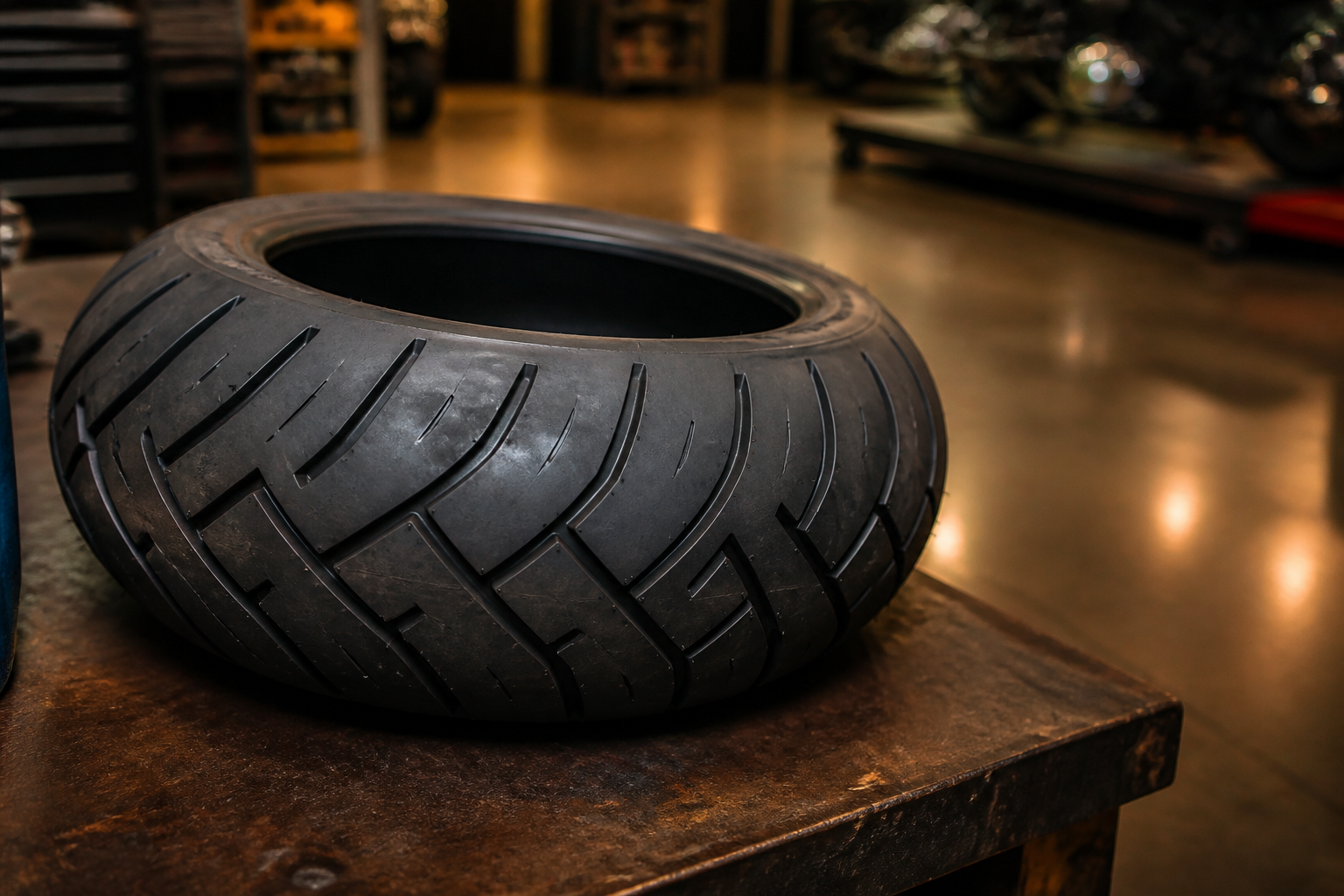
Heavy bikes and big torque want load-rated tires with long tread life and stable manners. Look for durability and correct load rating over outright grip. Common for our cruiser and bagger riders.
Long-haul and two-up riders want mileage, rain performance, and stability under a loaded bike. Sport-touring tires add grip without giving up much life. Ideal for touring machines.
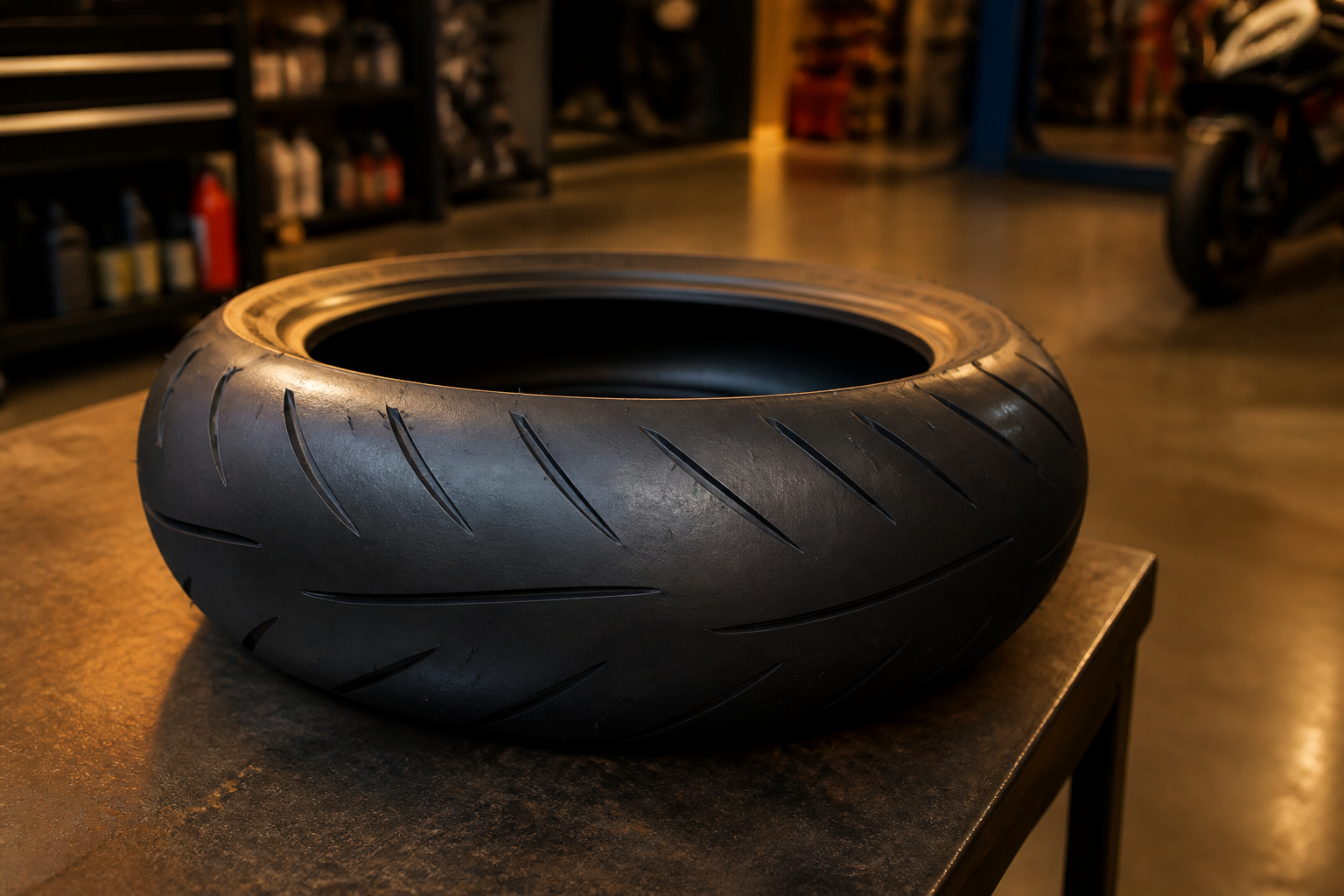
Corner and track riders want grip and quick, precise steering, and will trade tread life for it. Dual-compound and track tires suit sport bikes — matched to street or track use.
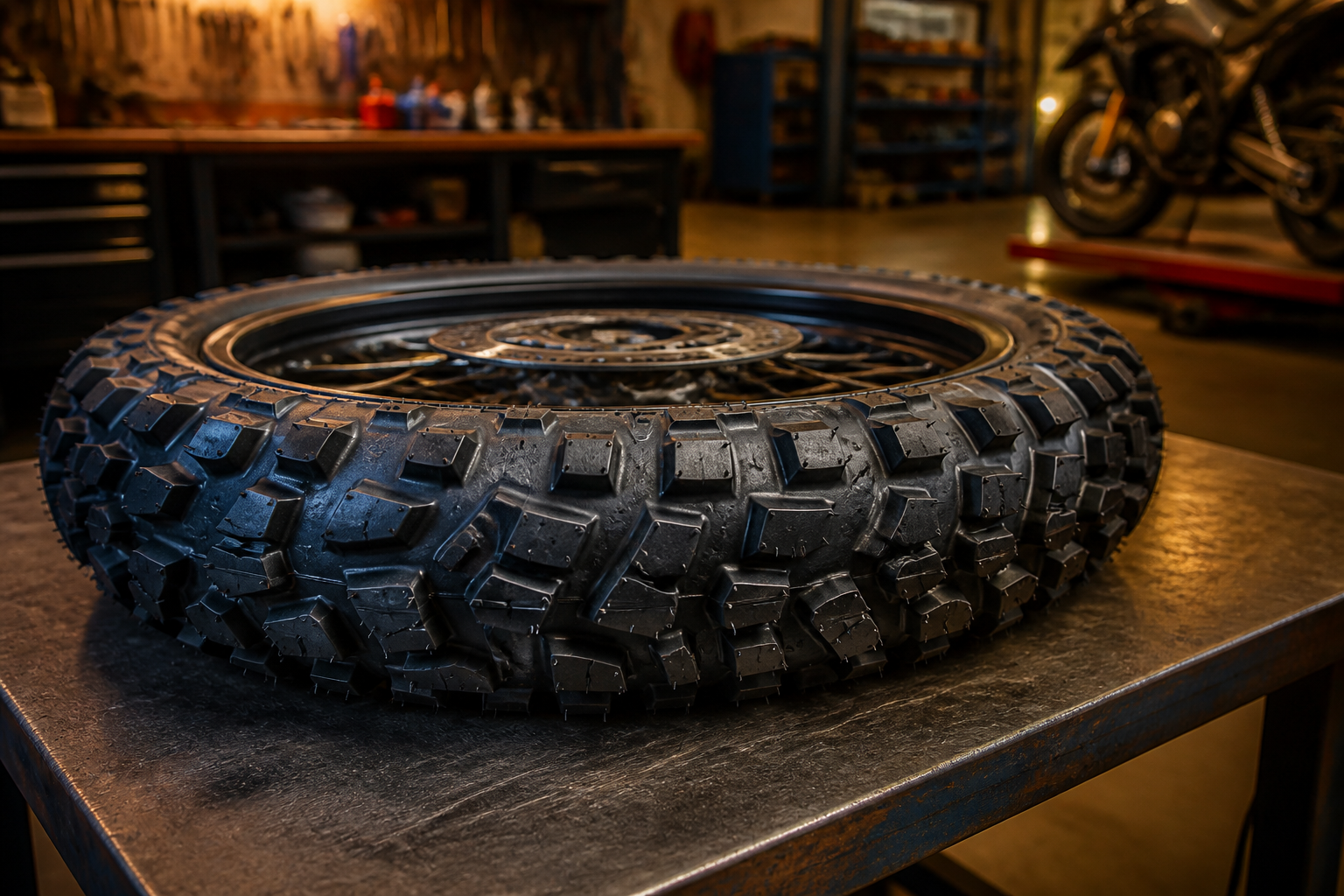
The key choice is your street-to-dirt ratio — 80/20 for mostly pavement, 50/50 for real off-road, knobbies for serious dirt. Be honest about your riding. For adventure and dual-sport bikes.
Whatever the category, the size, load index, and speed rating must match your bike. Going wider than the rim was designed for changes the profile and dulls steering — fitment first.
The core trade: softer compounds grip more and last less. Pick where you sit on that scale by how you ride — it also interacts with your suspension setup for overall handling.
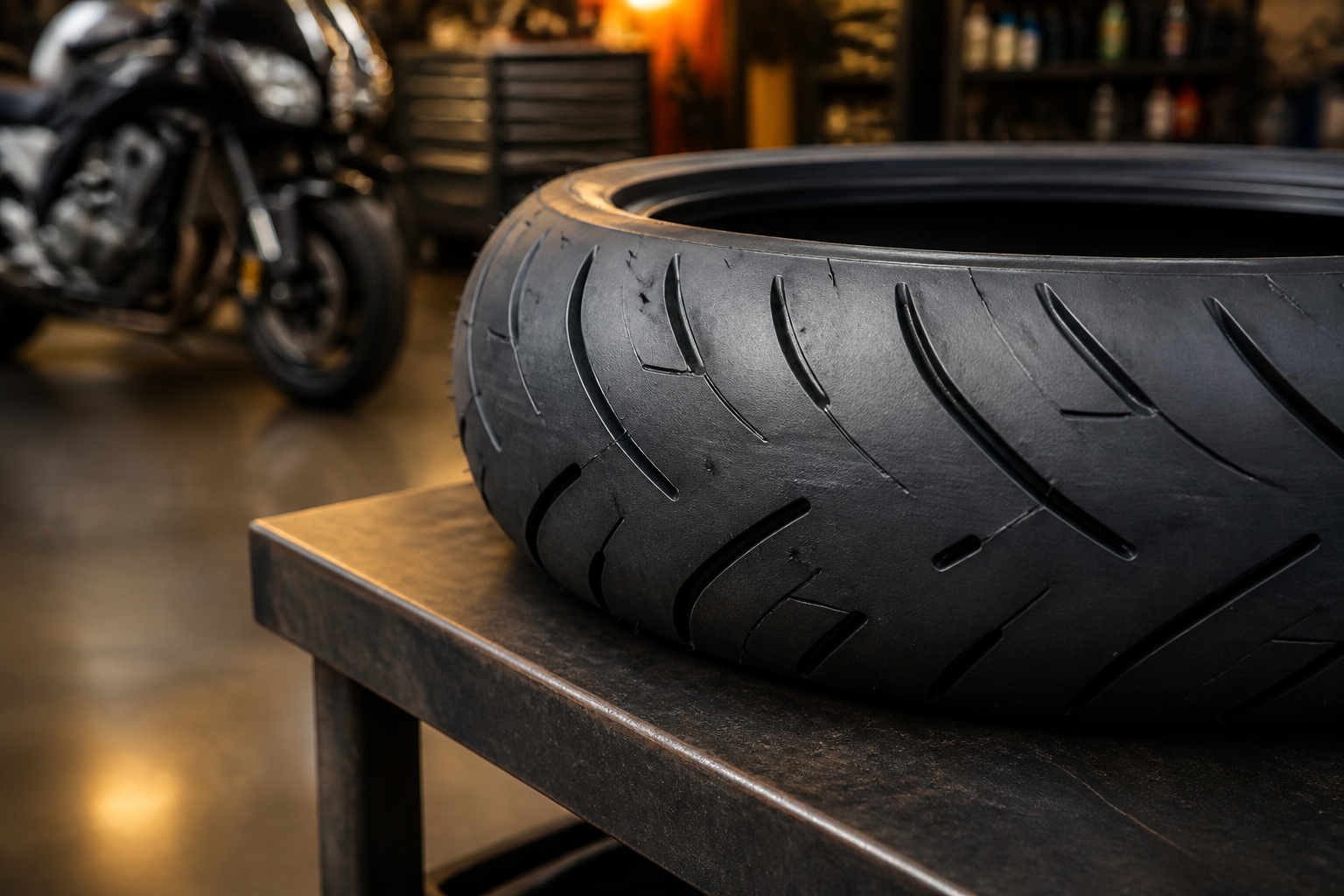
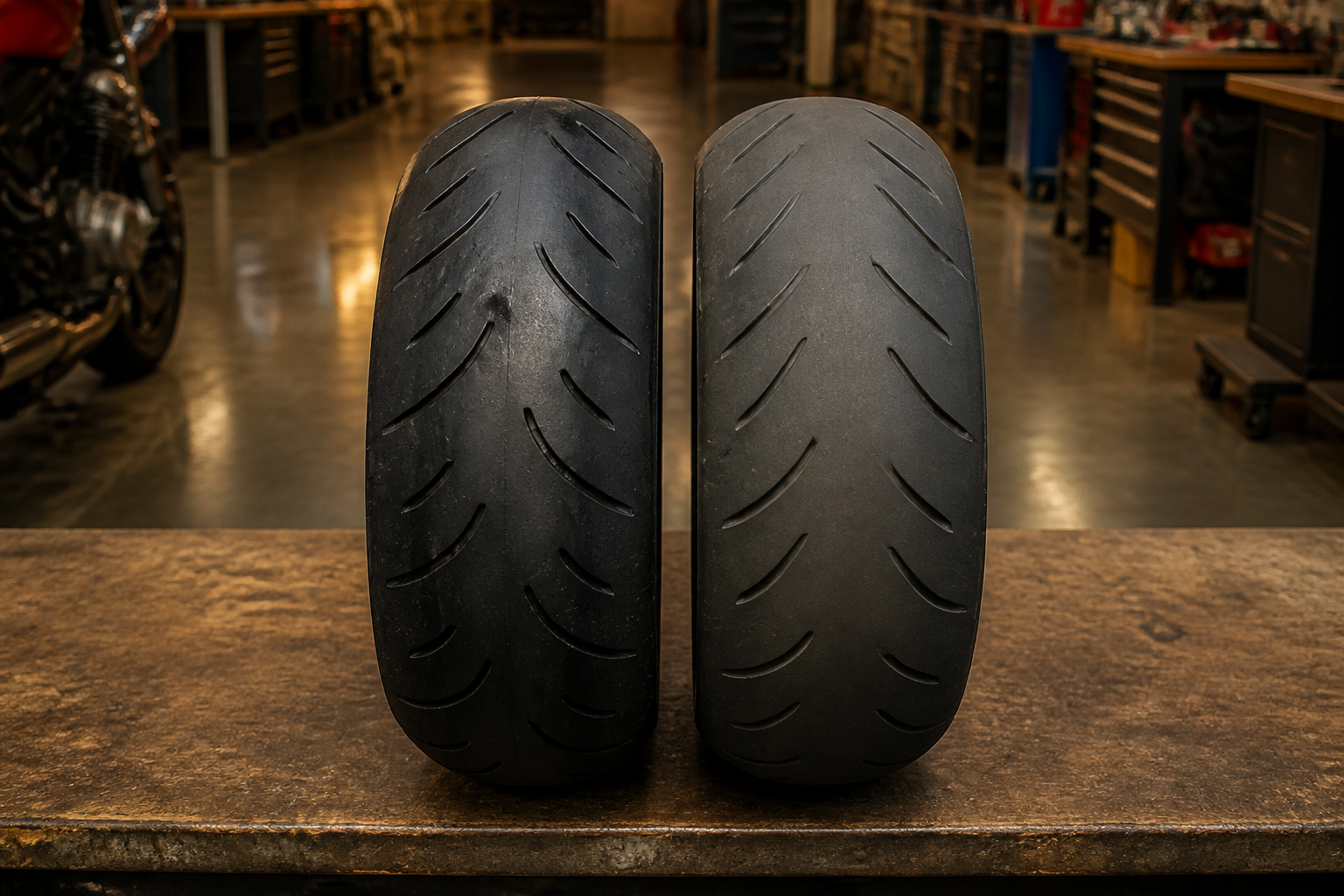
Almost every tire decision comes down to one axis: grip versus longevity. Softer rubber warms up quickly and grips harder, which is what a spirited or track rider wants — but it wears faster and can age out sooner. Harder compounds last far longer and resist the wear of high-mileage touring or commuting, at the cost of ultimate grip and warm-up. Most tires sit somewhere on that scale, and dual-compound tires cleverly put harder rubber in the center for mileage and softer rubber on the shoulders for cornering grip.
To decide, be honest about the miles you ride and the pace you ride them. A daily commuter and occasional weekend rider is almost always better served by a longer-life sport-touring or touring tire than a track-compound tire they'll never heat up. A rider chasing canyon or track pace should accept shorter life for the grip. And in Miami, wet performance and how a tire ages in the heat matter as much as either — which is where our tire service and honest advice come in. Handling is a system, so we look at your suspension alongside the tire when you're chasing a specific feel.
The sidewall tells you almost everything you need. Here's how to decode it and what each spec means for your choice.
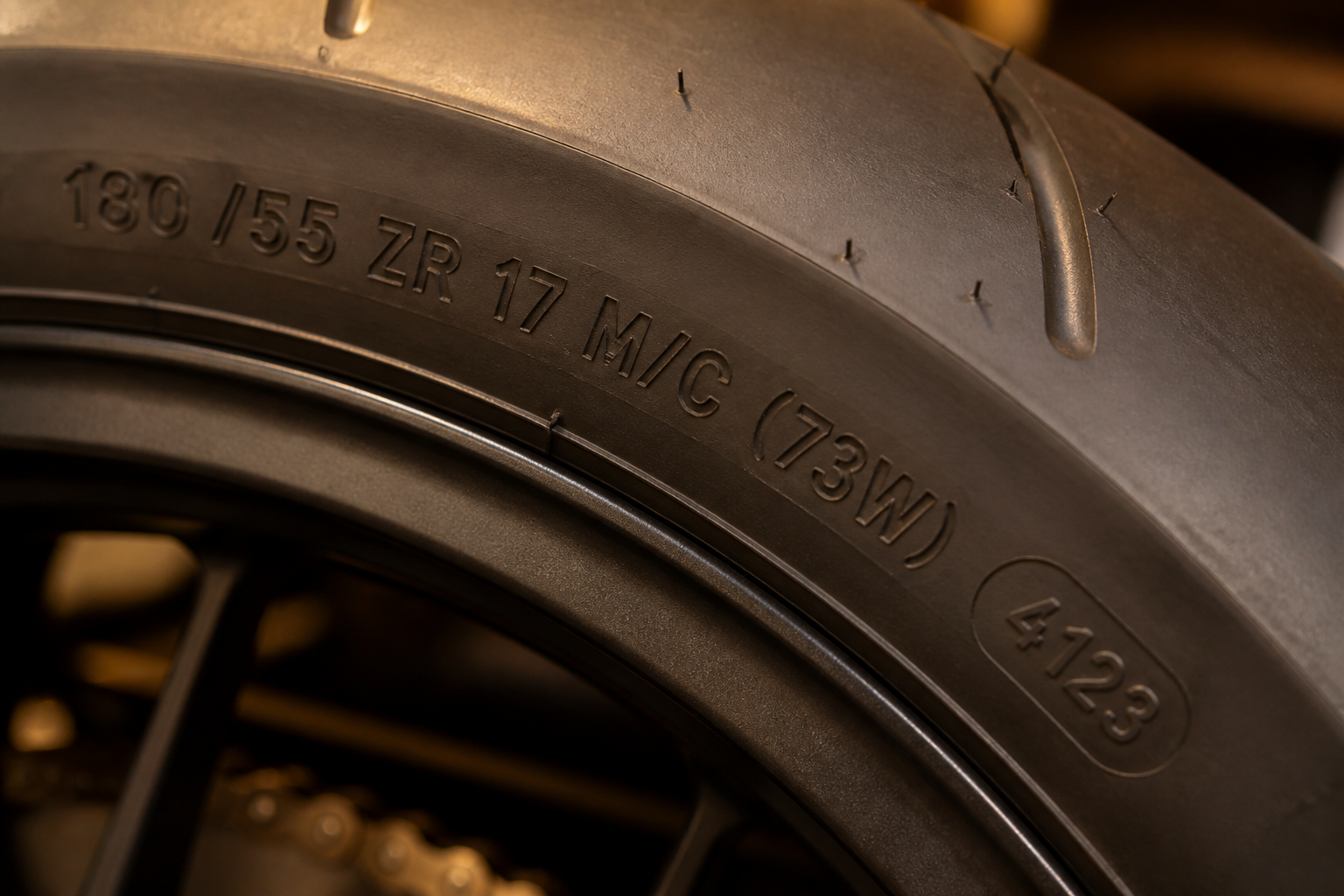
Something like 180/55 ZR17: section width in mm, aspect ratio (sidewall height as a % of width), construction, and rim diameter. It must match your bike's spec unless you know why you're changing it.
A code like 73W sets the maximum weight and sustained speed the tire is rated for. Never drop below your bike's spec to save money — it quietly reduces your safety margin.
Radials run cooler and grip harder for modern and sport bikes; bias-ply carries load well and suits many cruisers and classics. Follow the bike's design, not a "newer is better" assumption.
Dual-compound tires use harder rubber in the center for mileage and softer on the edges for grip — a smart middle ground for street riders who still want lean-angle confidence.
A four-digit stamp (week and year of manufacture). In Miami's sun this matters as much as tread — an old tire can be unsafe with plenty of tread left. Always check it on a new purchase.
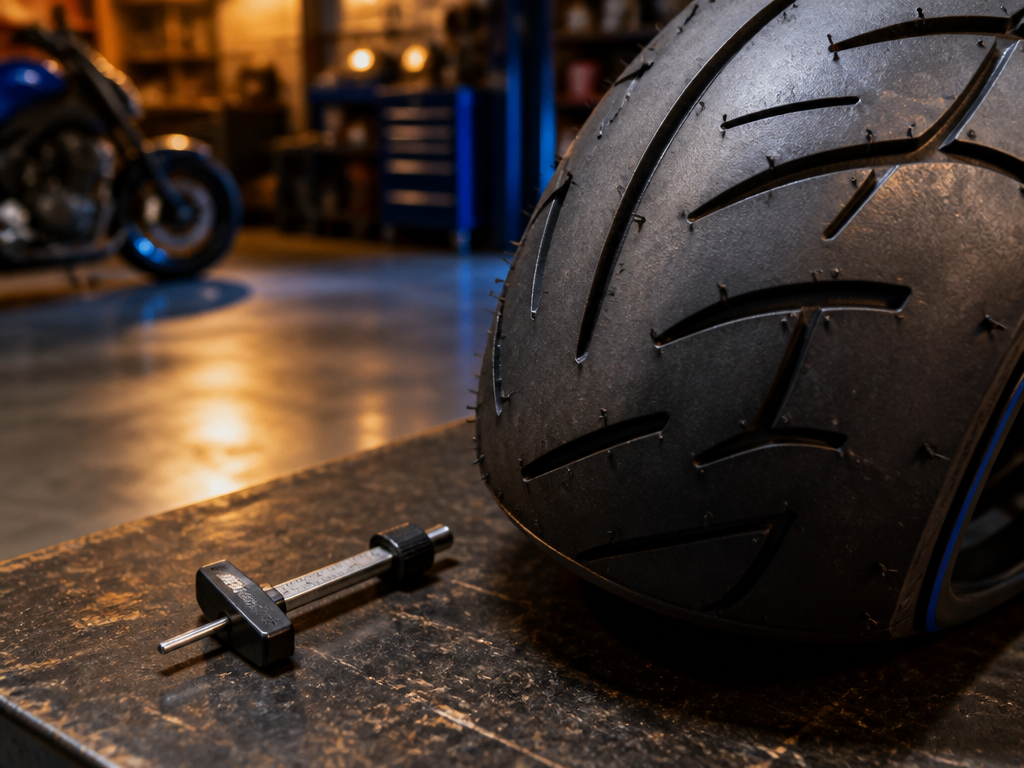
Grooves channel water; a track-oriented tire with minimal tread is hopeless in a Miami downpour. Match tread to how much wet riding you really do — it's a safety choice here.
A great tire bought for the wrong reasons is still the wrong tire. Here's how a smart buyer chooses versus the traps that cost riders money and grip.
Choosing a tire in Miami means weighting two factors most guides ignore: age resistance and wet grip. Our sun and heat break rubber down from the outside, so a tire here often needs replacing for hardening and cracking before it ever wears the tread out — which changes the math on buying a super-premium, short-life tire that will age out with tread to spare. For many South Florida riders, a quality tire with good longevity and a fresh date code is the smarter buy than the absolute grippiest compound. Always check that four-digit date stamp on anything new; a "deal" on an old-stock tire is no deal at all here.
Then there's rain. Miami's afternoon downpours are sudden and heavy, and the painted lines, manhole covers, and polished intersections of a city commute get genuinely treacherous when wet. Tread pattern and a compound that works at real-world street temperatures matter enormously — a minimal-tread track tire that's brilliant dry is a liability in a storm. We factor all of this into every recommendation: the right category for your riding, a compound that suits Miami's roads and pace, real wet capability, and a tire that will age gracefully in our climate. Choosing tires for somewhere with cool, dry seasons and smooth roads isn't choosing tires for here — and that's exactly the gap this guide, and our advice at the counter, is meant to close.
Your bike, your real riding, your priorities — mileage, grip, or both.
The right category, compound, and size for how and where you ride.
A quality tire with a fresh date code from the brands we trust.
Mounted and balanced right, with the wheel and bearings checked.
We'll help you choose — and mount — the right tire for what you ride, bought anywhere.
"I was about to buy track tires for my daily-ridden Street Triple. They talked me into a sport-touring tire instead — way more grip in the rain, lasts twice as long, and it was cheaper. Honest shop."
— Sofia R., Coral Gables
"Runs me through the 80/20 vs 50/50 decision for my Tenere honestly instead of just selling knobbies. I barely ride dirt, so 80/20 was right. Rides great and I'm not chewing through tires."
— Daniel K., Pinecrest
Sport tires prioritize grip and quick, precise cornering with softer compounds that wear faster. Touring tires prioritize mileage, wet grip, and stability under load, using harder, longer-lasting rubber. Cruiser tires are built for higher weight and torque with profiles that suit relaxed handling. Sport-touring tires split the difference. The right category follows how you ride, not what looks fastest.
It depends on how much dirt you actually ride. An 80/20 or 90/10 street-biased tire suits riders who are mostly on pavement and want good road manners and mileage; a 50/50 gives real off-road bite at the cost of on-road life and noise; and a 20/80 knobby is for serious off-road use. Be honest about your real riding — most ADV owners over-buy on knobbies they don't need.
Tires age out from UV and heat even with tread remaining, and in Miami that happens faster than almost anywhere. A tire more than about five to six years old — read from the four-digit DOT date code — should be viewed with suspicion regardless of tread, and hardened, cracked, or glazed rubber should be replaced. We check the date code and condition, not just tread depth.
Generally it's not recommended. Front and rear tires are designed as matched pairs with complementary profiles and compounds so the bike steers predictably. Mixing models — or a new tire against a hardened old one — can make a bike feel vague or nervous. If you're replacing one, we'll tell you honestly whether the other should go too.
Both. We're happy to recommend the right tire for your exact bike, riding style, and Miami conditions — or to mount tires you've already chosen, at the same standard. If you bought something online that's the wrong spec or aged out, we'll tell you before we put it on. The goal is the right tire, however you get to it.
Often, yes — but only the right premium tire for your riding. A quality tire matched to how you ride delivers better grip, wet performance, and predictable wear, which matters more on Miami's wet, hot roads than a few dollars saved. Where premium isn't worth it is buying race-compound rubber for a commuter that will age out before it wears out. We'll steer you to the smart spend, not the most expensive box.
Picked your tire? Our tire mounting and balancing service handles the install with a full wheel and bearing check. And since tires are only half of how a bike handles, if you're chasing a specific feel it's worth looking at your suspension setup at the same time — the two work together.
Based on Biscayne Blvd in Miami's MiMo corridor, we help riders choose and fit tires throughout Miami-Dade.
Get an honest tire recommendation for your bike and riding in Miami — then we'll mount it right.
Get a Tire Recommendation