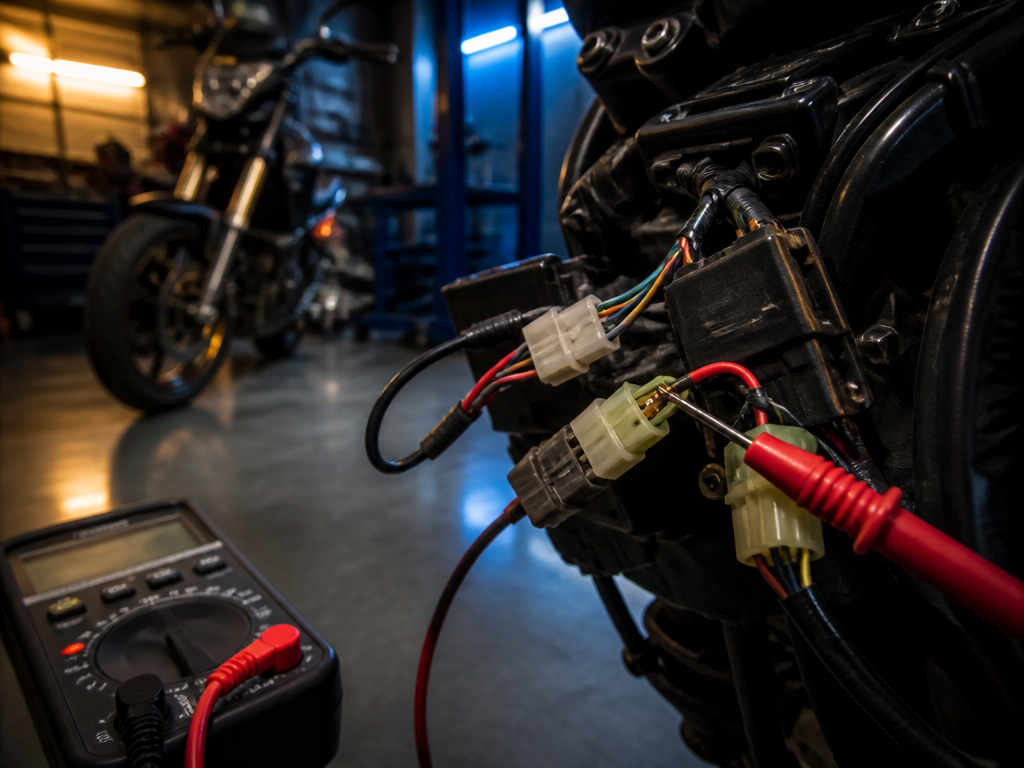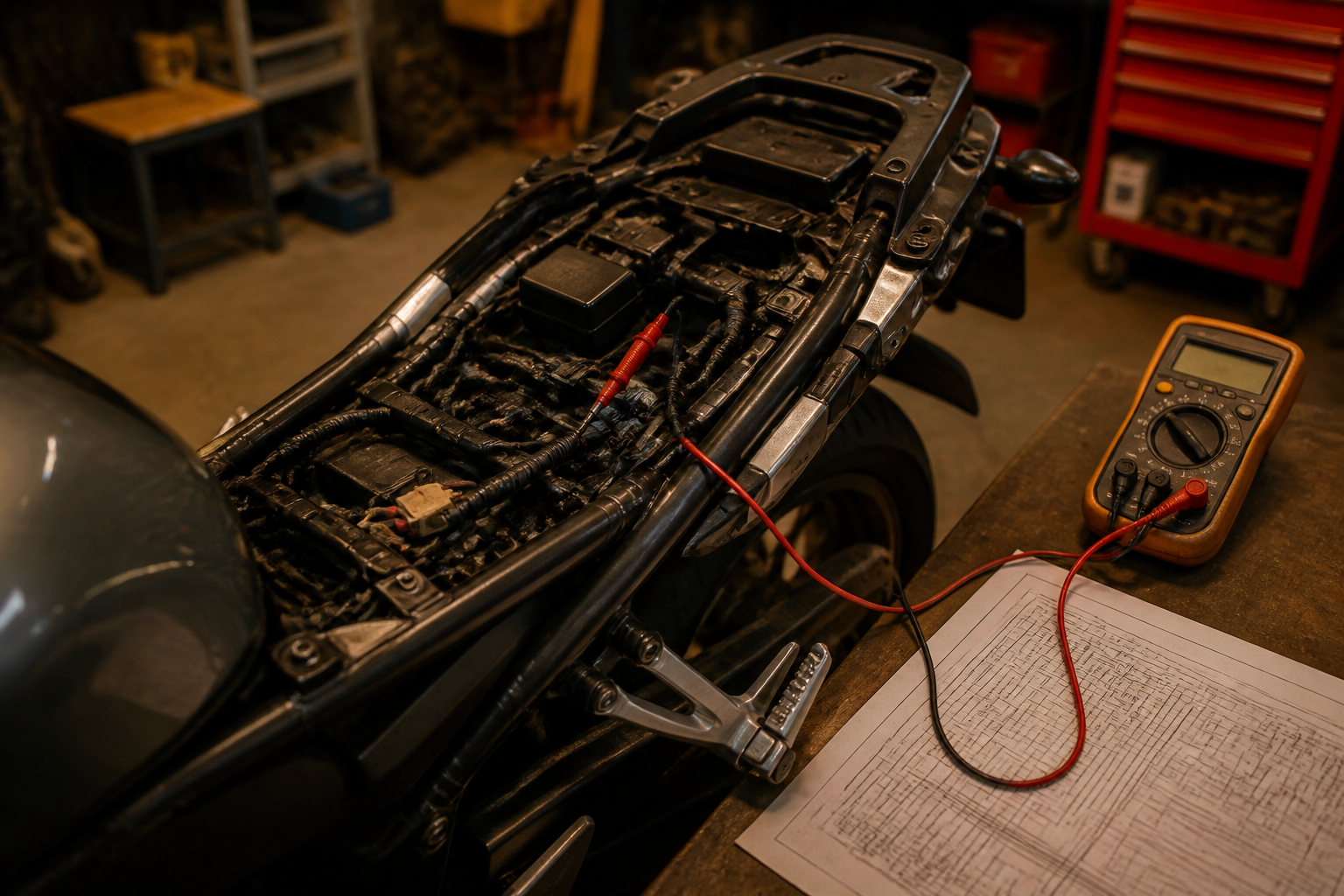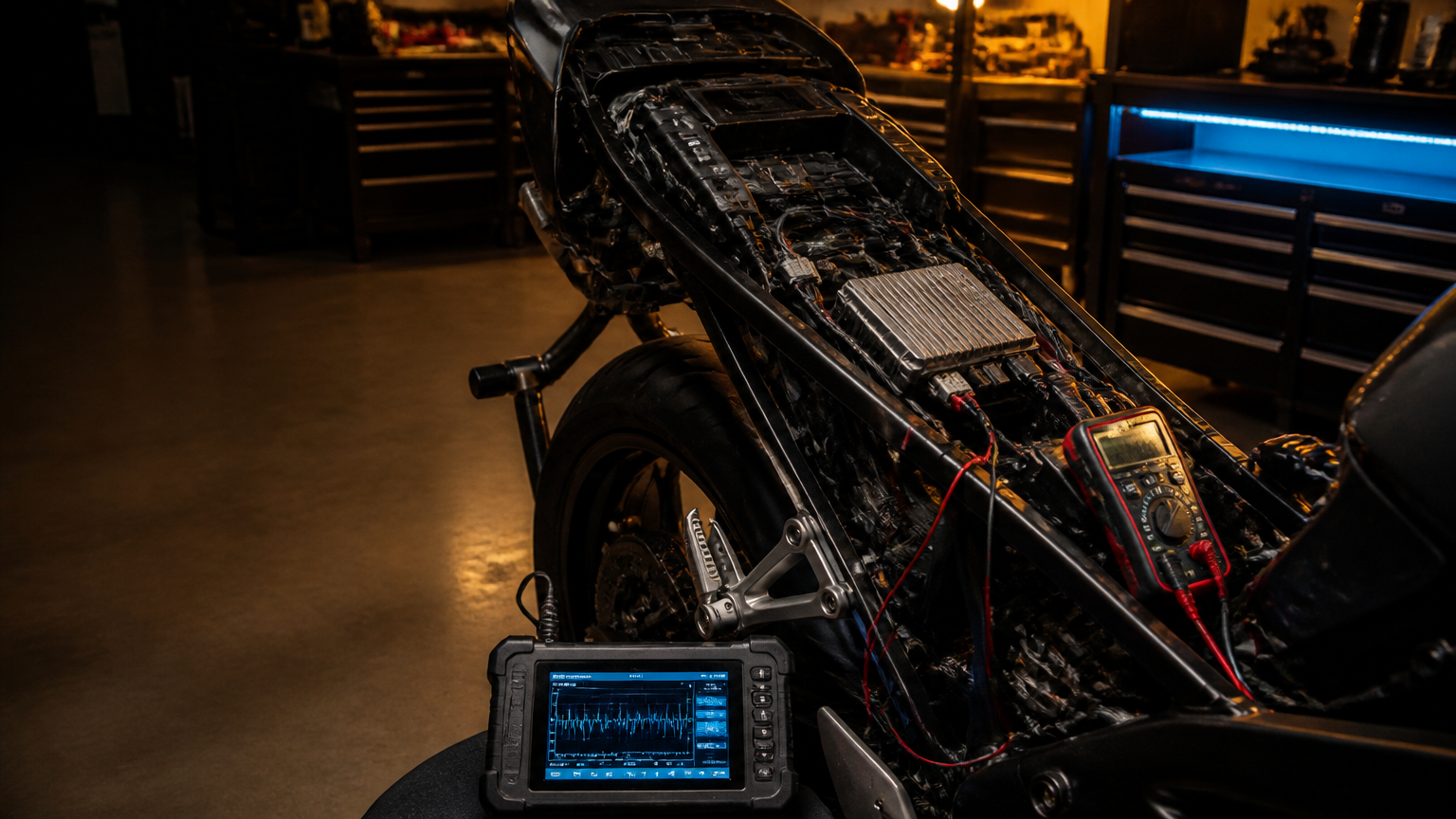
Electrical work is where most shops quietly fall apart. The easy path is to guess: replace the battery, then the regulator, then the stator, charging you for each part until something happens to fix it — or doesn't. That's not diagnosis, it's a lottery you pay for. A real diagnostic process isolates the fault to a specific circuit and component before a single part gets ordered, which is cheaper for you and far more likely to actually solve the problem the first time.
We built this side of the shop around method and equipment, not guesswork. A scan tool that reads codes is only the starting point; the value is a technician who can read live data, follow a wiring schematic, and use a meter to prove where a circuit fails. That discipline is the whole reason riders bring us the problems other shops gave up on, and it's a core part of what our Miami service department is built to do. Bike came from somewhere else, or already been to two shops? Doesn't matter — we service any motorcycle, and we're often the ones who finally find it.
"It's electrical" covers a lot of ground, from a bad ground strap to a failing ECU. Here's the range of faults we chase down and fix — the common ones and the ones nobody else could find.
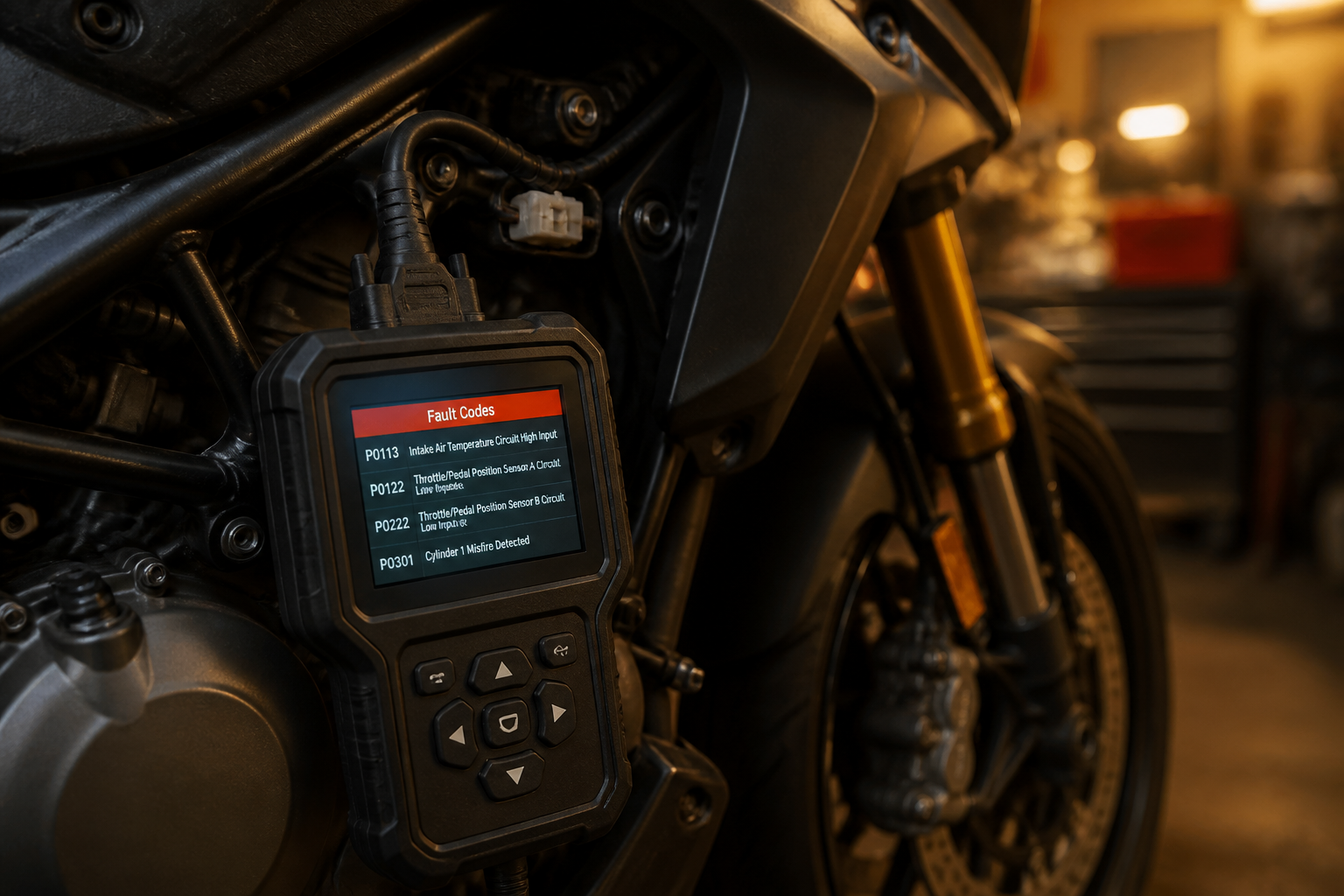
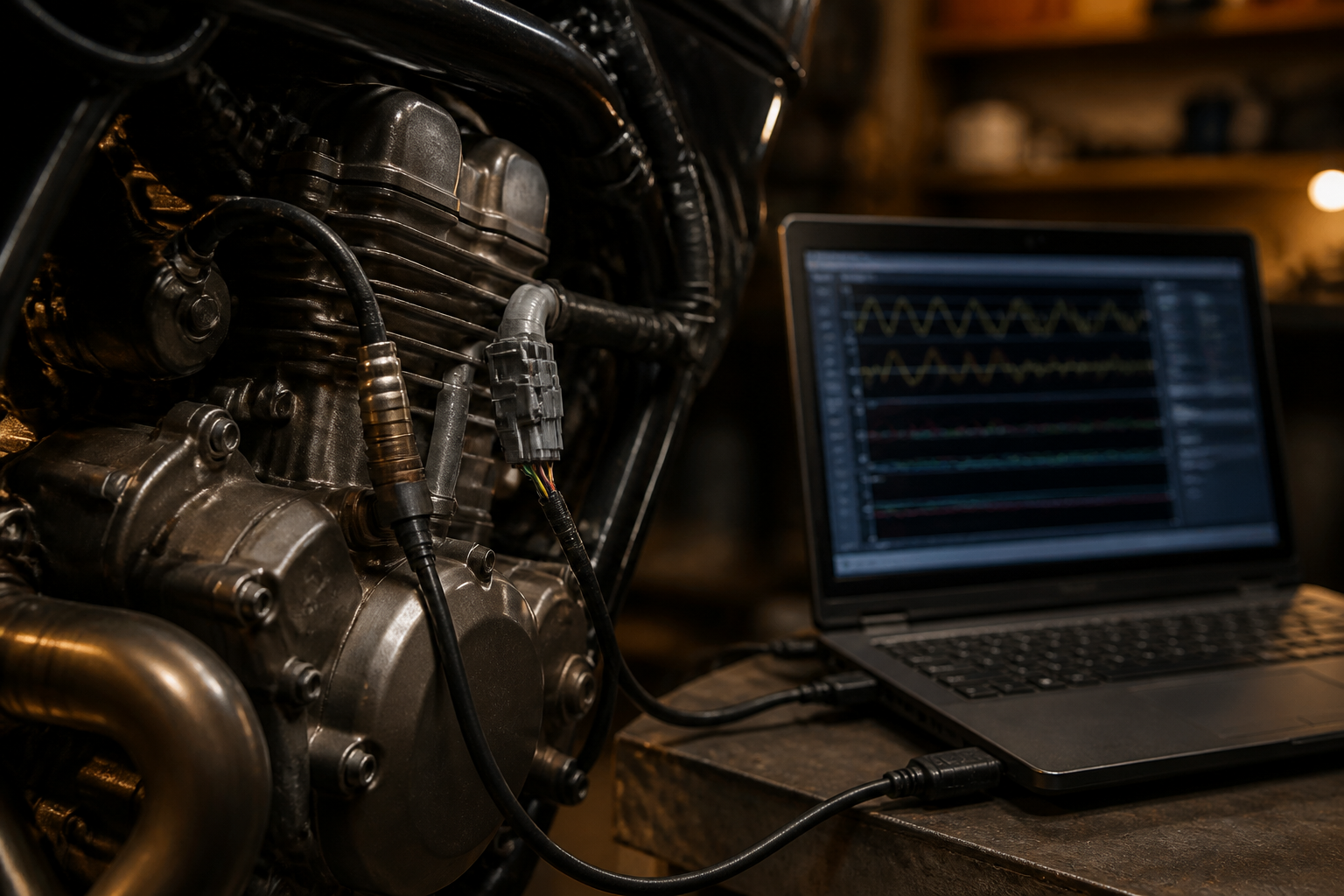
We pull stored and live codes, read sensor data, and interpret what the ECU is actually telling us — the read is the easy part; knowing what it means is the job. Common on electronics-dense sport bikes.
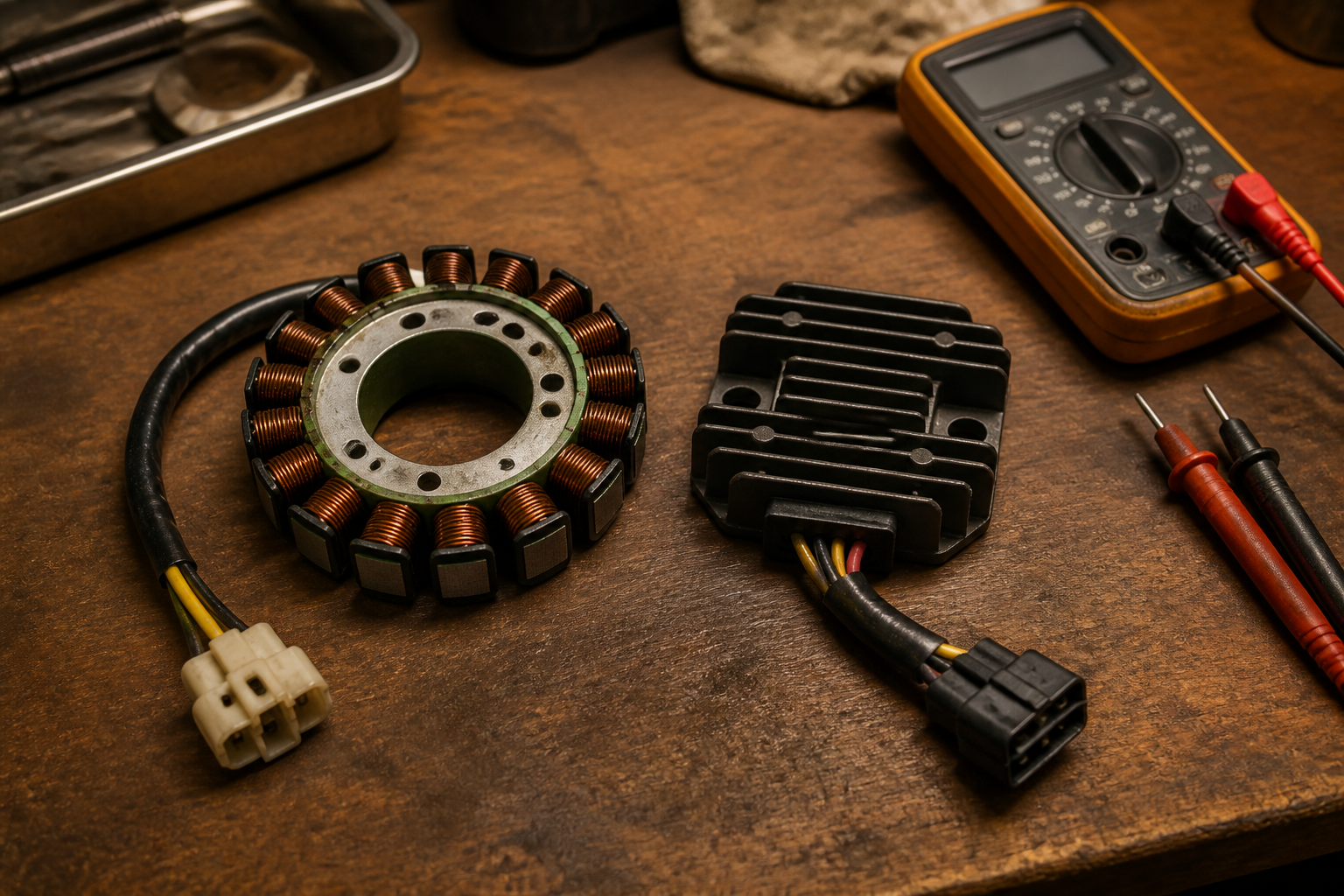
Dead batteries, dim lights, and charging warnings usually trace to the stator, regulator/rectifier, or a bad ground — not just the battery. We test the whole system so you replace the part that actually failed.
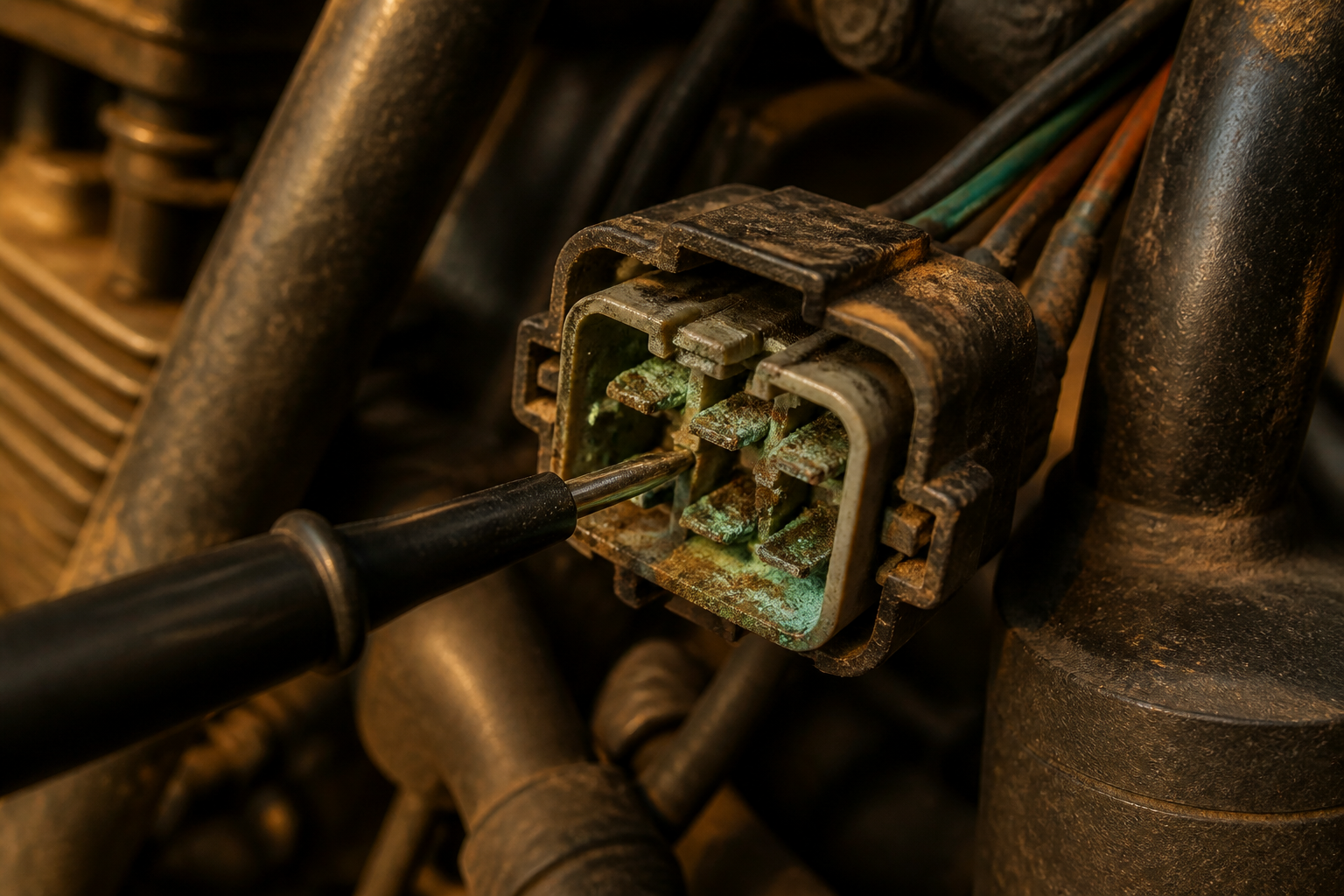
Corrosion, chafe-through, rodent damage, and bad aftermarket splices — repaired to a sealed, lasting standard, not taped over. Miami humidity makes connectors the number-one hidden culprit.
The frustrating ones — the bike that dies randomly or won't start sometimes. We recreate the condition and isolate the circuit instead of guessing, which is exactly the work most shops won't take on.
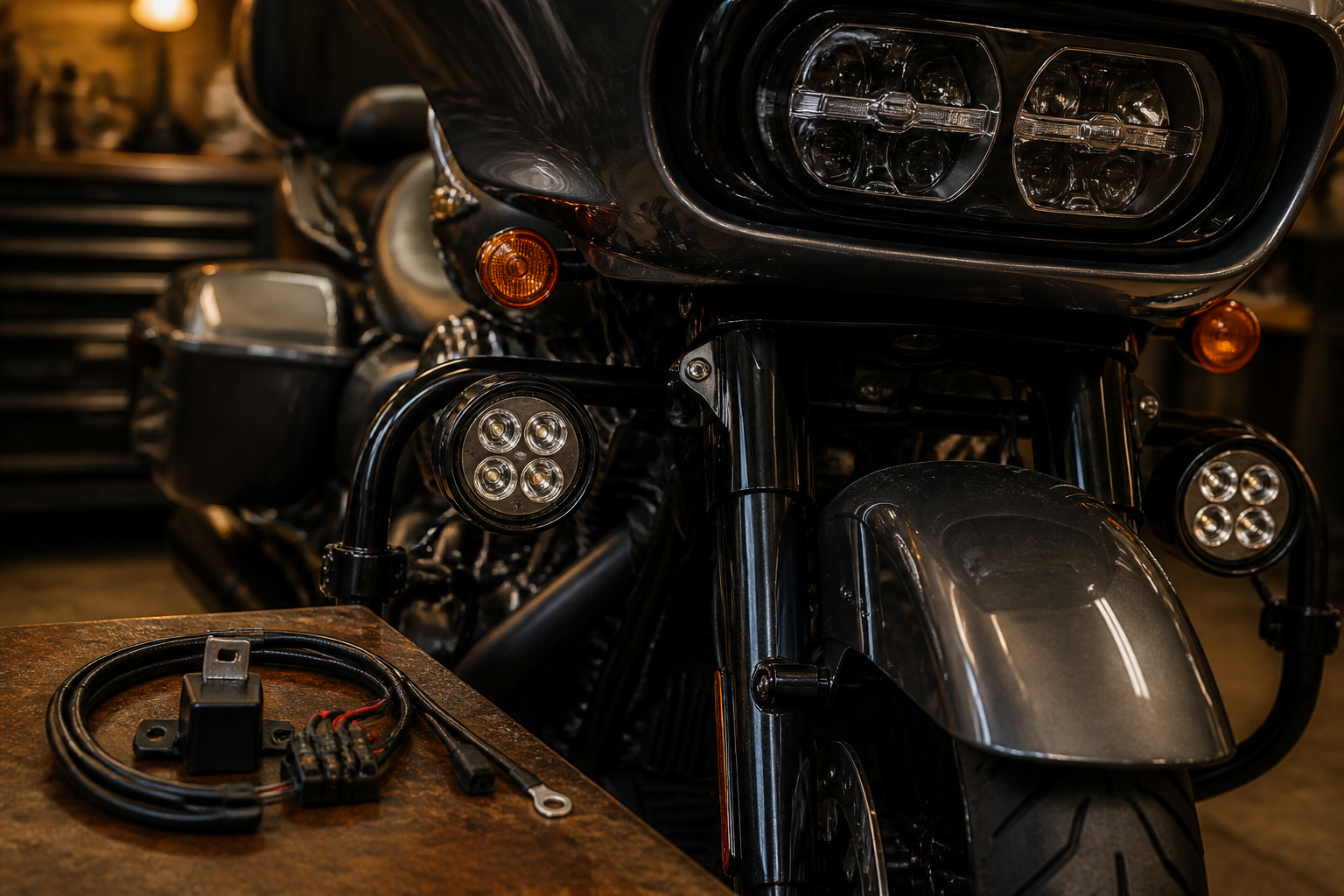
Heated grips, aux lights, chargers, and comms wired properly with fused, relayed circuits — not spliced into whatever's handy. A must for accessory-loaded touring bikes.
Stalling, poor idle, flat spots, and warning lights often come from a sensor or fueling fault. When a running problem is really a tuning issue, we hand off cleanly to dyno tuning.
A few terms make it much easier to understand what your bike is doing — and to tell whether a shop actually diagnosed it or just guessed.
The stator generates AC power; the reg/rec converts it to DC and controls voltage. Most "charging" failures are one of these two or their connectors — rarely the battery that gets blamed first.
A small current that drains the battery while the bike is off — a stuck relay, a bad accessory, a chafed wire. It's why a bike that sits a week won't start, and it's found with a meter, not a guess.
A huge share of motorcycle electrical faults are bad grounds — a corroded connection to the frame. Checking continuity and voltage drop across grounds is basic method that skips-ahead shops ignore.
A code points to a circuit, not always a part — a code isn't a diagnosis. Live data (what the sensors report in real time) is where the actual fault usually reveals itself under the right conditions.
Measuring the voltage lost across a connection under load reveals corrosion and bad joints a simple continuity check misses. It's the test that finds Miami's humidity-driven gremlins.
Newer bikes network their modules over a data bus, so one bad node can throw confusing symptoms elsewhere. Diagnosing them needs the right tool and an understanding of how the network talks.
Electrical faults are where the guess-and-replace shops cost riders the most money, because every wrong guess is a real part on your invoice. Here's the difference between diagnosis and a parts lottery.
If there's one environment purpose-built to create electrical gremlins, it's South Florida. Constant high humidity works its way into every connector, and the salt air near the coast and the barrier islands accelerates corrosion on terminals, grounds, and any bare metal. That green, powdery corrosion on a connector is the single most common root cause we find behind "mystery" electrical problems here — intermittent stalls, hard starts, flickering gauges, and charging warnings that come and go with the weather. A bike that runs fine in a dry garage can act possessed after a humid week or a rainy commute.
Rain and heat pile on. Afternoon downpours drive water into aging seals and switchgear, and the relentless sun bakes wiring insulation until it goes brittle and chafes through against the frame. Bikes that sit between rides — common here during hurricane season or a long wet stretch — develop parasitic draws and dead batteries that a quick jump-start only masks. We factor all of it into how we diagnose: we don't just clear a code and send you off, we look for the corrosion, the compromised ground, and the water intrusion that the Miami environment all but guarantees. Fixing the symptom without addressing why South Florida caused it is how the same gremlin comes back next season — so we repair to a sealed, corrosion-resistant standard built to survive the climate it lives in.
Get the full story — when it happens, in what conditions, and what's been tried already.
Scan codes, read live data, and meter the circuits to isolate the real fault.
Prove the diagnosis before we order a part, then explain it to you plainly.
Fix it to a sealed, lasting standard and verify the fault is truly gone.
We diagnose what you ride — even the bike two other shops couldn't figure out.
"My bike would die at random and two shops replaced parts that didn't fix it. These guys traced it to a corroded ground under the tank in an afternoon. Haven't had a hiccup since."
— Victor L., Doral
"Charging light kept coming on. Instead of just selling me a battery they tested the whole system and found the regulator. Honest work and they credited the diagnostic to the repair."
— Simone T., Miami Beach
We run modern OEM-level and quality aftermarket diagnostic tools that read ECU fault codes, live sensor data, and charging-system output across the major brands, backed by a proper multimeter, load tester, and oscilloscope for the faults software alone can't see. The tool tells us where to look; the technician's method is what actually finds the fault.
Yes. Intermittent faults are the hardest and most time-consuming to chase because they don't fail on command, but our process is built for exactly that — recreating the condition, monitoring live data, and isolating the circuit rather than guessing. It can take longer than a straightforward repair, and we'll be upfront with you about that from the start.
Yes, including harness repair from corrosion, rodent damage, heat, chafe-through, and aftermarket wiring that was spliced in incorrectly. We repair to a proper standard — soldered or correctly crimped and sealed connections, not electrical tape over a twist — so the fix lasts in Miami's humidity instead of coming back next season. Where a section is too far gone, we'll rebuild that part of the harness rather than patch over a failure that's guaranteed to return.
We charge a diagnostic fee, and it's credited toward the repair if you proceed with us, so the visit isn't wasted either way. Diagnosis is skilled labor — it's the part that saves you from throwing parts and money at a problem — so we charge for the work of finding the fault, not just the parts that fix it. You'll get a clear explanation and an estimate before any repair work begins, so there are no surprises on the invoice.
Absolutely — connector corrosion from humidity and coastal salt air is one of the single most common faults we diagnose here. It shows up as intermittent gremlins, hard starts, dim lights, and charging warnings long before anything fully dies. A lot of "mystery" electrical problems in South Florida trace back to a green, corroded ground or connector.
Yes. Not every bike has an ECU to plug into, and older charging systems, ignitions, and hand-built wiring still need someone who can read a schematic and use a meter. We diagnose vintage and carbureted bikes the classic way — circuit by circuit — and modern fuel-injected bikes with the scan tools, whichever your machine calls for. Older bikes are often where solid meter-and-schematic fundamentals matter most, and that's exactly how we work.
A diagnostic visit often uncovers work worth handling in the same appointment. If a running fault turns out to be a fueling or mapping issue, it moves cleanly to dyno tuning; if the bike's overdue anyway, it's a smart moment to bundle maintenance and major service so fresh plugs, filters, and fluids rule out the easy variables while we're already in there.
Based on Biscayne Blvd in Miami's MiMo corridor, we chase down electrical faults for riders throughout Miami-Dade.
Book a diagnostic in Miami — real equipment, a real method, and a straight answer on what's wrong.
Book Your Service